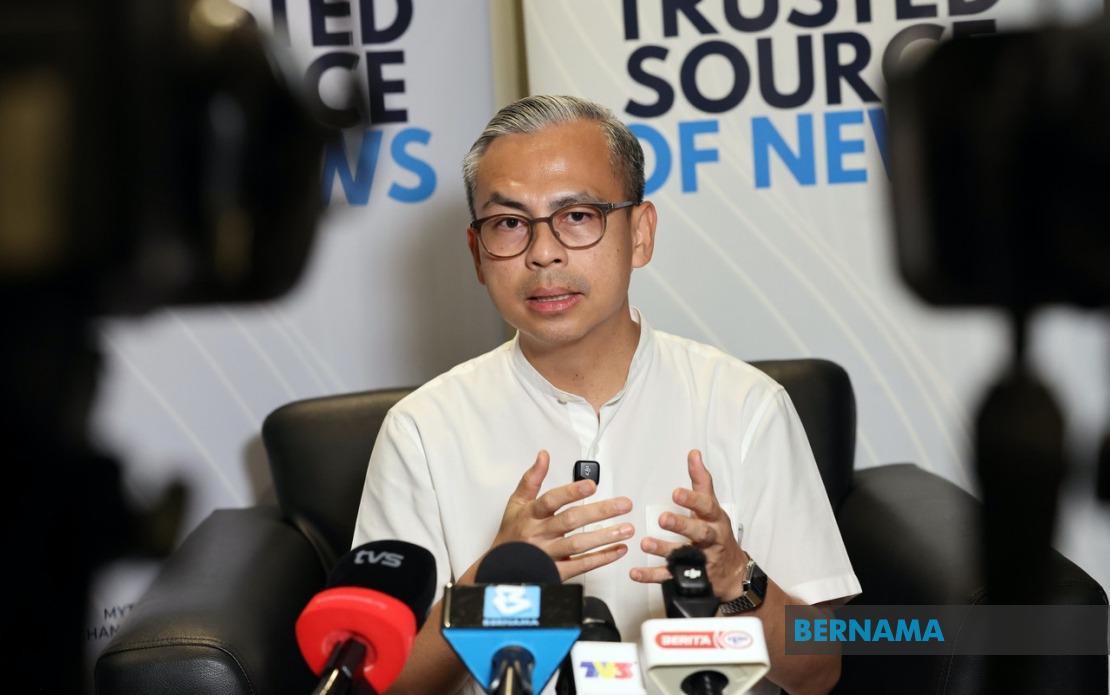
Communications Minister Datuk Fahmi Fadzil has issued a pointed call for social media platform operators to take a more aggressive stance in combating the spread of false information surrounding the 16th Johor state election, warning that the risk of confusion among voters remains particularly acute on polling day. Speaking at the Malaysian National News Agency (Bernama) operations centre in Johor Bahru on July 7, Fahmi articulated growing concerns about the potential for misinformation to undermine the electoral process, especially as Malaysians cast their votes on Saturday.
While acknowledging that major social media platforms have formally adopted policies prohibiting the dissemination of false content, Fahmi highlighted a critical gap between policy frameworks and operational enforcement. The minister pointed out that existing rules remain largely aspirational without sufficient real-time monitoring and rapid response mechanisms, a shortfall that becomes especially problematic during the high-stakes hours of polling day when vote tallies are being announced and constituency results emerge across the state. This timing vulnerability presents a window of opportunity for bad actors to weaponise false information about electoral outcomes in ways that could sway public perception before verified results are confirmed.
The minister's particular anxiety around polling night underscores a unique vulnerability in Malaysia's electoral ecosystem. Unlike the broader campaign period, which involves sustained messaging efforts that media regulators can track over weeks, polling day creates an information crunch where false claims about winners or losing candidates can circulate at speed before official sources can respond. Fahmi explicitly stressed his concern about narratives suggesting particular candidates have secured seats before formal announcements, a tactic that could theoretically suppress turnout or create false confidence in particular outcomes.
Fahmi's emphasis on the need for platform cooperation with the Malaysian Communications and Multimedia Commission (MCMC) reflects the government's recognition that no single actor can effectively address this challenge in isolation. The MCMC has previously coordinated with the Malaysian Media Council to address one dimension of the problem: the misuse of legitimate media logos and branding to create counterfeit graphics that impersonate news organisations. These fabricated news images, which can spread rapidly through messaging apps and social networks, represent a particularly insidious form of disinformation because they exploit the visual authority that institutional logos carry.
Yet Fahmi's frank assessment that this logo misuse represents only half the problem points to a deeper structural challenge. The other half involves user-generated content that, while not claiming false attribution to established media outlets, nonetheless contains electoral misinformation. These might range from doctored images of candidates to false claims about voting locations or timing, written commentary making unsupported assertions about policy positions, or speculative posts about internal party dynamics presented as fact. This category of disinformation is exponentially harder for platforms to police because it exists on a spectrum where opinion, legitimate criticism, and false claims intertwine.
The minister's frustration with the pace of platform responses reflects broader global tensions between technology companies and governments over content moderation standards. While platforms have invested in automated detection systems and human review teams, the practical reality across Asia has been mixed, with detection algorithms often struggling to parse context in local languages and cultures. For Malaysian election content, this means relying heavily on human moderators who must rapidly distinguish between protected political speech and actionable misinformation—a cognitively demanding task, particularly when claims are ambiguous or when multiple interpretations of factual events emerge during fast-moving election coverage.
Notably, Fahmi reported that MCMC had not yet received complaints about campaign misconduct on social media platforms at the time of his statement, suggesting that either such misconduct had remained contained or that voters and activists had not yet formally escalated concerns through official channels. This absence of recorded complaints, however, should not be mistaken for the absence of misinformation itself. Many false claims circulate through closed messaging groups, private forums, and encrypted channels where they remain invisible to regulators unless specifically reported.
Beyond the disinformation agenda, Fahmi outlined the coalition government's broader electoral strategy centring on voter mobilisation and turnout maximisation. The Pakatan Harapan campaign team has focused particular attention on encouraging Johoreans working or studying outside the state to return home to vote, recognising that outstation voters represent a significant demographic that can materially affect seat outcomes in a state election with substantial inter-state migration patterns. The positive reception of public transport initiatives and special packages offered by bus companies suggest that logistical barriers to voting have begun receiving systematic attention.
Fahmi also highlighted efforts to facilitate voting among young people, including arrangements for students from the Youth and Sports Skills Training Institute (ILKBS) to take leave and return to their constituencies. These initiatives reflect recognition that youth participation, particularly among first-time voters and those aged 18 to 25, could prove decisive. His call for retailers and food and beverage sector employers to grant employees flexibility on polling day addresses a practical obstacle that often suppresses turnout among lower-wage workers without generous leave policies.
The minister's articulation of a 60 per cent voter turnout target speaks to the government's confidence in mobilisation capacity while also suggesting internal baseline expectations. Historically, state elections in Malaysia have recorded variable turnout rates depending on seasonal factors, perceived competitiveness of contests, and voter enthusiasm for particular races. A target exceeding 60 per cent would represent a respectable showing and would likely reflect strong engagement among the electorate regarding Johor's political direction.
Fahmi's appeal for parents to encourage adult children living outside Johor to return home reframes voting as a family responsibility and community obligation rather than merely an individual civic duty. This rhetorical move, while politically motivated, also acknowledges that Malaysian electoral participation is often understood within kinship networks and family hierarchies, particularly in Johor where extended family structures and hometown loyalty remain culturally significant.
As Malaysia moves toward the Johor election, the intersection of disinformation vulnerabilities and mobilisation strategies will likely determine not just the electoral outcome but also the public's confidence in the legitimacy of results. The government's explicit focus on platform accountability and the need for enhanced monitoring suggests recognition that electoral integrity in 2024 cannot be taken for granted without proactive institutional engagement. How effectively platforms respond to these calls for action in the final week before polling will test whether technology companies can move beyond policy statements to operational intervention at moments when election integrity is most at risk.

