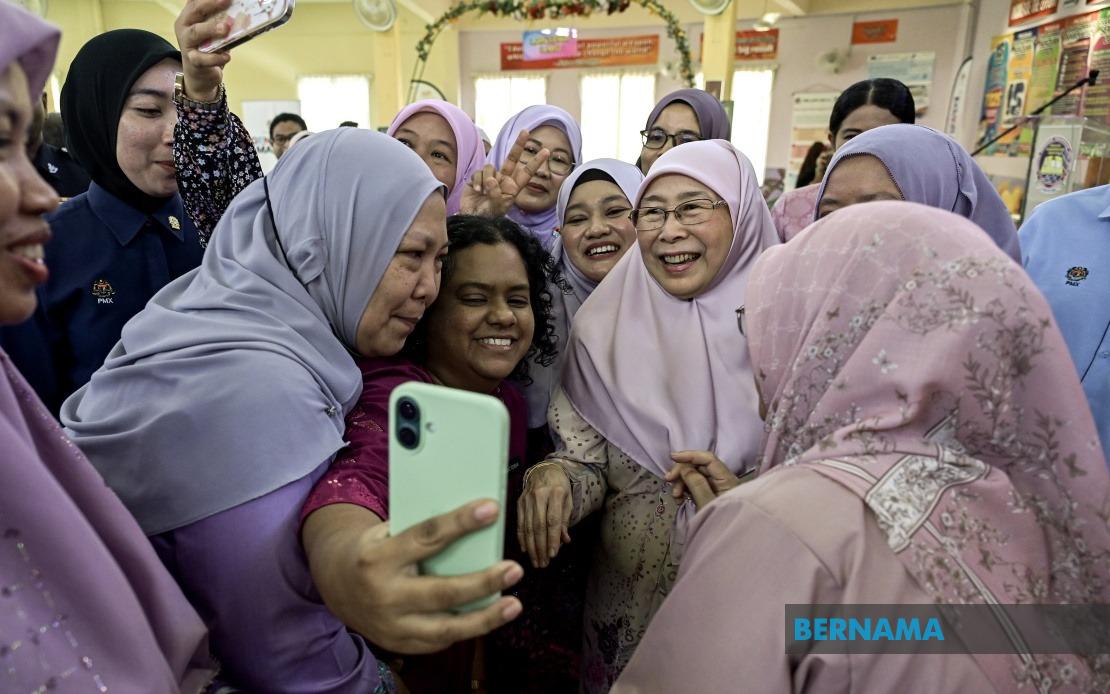
SMK Seri Mulia in Kuala Lumpur is set to undergo significant facility upgrades following the allocation of RM300,000 from the Bandar Tun Razak parliamentary constituency fund. The substantial funding commitment addresses long-overdue infrastructure improvements at the secondary school, which has operated without comprehensive renovation work for more than two decades. The decision to prioritise upgrades at the school was announced during an Academic Excellence Awards ceremony on July 25, underscoring the government's commitment to modernising educational facilities in urban constituencies.
Bandar Tun Razak Member of Parliament Datuk Seri Dr Wan Azizah Wan Ismail announced the allocation, emphasising that the funds would facilitate both maintenance work and structural enhancements across the school's campus. The allocation represents a targeted investment in one of the constituency's key educational institutions, reflecting broader government efforts to strengthen school infrastructure across the nation. Dr Wan Azizah, who holds the concurrent position of wife to Prime Minister Datuk Seri Anwar Ibrahim, framed the initiative as part of wider efforts to ensure Malaysian educational institutions meet contemporary standards.
Central to the upgrade initiative is a dedicated focus on student safety and wellness measures. The allocation explicitly earmarks funding for the installation of safety grills throughout the school premises, with all applications for such installations already approved by relevant authorities. This safety-conscious approach acknowledges growing concerns about student protection within school environments and represents a tangible response to parental expectations for secure learning spaces. Dr Wan Azizah stressed that protecting children remains the paramount consideration in budgetary decisions, emphasising that safety infrastructure forms the foundation upon which quality education is built.
Beyond physical security enhancements, the funding framework extends to supporting student mental health initiatives. The allocation demonstrates institutional recognition that student well-being encompasses psychological and emotional dimensions alongside physical safety. By incorporating mental health considerations into the upgrade strategy, the school is positioned to address holistic student development concerns that increasingly feature in educational discourse across Southeast Asia. This multifaceted approach to student welfare reflects contemporary understandings of what constitutes a supportive educational environment.
The fact that SMK Seri Mulia had not undergone major facility upgrades for 23 years highlights infrastructure challenges faced by some established educational institutions in urban areas. Over two decades, schools experience cumulative wear and deterioration affecting everything from physical structures to utility systems and safety features. The extended interval between upgrades creates compounding maintenance backlogs that eventually necessitate significant capital injections. This allocation thus addresses both immediate safety concerns and the backlog of deferred maintenance that naturally accumulates when facility upgrades remain sporadic.
The announcement occurred during a broader school-wide recognition event honouring student achievement. The Academic Excellence Awards ceremony provided an appropriate platform to acknowledge both individual student accomplishments and institutional improvements. By connecting infrastructure investment with academic recognition, the ceremony communicated to students that the school values both their intellectual development and their physical safety and well-being. This integration of different school improvement initiatives under a single celebratory event creates a more cohesive message about institutional priorities.
Official attendance at the event included Prime Minister's political secretary Datuk Azman Abidin and Kuala Lumpur Federal Territory Education Department School Management Sector deputy director Aziah Amir. The presence of senior government figures and education department representatives signalled the upgrade initiative's importance within broader education policy frameworks. Such high-level attendance also reinforces the message that the school's challenges and improvements receive attention at multiple levels of government administration.
From a policy perspective, this allocation exemplifies how parliamentary allocation systems can be directed toward addressing specific institutional needs identified by elected representatives. The Bandar Tun Razak constituency allocation mechanism allows the MP to identify priority projects within their jurisdiction and allocate funds accordingly. In this instance, Dr Wan Azizah identified educational infrastructure upgrading as a constituency priority, resulting in concentrated investment in a single institution facing deferred maintenance challenges.
For Malaysian readers in urban constituencies, this allocation offers a concrete example of how parliamentary funds translate into tangible infrastructure improvements affecting daily student experiences. The RM300,000 investment will enhance physical conditions for approximately 1,000 students attending SMK Seri Mulia, demonstrating how centralised education policy connects with local implementation. Parents and communities observing similar infrastructure backlogs at local schools may view this allocation as a reference point for advocacy and engagement with their own elected representatives regarding facility improvement priorities.
The emphasis on safety enhancements reflects broader societal conversations about school environments and student protection. Installation of safety grills and structured mental health support acknowledges that contemporary students navigate complex wellbeing challenges requiring institutional responses. Educational institutions are increasingly expected to function not merely as academic delivery centres but as comprehensive support environments addressing student safety, physical health, and psychological well-being simultaneously.
Moving forward, the implementation of these upgrades will require coordinated planning between school management, the education department, and relevant contractors. The RM300,000 budget must be strategically allocated across multiple improvement categories including safety infrastructure, general maintenance, and mental health support systems. Successful implementation will require transparent project management and clear communication with stakeholders about timeline, scope, and expected outcomes.
For the broader Southeast Asian education sector, this initiative illustrates how mid-career facility upgrades for established schools represent an ongoing infrastructure challenge across developing and middle-income economies. As schools age, systematic approaches to facility renewal become essential for maintaining educational quality and student safety. The Malaysian government's allocation to SMK Seri Mulia demonstrates recognition that educational infrastructure investment remains a continuing government responsibility rather than a one-time establishment cost.

