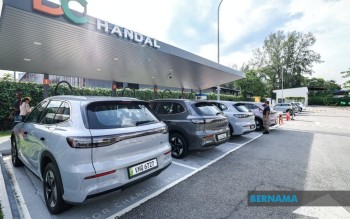
Malaysia's expanding electric vehicle market is drawing interest from international charging technology providers, with Chinese firm Xi'an LINCHR New Energy Technology Co Ltd bringing sophisticated smart charging solutions to the region as adoption accelerates over the coming three to five years. However, the company's leadership is sounding a cautionary note: simply transplanting successful models from other markets will not serve Malaysia's unique needs. This perspective highlights a broader challenge facing the nation as it seeks to build world-class EV infrastructure while remaining financially and operationally sustainable.
Yuan Qingmin, chairman of LINCHR, emphasizes that electric vehicles and their charging ecosystems are fundamentally interdependent. When one component lags, the other inevitably suffers—a dynamic that could throttle Malaysia's EV momentum if not carefully managed. While China has been a pioneer in both EV adoption and charging network development, Yuan stresses that success there does not automatically translate to Malaysian conditions. Technology transfer, he argues, demands genuine adaptation rather than wholesale replication of foreign models, requiring investment in localization strategies and research tailored to the Malaysian market's specific characteristics.
LINCHR's presence at the Global Automotive and Technology Expo (GATE 2026), running August 26-28 at the Malaysia International Trade and Exhibition Centre (MITEC), underscores the company's commitment to understanding and engaging with Malaysia's EV ecosystem. The event provides a crucial platform for dialogue with government agencies, power utilities, infrastructure operators, and industry stakeholders who collectively shape Malaysia's charging landscape. Such engagement is vital for any foreign technology provider seeking to position itself as a long-term partner rather than a short-term vendor.
The company's strategic collaboration with Swift Bridge Technologies Sdn Bhd, a homegrown EV charger manufacturer, exemplifies the partnership approach LINCHR believes will work best in Malaysia. This arrangement extends beyond simple procurement or licensing; it encompasses joint development of charging infrastructure standards, shared product innovation, coordinated technology advancement, and collaborative engineering design. By working with a local partner who understands Malaysia's regulatory environment, supply chains, and customer preferences, LINCHR can accelerate market entry while building local capacity.
LINCHR's credentials are substantial. The company commands over 70 per cent of China's market share in testing technology solutions for charging infrastructure—a commanding position that reflects years of refinement in the world's largest EV market. Yet Yuan acknowledges that international expansion demands more than exporting winning formulas. Each new market requires dedicated technology transfer agreements with local partners, coupled with localized research and development initiatives that address regional variations. Without this investment, even proven technology risks underperformance or market rejection.
The distinction between merely meeting baseline requirements and delivering genuinely suitable solutions proves critical in Malaysia's tropical context. To illustrate this principle, LINCHR has modified its charging station design specifically for Malaysian conditions by incorporating oil-immersed insulation for the printed circuit boards (PCBs). This adaptation directly addresses the corrosive effects of salt spray combined with Malaysia's hot and humid climate—environmental stressors that could degrade standard equipment over time. Such seemingly technical details ultimately determine whether infrastructure proves reliable and cost-effective over its operational lifespan.
Standardization efforts further demonstrate LINCHR's commitment to building appropriate local capacity. In March of the previous year, LINCHR, Swift Bridge, and the Standards and Industrial Research Institute of Malaysia (SIRIM) formalized a tripartite cooperation agreement aimed at establishing charging infrastructure testing and certification standards suited to Malaysian requirements. Since that signing, the three parties have collaborated on developing these standards while simultaneously upgrading equipment testing laboratories—building institutional expertise that Malaysia will need as its EV market matures.
The evolution of charging technology itself demands ongoing attention and adaptation. As electric vehicles become increasingly connected and intelligent, the charging ecosystem must evolve in parallel. Yuan envisions a future where EVs charge not only at home and workplaces but also opportunistically whenever the vehicle is idle. More ambitiously, surplus power stored in EV batteries could flow back into the electrical grid, transforming individual vehicles from mere electricity consumers into distributed energy resources. This vision of bidirectional power flow—sometimes called vehicle-to-grid or V2G technology—represents a fundamental shift in how energy systems might operate, with profound implications for grid stability, renewable energy integration, and electricity pricing.
For Malaysia, this technological trajectory carries significant opportunity. The nation's abundant renewable energy resources, particularly solar potential, could be better utilized if EV batteries function as flexible storage and supply systems. However, realizing this vision requires charging infrastructure purposefully designed for these capabilities from the outset, rather than retrofitting solutions optimized for one-way power flow. LINCHR's emphasis on thoughtful localization, grounded in partnership with Malaysian institutions, suggests an approach aligned with these longer-term aspirations.
The experience of LINCHR and Swift Bridge illustrates broader lessons for Malaysia's industrial development. Attracting foreign technology and expertise provides valuable shortcuts, yet genuine competitiveness emerges only when local institutions and partnerships drive genuine innovation and adaptation. By insisting that international partners invest in local R&D, establish transparent standards through recognized bodies like SIRIM, and collaborate with Malaysian companies, the country positions itself to build not merely functioning infrastructure but intellectual capital and manufacturing expertise that will sustain competitive advantage. As Malaysia's EV sector accelerates, such strategic partnerships in charging technology could lay foundations for broader advances in electrical engineering, industrial innovation, and green energy systems development.

