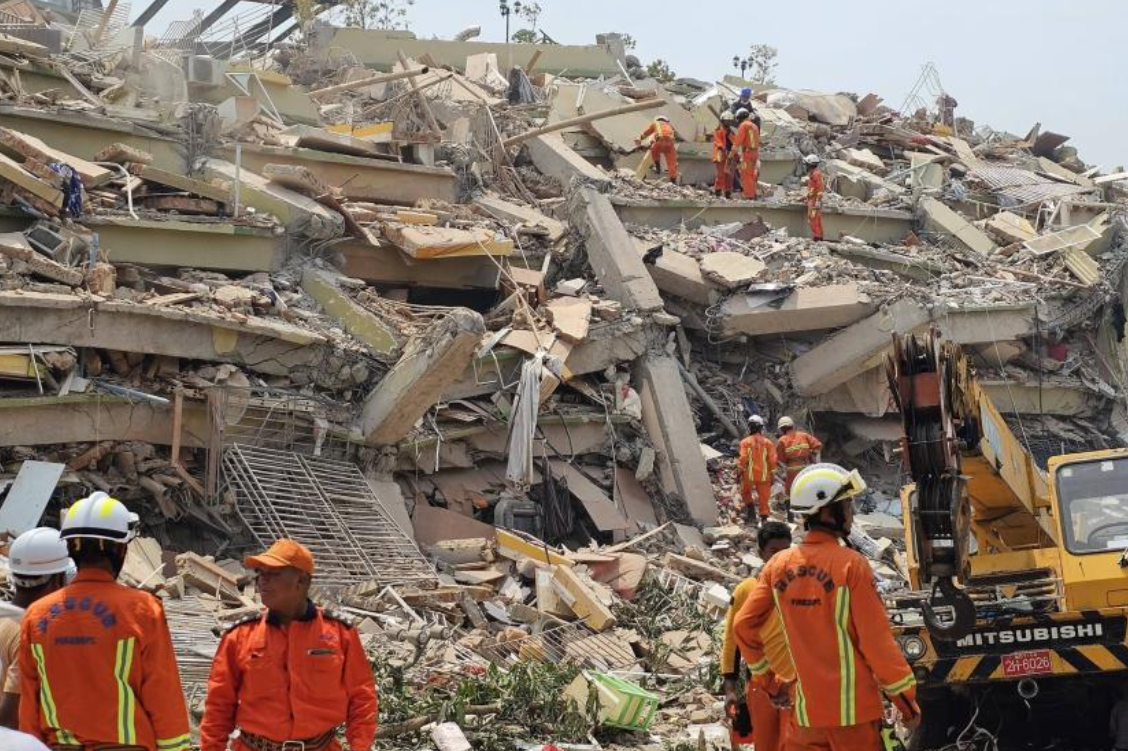
The owner of Sky Villa Condominium in Myanmar has been handed down a five-year prison sentence with hard labour by the Aungmyaythazan Township Court following the structure's collapse during the Mandalay earthquake, which claimed the lives of more than 200 people. U Naing Htun Lin, who owned the 11-storey residential complex, received the conviction under Section 304-A of the Myanmar Penal Code, which addresses causing death through negligence or rash acts.
The legal proceedings commenced when U Naing Htun Lin was formally charged at the Aungmyaythazan Township Court on February 10. Initially, the court granted him bail, permitting him to remain free while the case progressed through the trial phase. This decision reflected standard judicial procedure in Myanmar, where defendants facing non-violent charges are often released pending trial. However, the circumstances of the case prompted a significant change in his legal status.
On March 17, roughly five weeks after his initial appearance, the court made a critical determination to revoke his bail and remand him into custody. This development suggested the prosecution had presented sufficient evidence or raised concerns compelling enough to justify detention without liberty. The transition from bail to custody often indicates judicial concern about flight risk or the severity of allegations being weighed against the defendant.
The criminal case originated from an investigation conducted at the No. (1) Area Police Station in Aungmyaythazan Township, where authorities examined the circumstances surrounding the collapse. The investigation was pursued by U Zaw Moe Aung, a staff officer from the Special Investigation Department, who acted as the plaintiff in the proceedings. On June 23, the court rendered its verdict, imposing the five-year hard labour sentence following what court officials described as a comprehensive trial process.
The Sky Villa complex was situated between 21st and 22nd Streets on 60th Street in Aungmyaythazan Township. When the Mandalay earthquake struck, the building became one of the most devastating casualties of the disaster, with more than 200 bodies recovered from the rubble. This made the Sky Villa collapse among the deadliest structural failures associated with the seismic event, underscoring the catastrophic consequences of the building's failure to withstand the earthquake's forces.
The construction of Sky Villa had been undertaken by NTL Construction Company, headed by U Naing Htun Lin as managing director. This dual role—as both the building's owner and principal figure in the construction enterprise—placed him at the centre of responsibility investigations into potential construction deficiencies or negligent oversight. Building codes and construction standards in Myanmar have long been areas of concern for structural engineers and urban planners, particularly regarding seismic resilience and safety compliance.
Following the tragedy, the family and associates of U Naing Htun Lin, including his wife Daw Thet Thet Khine, initiated a series of reconciliation ceremonies at a monastery pavilion located on 19th Street in Mandalay. These three separate ceremonial events served multiple purposes within Myanmar's cultural and social framework, functioning as formal apologies to the families of deceased victims. The gatherings represented an attempt to address the human and spiritual dimensions of the disaster beyond the strictly legal proceedings.
During these ceremonies, the group provided monetary compensation totalling 10 million kyats to the family of each person killed in the Sky Villa collapse. This gesture, while substantial in Myanmar's economic context, reflected customary practices of acknowledging grievance and attempting restitution following tragic incidents. However, such compensation mechanisms remain controversial internationally, as they cannot restore lost lives or fully address the families' suffering and loss.
The case has not reached finality despite the June 23 sentencing. According to court officials, the Aungmyaythazan District Court has requested the case file for review under Criminal Revision Case No. 39Ka/2026, initiating a higher-level examination of the trial proceedings and verdict. This appellate mechanism allows superior courts to scrutinise whether proper legal procedures were followed and whether the sentence was appropriate under Myanmar law.
Both the prosecution and defence are actively pursuing appeals and revision proceedings related to the verdict. This continuing legal battle reflects the complexity and significance of the case within Myanmar's judicial system. The defence may argue procedural irregularities or challenge the sufficiency of evidence supporting the negligence conviction, whilst prosecutors might contend that the sentence is inadequate given the scale of loss and destruction.
For regional observers, the Sky Villa case illustrates ongoing challenges in Southeast Asia regarding building safety standards, earthquake preparedness, and accountability mechanisms in construction-related disasters. Myanmar's justice system faces significant pressure to demonstrate that corporate and individual responsibility for structural failures resulting in mass casualties will be pursued rigorously. The outcome of the ongoing appeals and revision proceedings will provide important signals about how Myanmar addresses catastrophic infrastructure failures and whether convictions for building-related deaths are upheld on review.

