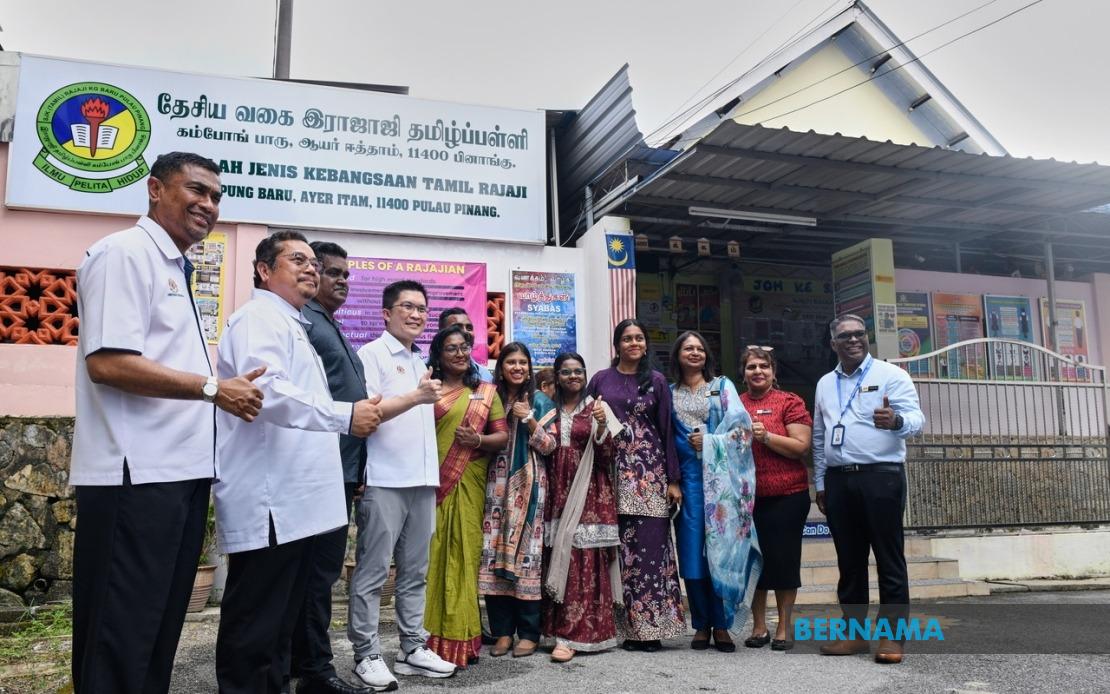
The Education Ministry has granted approval for SJKT Rajaji in George Town to construct a new RM8 million building at a dedicated site in Farlim, Bandar Baru Ayer Itam, marking a significant milestone for the institution that has served the Tamil-speaking community for over seven decades. Deputy Education Minister Wong Kah Woh announced the development after presenting the formal approval letter, signalling the culmination of a multi-year effort to secure better educational facilities for the school and its students.
The current campus has become severely constrained, with approximately 100 pupils operating within facilities never designed to accommodate modern educational needs. This space crunch has forced the school to deliver instruction in suboptimal conditions, limiting classroom configurations, extracurricular programmes, and student development activities. By relocating to the new site, SJKT Rajaji will gain significantly improved infrastructure that can support comprehensive educational delivery and foster a conducive learning environment for Tamil-medium education in Penang.
The relocation process has been methodical, with the Penang state government approving a 2.3-acre plot of land in Farlim in 2022, positioned approximately 500 metres from the school's current location. This proximity allows for a managed transition while giving the institution fresh operational beginnings. The school's board of governors formally submitted a relocation application to the Education Ministry last year, which was subsequently approved once all outstanding coordination with local authorities had been resolved—a process highlighting the bureaucratic clearances required for such initiatives.
Construction timelines indicate that building works will span 18 months, with SJKT Rajaji expected to commence operations at the new campus by the 2029 academic session at the latest. This extended runway allows for proper planning of the transition, staff preparation, and infrastructure readiness. The deliberate pacing also reflects realistic construction scheduling for a project of this magnitude, ensuring quality workmanship rather than rushed completion that might compromise facility standards.
A distinctive feature of the project is its funding mechanism: the entire RM8 million cost will be underwritten by a private developer through its corporate social responsibility framework. This public-private partnership arrangement exemplifies how commercial entities can contribute meaningfully to educational infrastructure without placing additional fiscal strain on government budgets. Such collaborations are increasingly important in Malaysia's education landscape, where demand for facility upgrades often exceeds available public resources.
Datak Seri S. Sundarajoo, who chairs both the State Housing and Environment Committee and the Penang Tamil Schools Special Committee, contextualised this development within Penang's broader commitment to Tamil-medium education. The state operates 28 Tamil national-type schools, many of which require attention to facility standards, land security, and physical plant improvements. Rather than addressing these needs sporadically, Penang has adopted a staged approach to systematically upgrade its Tamil school network.
Groundbreaking ceremonies for at least three additional SJKT projects are scheduled to commence during the current year, reflecting accelerated momentum in the state's Tamil education development agenda. Beyond new construction, Penang is simultaneously reviving several stalled initiatives, including major undertakings at SJKT Sungai Bakap and SJKT Juru. This multipronged strategy suggests a coordinated effort to ensure that Tamil-speaking students across Penang benefit from comparable facility standards and educational quality.
The significance of this development extends beyond SJKT Rajaji itself. Tamil national-type schools throughout Malaysia have historically faced infrastructural challenges, with many operating from aging buildings or shared facilities. Penang's visible commitment to upgrading Tamil education signals that these institutions merit comparable investment to their Malay-medium and English-medium counterparts. For other states wrestling with similar challenges, the SJKT Rajaji model—leveraging developer CSR funding while securing government approval—offers a replicable template.
Moreover, this initiative responds to longer-standing questions about the sustainability and viability of mother-tongue education in Malaysia. By investing in contemporary facilities, Penang demonstrates institutional confidence in Tamil-medium schooling as a legitimate educational choice worthy of modern infrastructure. This sends a message to Tamil-speaking families that their preferred medium of instruction remains valued and supported, even as Malaysian education navigates linguistic and demographic transitions.
The project's completion by the 2029 academic session aligns with broader national education planning cycles. Students currently enrolled at SJKT Rajaji will experience the benefits of the new facility during their secondary school years, while the improved campus may attract additional enrolment from families seeking quality Tamil-medium education. Enhanced facilities often serve as catalysts for increased community engagement and student achievement metrics.
For Malaysian readers, particularly in Penang, this approval represents tangible progress in addressing educational equity. Tamil national-type schools constitute an integral component of Malaysia's multicultural education ecosystem, and their facility upgrades deserve recognition alongside investments in other school categories. As Penang implements this RM8 million project and its accompanying initiatives, it establishes benchmarks that other state education authorities may reference when planning infrastructure improvements for their own minority-language institutions.