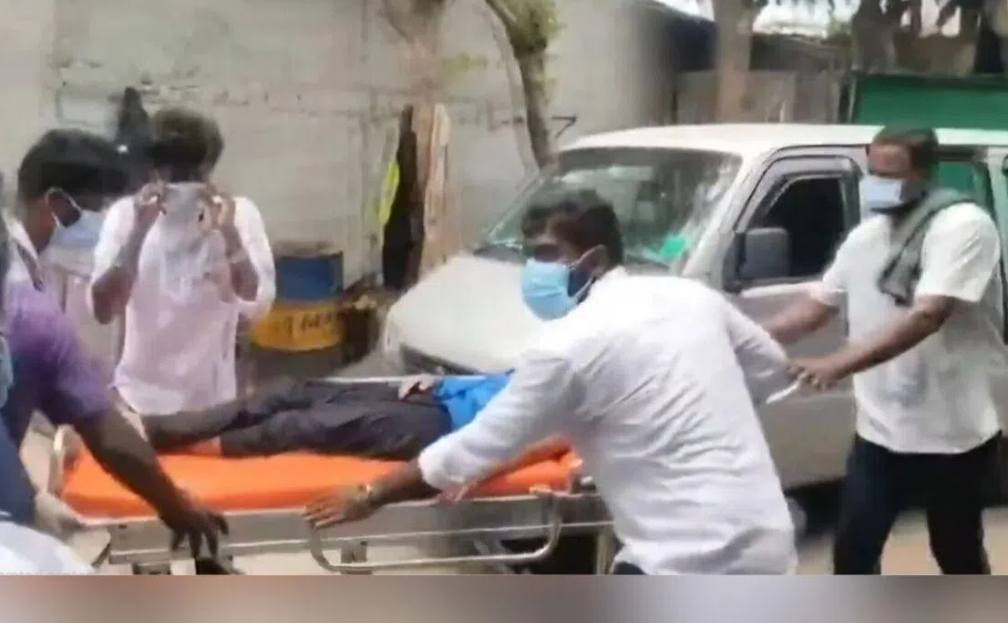
A catastrophic industrial accident unfolded at a seafood export facility near Periyapalayam village in Tamil Nadu's Thiruvallur district on Sunday, claiming the lives of at least six workers and leaving many others fighting for survival in nearby hospitals. The incident has reignited concerns about workplace safety standards in India's food processing sector, where migrant labourers often work under precarious conditions with limited protections. The tragedy strikes a chord across South Asia, where similar industrial mishaps in Bangladesh, Pakistan, and other regional neighbours have exposed systemic gaps in occupational health enforcement.
Approximately 120 migrant workers were present at the processing unit when the catastrophic leak developed, with the workforce comprising predominantly women from states including Assam, Odisha, and Jharkhand. The composition of this workforce reflects broader patterns of labour migration within India, where workers from poorer eastern and northeastern states travel long distances to industrial zones in the south seeking employment. Many of these labourers lack formal employment contracts, proper training, or access to reliable safety information, making them especially vulnerable when industrial emergencies occur.
Investigators have identified the facility's refrigeration or processing systems as the probable source of the ammonia discharge, though the precise mechanism remains under examination. Ammonia is a widely used industrial refrigerant in food processing because of its efficiency and low cost, but it poses extreme health hazards at high concentrations. The gas dispersed rapidly through portions of the plant, creating an immediate threat to everyone in proximity. Workers exposed to the vapours experienced severe respiratory distress, vertigo, and tissue irritation, with some suffering haemorrhaging from the mouth and nostrils—a sign of dangerously concentrated exposure levels.
The panic and chaos that erupted as workers fled the contaminated environment created secondary dangers. Some individuals collapsed while attempting to escape, while others were trampled or blocked from reaching exits. First responders, including police units and emergency medical teams, arrived on scene and coordinated rapid evacuation efforts. Ambulances transported the injured to regional hospitals, where medical staff confronted the challenge of treating multiple patients suffering simultaneous ammonia inhalation injuries, a condition requiring specialized respiratory support and intensive monitoring.
Tamil Nadu Chief Minister C. Joseph Vijay responded swiftly by issuing directives to ensure comprehensive medical care for all affected workers. Beyond the immediate health response, he initiated a formal inquiry mechanism to establish accountability and identify preventive measures. The chief minister constituted a three-member investigation committee tasked with scrutinizing the accident's underlying causes within a compressed 24-hour timeline. This accelerated schedule reflects the political sensitivity surrounding industrial fatalities and the public demand for transparent accountability.
The investigation framework encompassing safety protocols, maintenance schedules, and potential regulatory breaches represents standard procedure following such incidents in India. However, critics of industrial regulation argue that inquiry committees often lack resources, independence, and enforcement power to implement meaningful reforms. In many cases, findings remain shelved or recommendations go unenacted for years. The committee's examination will need to assess whether the facility had proper ammonia detection systems, emergency ventilation procedures, worker training programmes, and medical response protocols—the essential infrastructure that separates functional safety cultures from negligent operations.
Law enforcement has registered formal charges, initiating criminal investigations that may extend beyond immediate workplace safety violations. Prosecutors will likely examine whether management awareness of existing hazards, deferred maintenance, understaffing, or corner-cutting in safety investments constituted criminal negligence. The prospect of penal action, while providing deterrent value, often proves insufficient when enforcement remains inconsistent across India's thousands of industrial facilities.
The accident highlights the structural vulnerabilities embedded within India's food processing and export sector. Companies competing in tight global markets often prioritize cost reduction over safety investments, knowing that regulatory oversight remains patchy and penalties for violations are typically modest. Migrant workers, unfamiliar with their surroundings and often isolated from family support networks, possess minimal bargaining power to demand safer conditions. Language barriers, documentation issues, and economic desperation create conditions where workers tolerate hazardous environments rather than risk employment loss.
For Malaysian readers and Southeast Asian observers, this tragedy underscores the interconnected nature of regional labour movements and industrial standards. Many Malaysian food processing and manufacturing facilities employ migrant workers from South Asia under similar vulnerability conditions. The incident serves as a cautionary reminder that safety cannot be compromised regardless of production pressures or cost considerations. It demonstrates why regional labour-standard harmonization and cross-border worker protections remain critically important for economic justice and humanitarian grounds across Southeast Asia.
The broader implications extend to consumer awareness and corporate responsibility within global supply chains. Retailers and importers purchasing seafood products from processing units must recognize that safety failures carry human costs measured in lives and suffering. Increased due diligence regarding supplier facility conditions, worker welfare protocols, and safety certifications could incentivize higher standards throughout the sector. International buyers increasingly face reputational and legal consequences for sourcing from facilities with documented safety violations, creating market-based pressure that complements regulatory enforcement.

