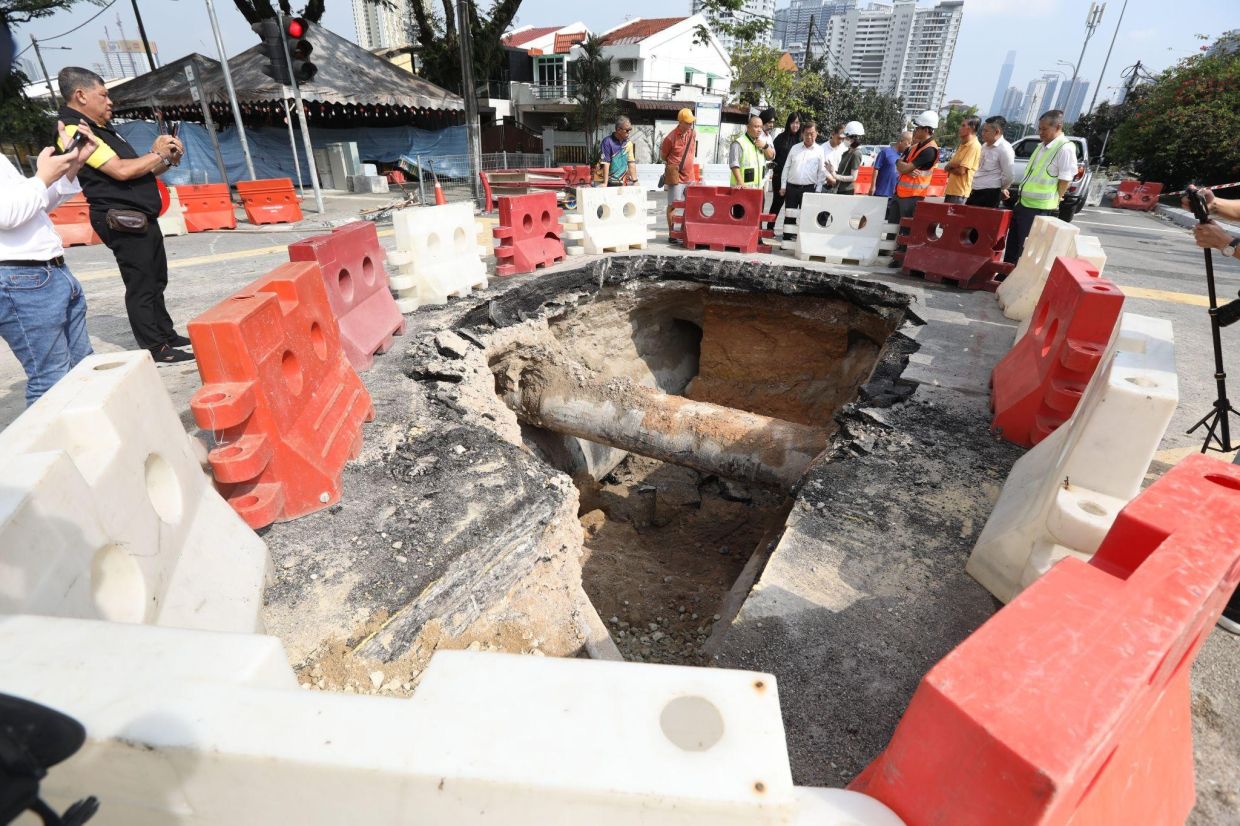
The rising frequency and intensity of extreme weather events across Malaysia is placing unprecedented stress on the nation's underground sewerage infrastructure, with sinkholes emerging as a growing public safety concern. As climate patterns shift and rainfall episodes become more severe and unpredictable, the vulnerabilities of ageing sewer networks are being exposed, prompting the country's sewerage management authority to take decisive action. Indah Water Konsortium (IWK), which operates and maintains the bulk of Malaysia's public sewer systems, is implementing a comprehensive risk-management framework to mitigate sinkhole hazards and ensure the long-term resilience of this critical infrastructure.
Sinkhole formation is rarely attributable to a single cause, but rather emerges from the convergence of multiple risk factors. Natural geological conditions beneath the surface, the movement of groundwater, the disruption caused by construction projects, and the deteriorating state of underground pipes and pipelines all contribute to the phenomenon. Each incident presents a unique combination of circumstances, meaning that identifying the precise trigger demands rigorous technical investigation and forensic analysis. For a nation with expanding urban centres and intensifying climate impacts, understanding these mechanisms has become essential to infrastructure planning and public protection.
IWK's responsibility spans approximately 22,500 kilometres of public sewer pipelines distributed across Malaysia, a vast network that requires systematic oversight and targeted intervention. The operator has prioritised large-diameter reinforced concrete trunk sewers measuring 600 millimetres and above, which function as the backbone of municipal sewerage systems. These critical conduits typically operate under severe stress, carrying sewage flows at or near maximum capacity while being subjected to high flow velocities that place continuous strain on structural integrity. Over extended periods, hydrogen sulphide gas accumulates within these large pipes, generating a corrosive environment that gradually weakens concrete, hastening deterioration and increasing the likelihood of catastrophic failure.
To counteract these risks, IWK has adopted an inspection regime utilising cutting-edge diagnostic technologies tailored to diverse operational environments. Ground Penetrating Radar systems can detect subsurface anomalies without excavation, whilst CCTV crawler inspections provide detailed visual documentation of internal pipe conditions. Push rod cameras and pole cameras offer alternative assessment methods suited to different accessibility constraints and operational circumstances. By conducting periodic condition assessments on high-priority sewer assets, IWK gathers data that informs targeted rehabilitation decisions, enabling the operator to allocate resources toward pipes most at risk of failure.
When inspection findings reveal structural compromise, IWK deploys rehabilitation technologies including trenchless sewer lining, which reinforces existing pipes without extensive excavation, or full replacement of severely defective sections. These interventions restore structural integrity, reduce failure likelihood, and extend asset lifespan whilst minimising disruption to communities and traffic networks. The proactive approach stands in contrast to reactive crisis management, where emergency repairs following pipe failure prove costlier, more disruptive, and potentially more dangerous to public safety.
According to IWK chief executive officer Narendran Maniam, the relationship between extreme weather patterns and underground infrastructure performance has become increasingly apparent as Malaysia's climate becomes more volatile. Heavy rainfall destabilises soil by increasing saturation, causing ground shifting that can displace or misalign sewer pipes, leading to blockages and structural breaks. Simultaneously, intense rainfall dramatically elevates water pressure within sewer lines, creating hydraulic forces that crack or rupture pipes, necessitating full-line replacement. The cumulative effect of prolonged saturation weakens soil whilst ageing pipes face compounding pressure, creating conditions conducive to failure.
When saturated ground loses structural support and pipes crack or fail, surrounding soil gradually washes away into the void spaces created by leaking sewage and infiltrating water. As these underground cavities expand over time, the ground above loses the support needed to sustain its own weight, eventually triggering sudden surface collapse that forms a sinkhole. Beyond the dramatic visual impact, sinkholes pose acute risks to public safety, damage road pavements and nearby buildings, and disrupt community life. The economic costs of remediation, combined with potential casualties and property loss, underscore the importance of prevention.
Heavy rainfall complicates sewer system operation by introducing substantial volumes of stormwater through cracks, deteriorated joints, and manhole openings. This uncontrolled water ingress overloads sewerage networks designed primarily for sanitary sewage, placing additional stress on systems already operating near capacity. Older pipe sections prove particularly vulnerable to the accumulated effects of ground movement, cracking, and material degradation. As Malaysia's climate continues its shift toward greater extremes, the case for maintaining resilient infrastructure and preparing for emergency scenarios has become compelling.
Recognising these escalating threats, IWK recently conducted a comprehensive Crisis Simulation Exercise at its Asian Sewerage Training, Research & Innovation Centre of Excellence (ASTRICE). The scenario replicated a major sinkhole incident involving casualties and substantial damage to large-diameter sewer infrastructure, testing IWK's ability to mobilise operational teams, execute crisis management protocols, and coordinate with the Fire and Rescue Department, Royal Malaysia Police, and other government agencies. The controlled exercise permitted evaluation of response procedures, identification of coordination gaps between teams and organisations, and refinement of decision-making processes under high-pressure conditions.
Narendran emphasised that such exercises provide invaluable opportunities to stress-test systems and strengthen collaborative relationships with emergency responders. The simulation findings informed enhancements to IWK's crisis management standard operating procedures, ensuring that personnel throughout the organisation understand their assigned roles and responsibilities during emergencies. By conducting exercises in controlled settings, IWK can identify weaknesses and implement improvements without the risks and costs associated with responding to actual incidents. The approach reflects a broader industry shift toward preparedness and resilience planning.
As extreme weather events intensify with climatic change, proactive preparedness has moved from an aspirational goal to an operational necessity. IWK's multifaceted strategy—combining advanced asset inspection, targeted rehabilitation, crisis simulation training, and inter-agency coordination—represents a sophisticated response to emerging infrastructure challenges. The operator's commitment to continuous planning and collaboration with emergency management agencies positions Malaysia's sewerage system to withstand increasing climate pressures whilst maintaining service reliability and protecting public safety, even as weather patterns grow more unpredictable.

