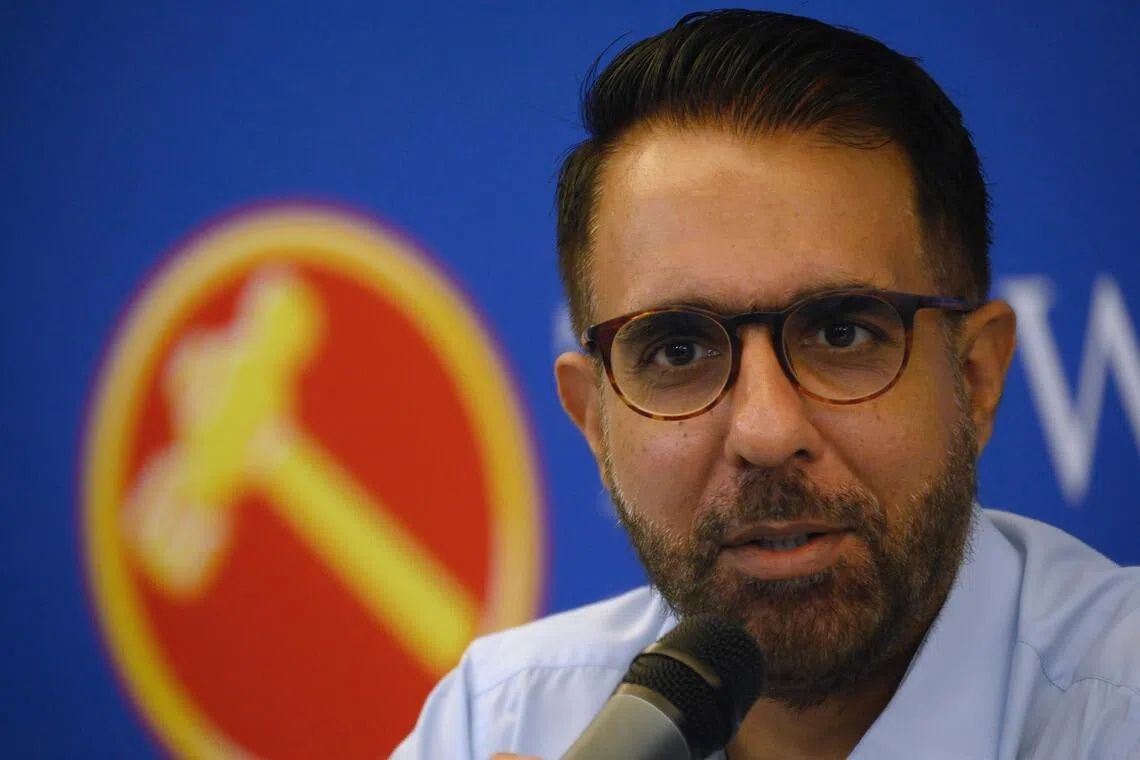
A power struggle is brewing within Singapore's Workers' Party as a faction of cadres mobilises to remove Pritam Singh from his position as secretary-general, capitalising on fallout from his High Court conviction for providing false testimony to a parliamentary committee. The challenge will culminate at internal elections scheduled for June 28, where slightly more than 100 party cadres will vote on the opposition party's leadership direction. Singh has held the role unchallenged for eight years, making this the first credible threat to his tenure since his elevation to the party's top post.
The push for Singh's removal crystallised following a December 2025 court decision that upheld his conviction related to the handling of false statements made by former Sengkang GRC member Raeesah Khan in Parliament. A formal letter of reprimand issued two months later—alleging that Singh had breached the party's constitution—intensified demands from party insiders that he step down. Twenty-five cadres, including former central executive committee members and election candidates, formally requested a special conference to address the matter, signalling organised dissent rather than scattered grumbling.
The mechanics of the June 28 showdown involve two separate meetings. The first will be a special cadres' conference at which Singh must answer questions about his conduct preceding the conviction. If he does not resign voluntarily during this session, members have called for a secret ballot to determine his future. The party will then proceed to its regularly scheduled biennial conference for electing the full slate of leadership positions, including the secretary-general post. Singh remains technically eligible to contest even if ousted at the first meeting, creating possibilities for dramatic reversals or continued conflict.
The search for a viable challenger has intensified behind the scenes, though party insiders remain circumspect about their efforts. Those approached for soundings include established names such as Aljunied GRC MP Gerald Giam and Hougang MP Dennis Tan, as well as Sengkang GRC representatives He Ting Ru and Jamus Lim—three of whom served on the disciplinary panel that concluded Singh had breached party rules. Despite these feelers, no candidate has publicly declared an intention to run, a reticence that party sources attribute to fears of disciplinary action against outspoken critics. The fluid nature of the situation means shifts could occur right up to voting day.
Former party chief Low Thia Khiang, who led the Workers' Party from 2001 to 2018 and engineered its breakthrough GRC victory in 2011, emerges as a pivotal figure in this succession drama. While Low remains on the party's central executive committee, speculation swirls that he has withdrawn backing from Singh, reportedly voting against him during recent discussions of the disciplinary panel's findings. No expectation exists that Low will himself contest the leadership, but cadres recognise his considerable influence over party veterans—many of whom now support Singh's removal. Insiders calculate that Low's endorsement of an alternative candidate, combined with roughly thirty dissatisfied cadres, could muster sufficient votes to unseat the incumbent. This mirrors a 2016 challenge to Low himself, when former Aljunied MP Chen Show Mao mounted an unsuccessful bid backed by some of these same veterans.
The grievances fuelling the revolt extend beyond Singh's legal troubles. Dissident cadres argue that his conviction fundamentally undermines the Workers' Party's carefully cultivated brand as the principled opposition force offering voters something substantively different from the ruling establishment. As one anonymous cadre framed the concern: the party derives electoral support precisely because voters believe the Workers' Party will uphold higher standards of integrity. When the party's own leader stands convicted of misleading parliament, that moral distinction collapses, leaving the organisation vulnerable to accusations of hypocrisy and weakening its appeal to reform-minded voters.
Electoral performance has also become a flash point. The party's showing at the 2025 general election disappointed cadres who believed the party's strengthened slate should have captured additional constituencies. Instead, the Workers' Party gained no ground, a failure some attribute to strategic missteps including Singh's decision to withdraw from Marine Parade-Braddell Heights GRC on Nomination Day. These setbacks compound dissatisfaction rooted in Singh's handling of the Khan affair, in which he failed to demand immediate clarification when she introduced false anecdotes during parliamentary debate in August 2021. Her admission came only in November that year—a delay that parliamentary and judicial inquiries determined Singh had actively managed.
The party's loss of formal parliamentary prominence adds another dimension to cadre unhappiness. Prime Minister Lawrence Wong stripped Singh of his Leader of the Opposition designation in January 2026, effectively sidelining the Workers' Party from the ceremonial but symbolically significant role of leading organised parliamentary scrutiny. When the government invited the party to nominate another elected MP to assume the position, the Workers' Party declined, choosing instead to maintain solidarity with Singh. Some cadres have privately questioned this decision, viewing it as self-defeating and ultimately harmful to broader opposition interests in parliament. This defensive posture contrasts with the more assertive approach the party pursued during earlier leadership transitions.
The upcoming contest operates within specific constitutional parameters that could affect outcomes. Any cadre in good standing may run or nominate another, and Singh requires only a simple majority to retain his position should a challenger emerge. The party has confirmed that his convictions do not automatically disqualify him from seeking re-election. If Singh steps down or loses the initial vote, he remains eligible to contest again at the biennial conference. This dual-meeting structure introduces possibilities for tactical manoeuvring: cadres opposed to Singh might vote differently depending on first-round outcomes, and ambitions could shift if initial results suggest either overwhelming support or genuine vulnerability.
For regional observers, the Workers' Party struggle carries implications beyond Singapore's internal opposition politics. The party represents one of Southeast Asia's few credible alternative voices in an otherwise stable-but-authoritarian political landscape, and its ability to project unity and competence affects how regional democracy advocates evaluate opposition prospects across the broader region. An internal implosion could reinforce narratives about opposition fragility, while successful navigation of succession might demonstrate institutional resilience. The June 28 vote will reveal whether institutional mechanisms can manage leadership transitions without fracture, or whether conviction and electoral disappointment prove sufficient catalysts for fundamental change in how Singapore's most established opposition party governs itself.

