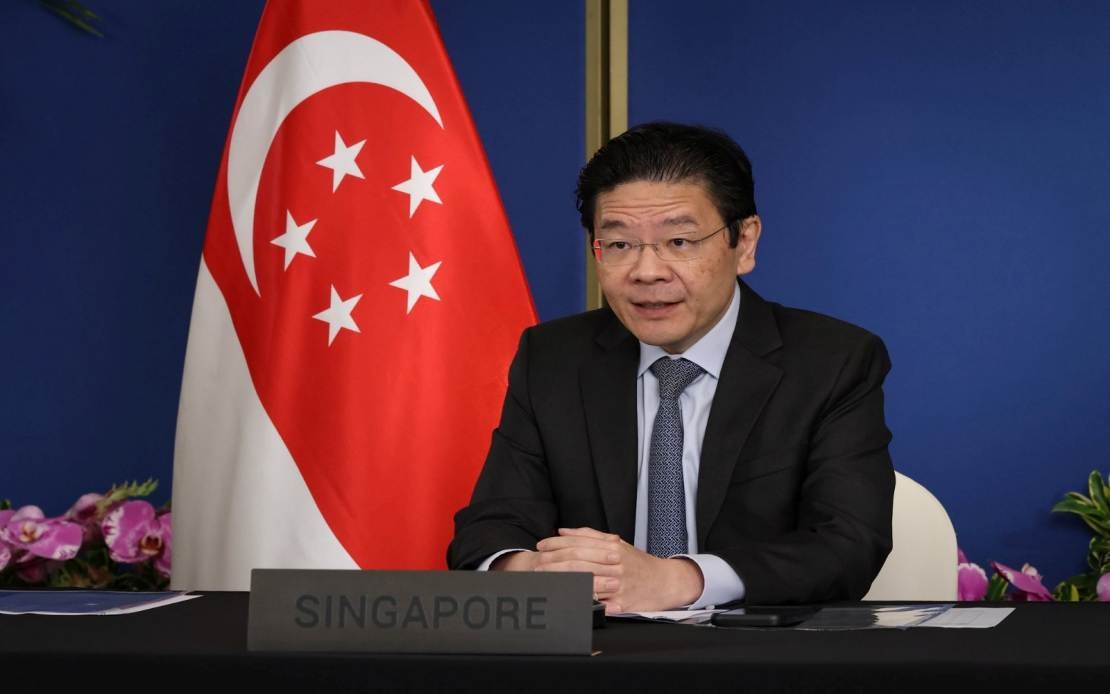
Singapore Prime Minister Lawrence Wong has unveiled a substantial restructuring of his Cabinet, signalling a deliberate shift towards nurturing a new generation of political leaders while preserving institutional continuity. The reshuffle, announced on Wednesday and largely taking effect from July 27, represents Wong's strategic approach to balancing youthful dynamism with accumulated experience at the highest levels of government. The moves underscore Singapore's ongoing management of political succession and its commitment to ensuring smooth transitions in leadership across multiple ministries.
Among the most significant elevations in the reshuffle, K. Shanmugam has been appointed Senior Minister while retaining his existing responsibilities as Coordinating Minister for National Security and Minister for Home Affairs. This promotion positions Shanmugam as one of only two Senior Ministers in Wong's Cabinet, alongside Senior Minister Lee Hsien Loong. The arrangement reflects Wong's intention to leverage the institutional knowledge and gravitas of these veteran figures, who are expected to serve as key advisors and mentors to younger office-holders navigating complex policy challenges. Wong emphasised at a press conference that these senior figures would continue providing strategic counsel and guiding the next tier of leadership, a critical function in a system where experience and relationships form the backbone of effective governance.
A notable structural innovation involves the reorganisation and renaming of the Ministry of Trade and Industry. From October 1, this ministry will be transformed into the Ministry of Energy, Trade, and Industry, reflecting Singapore's intensifying focus on energy security and sustainability. The restructured ministry will be led jointly by Deputy Prime Minister Gan Kim Yong and Tan See Leng, with each minister assuming distinct portfolios. Gan will continue overseeing trade policy and broader economic strategy, while Tan will assume full responsibility for energy and industry matters. Tan's appointment represents a consolidation of his previous roles, as he steps back from the Ministry of Manpower to concentrate entirely on these critical growth sectors. This division of labour suggests Singapore's recognition that managing energy transitions and industrial modernisation now require dedicated executive attention comparable to that afforded trade relations.
The reshuffle brings several officials to the rank of full minister, marking their advancement within the political hierarchy. Jeffrey Siow and David Neo have both been promoted to ministerial positions, with Siow continuing his role as Minister of Transport and Neo maintaining his portfolio as Minister for Culture, Community and Youth. These promotions, though preserving their existing responsibilities, signify organisational confidence in their stewardship and may signal their positioning as potential candidates for broader responsibilities in future restructurings. The stability of their portfolios, meanwhile, reflects a preference for allowing capable ministers to deepen expertise in their domains rather than disrupting ongoing initiatives.
Several officials have assumed expanded portfolios as part of the reshuffle, indicating their growing prominence within government circles. Sim Ann has been promoted to Second Minister of Foreign Affairs and Home Affairs, a dual responsibility that connects her to two of Singapore's most strategically sensitive domains. Jasmin Lau has been elevated to Senior Minister of State for the Ministry of Digital Development and Information while simultaneously becoming Acting Minister of Manpower, reflecting both the priority assigned to digital governance and the need for continuity in labour policy. Goh Pei Ming has similarly ascended to Senior Minister of State roles encompassing the Ministry of Social and Family Development and the Ministry of Home Affairs, positioning her at the intersection of social policy and internal security matters.
The reshuffle also introduces several political office-holders to new assignments within the ministerial structure. Alvin Tan has been appointed Minister of State in the Ministry of Foreign Affairs while retaining his existing post in the Ministry of National Development but relinquishing his role at the Ministry of Trade and Industry. Ng Chee Meng, the Secretary-General of the National Trades Union Congress, has entered the political executive as Minister in the Prime Minister's Office, suggesting the government's intention to maintain close coordination with labour interests at the highest levels. Zhulkarnain Abdul Rahim has been appointed Minister of State in the Ministry of Foreign Affairs and the Ministry of Home Affairs, while Foo Cexiang and Shawn Loh assume ministerial positions in their respective portfolios.
The deliberate infusion of newer faces into ministerial ranks reflects Wong's articulated philosophy of managing generational transition with sophistication. By promoting younger office-holders while maintaining experienced leaders in advisory and coordinating roles, the reshuffle seeks to provide emerging talent with substantive responsibility while preserving the institutional memory and networks that senior figures command. This approach addresses a perennial challenge facing governments: nurturing the next cohort of leaders while ensuring that contemporary policy challenges are managed by seasoned operators familiar with Singapore's complex political economy and regional positioning.
For Malaysia and the broader Southeast Asian region, Singapore's internal political restructuring carries several implications. Singapore's effectiveness in managing economic diversification, energy security, and maintaining regional stability depends significantly on the quality of its executive leadership. The emphasis on promoting competent younger officials while retaining experienced hands suggests confidence in Singapore's institutional capacity to navigate coming challenges, whether regional geopolitical shifts or the energy transition. For Malaysian observers, the reshuffle offers instructive lessons in succession planning and institutional renewal, particularly as regional nations grapple with similar questions about balancing innovation with continuity in public administration.
Wong's framing of the reshuffle emphasises the necessity of marrying youthful energy with seasoned judgment. His statement that Singapore requires both experienced leaders to navigate immediate challenges and a new generation capable of charting future courses reflects a sophisticated understanding of organisational dynamics. This articulation may resonate with policymakers across Southeast Asia confronting comparable transitions. The structural changes to ministry portfolios, particularly the creation of a combined energy and industry ministry, also signal Singapore's strategic priorities as the region confronts climate imperatives and industrial transformation, factors increasingly relevant to Malaysia's own economic planning and energy security calculations.

