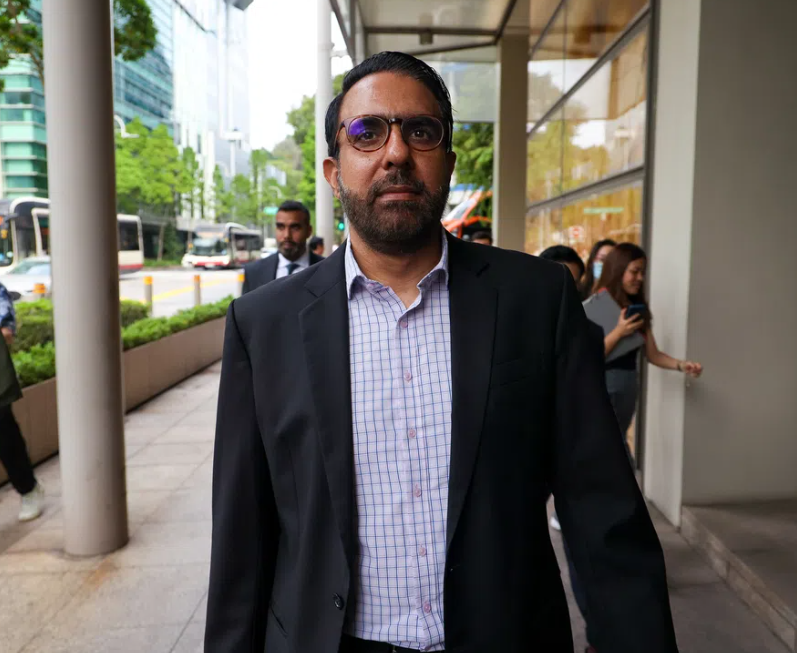
Singapore's Law Society has moved to have Workers' Party chief Pritam Singh removed from the legal profession's register, with disciplinary proceedings scheduled for August 13 before the Court of Three Judges—the highest disciplinary authority for lawyers in the city-state. Singh, who represents Aljunied GRC in Parliament, is a non-practising member of the profession, meaning he does not actively practise law but maintains formal registration with the regulatory body.
The application arises from Singh's conviction in February 2025 on two counts of perjury, following an investigation by Parliament's Committee of Privileges. The underlying matter traces to July 2021, when Workers' Party MP Raeesah Khan made a false statement in Parliament regarding a sexual assault case she claimed was inadequately handled by police. Singh subsequently misled the privileges committee during questioning about his knowledge of Khan's fabrication and his guidance to her concerning the statement.
Despite his legal appeal, Singh's bid to overturn the conviction failed in December 2025 when the High Court upheld the decision, resulting in a S$14,000 penalty. This judicial outcome triggered a mandatory process under Singapore's Legal Profession Act, which requires the Law Society to initiate disciplinary action against any regulated legal practitioner convicted of offences involving fraud or dishonesty. The society has no discretion in this matter—the law explicitly compels such proceedings without requiring further direction or justification.
The disciplinary panel will comprise Chief Justice Sundaresh Menon, Justice Kannan Ramesh, and Justice See Kee Oon, a tribunal empowered to impose sanctions ranging from suspension lasting up to five years to outright removal from the rolls, or financial penalties extending to S$100,000. Legal precedent in Singapore establishes that striking off is the presumptive sanction when misconduct involves dishonesty, creating a substantial hurdle for Singh to remain registered unless the court identifies exceptional circumstances warranting departure from this principle.
Singapore's courts have consistently applied this standard in recent cases. In July 2026, a lawyer convicted of deceiving police during a drink-driving investigation was removed from the rolls after the court determined no exceptional grounds existed to avoid the presumptive penalty. This pattern suggests Singh faces an uphill battle, as his conviction involves deliberate misstatement to a parliamentary body rather than inadvertent error or technical breach. The gravity of misleading Parliament's own oversight mechanism appears unlikely to be viewed as meriting leniency in a legal ethics context.
For Malaysian observers, the case underscores how Commonwealth jurisdictions with mature legal systems enforce professional discipline through independent regulators insulated from political influence. The Law Society's mandatory obligation to proceed, regardless of Singh's party position, reflects institutional independence that prevents political connections from shielding lawyers from accountability. Such structural safeguards remain aspirational in some regional jurisdictions where professional bodies face pressure to accommodate prominent figures.
The disciplinary action also illustrates the consequences that public figures face when occupying dual roles as politicians and professionals. Singh's status as a non-practising lawyer initially shielded him from day-to-day consequences, yet his registration made him subject to profession-wide standards of conduct. The distinction between active and inactive practice proved immaterial to the Law Society's enforcement obligations, suggesting that professional registration itself carries enduring ethical weight regardless of current engagement level.
Within the Workers' Party itself, organizational discipline preceded the legal proceedings. In April 2025, following Singh's court conviction, the party's central executive committee issued a formal reprimand after finding he had breached two constitutional provisions. This internal accountability measure, while significant for party governance, proved separate from and insufficient to forestall the Law Society's independent action—a separation that reinforces the autonomy of professional regulatory frameworks from political party structures.
The August 13 hearing arrives at a critical juncture for Singapore's political landscape, where public trust in institutions remains central to governance legitimacy. The Law Society's willingness to pursue removal proceedings against a senior opposition politician, despite potential controversy, demonstrates the regulatory body's commitment to professional standards as non-negotiable. Conversely, should the court ultimately strike Singh off, it would represent a rare instance of a sitting MP losing professional credentials due to a parliamentary-related offense, an outcome with potential ramifications for political culture across Southeast Asia.
For regional legal communities, the case presents instructive lessons about the intersection of political office and professional responsibility. Unlike jurisdictions where legislative immunity extends to statements made in parliamentary chambers, Singapore's approach holds elected representatives accountable to the same ethical standards governing the legal profession. This principle carries particular resonance in Malaysia, where questions about professional accountability for politician-lawyers periodically surface in public debate, offering a comparative framework for evaluating how different systems balance political privilege against professional discipline.

