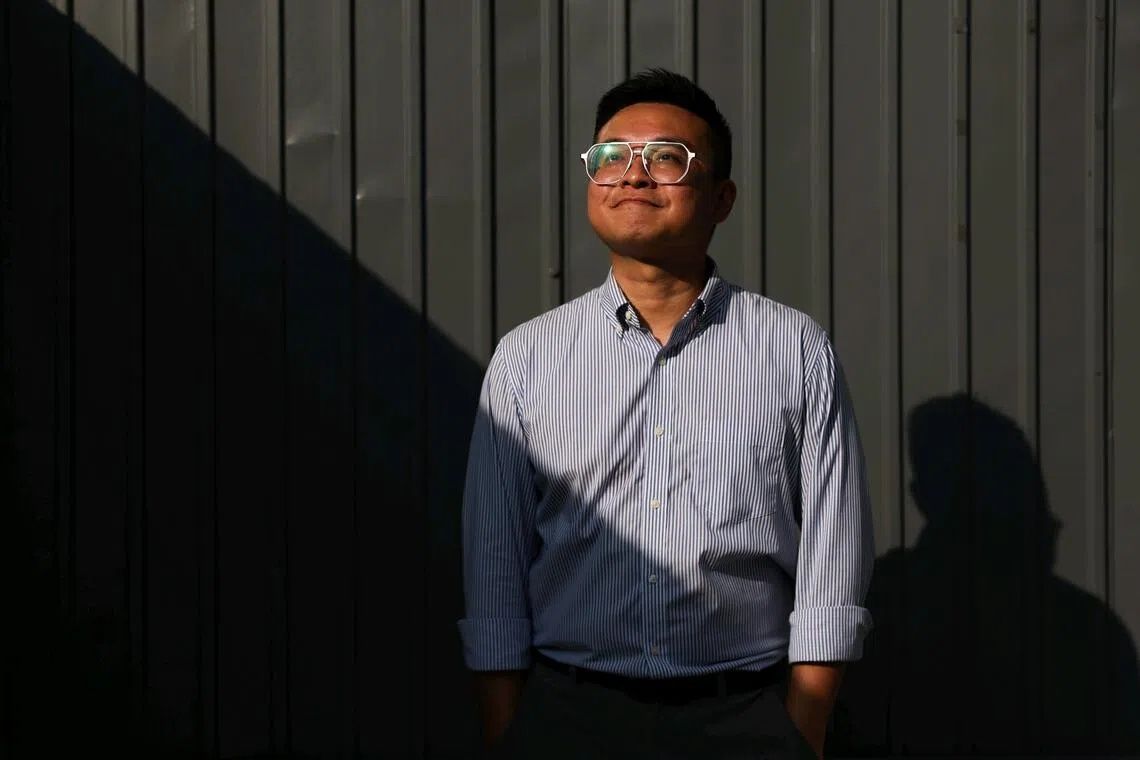
Singapore's drug rehabilitation landscape is increasingly populated by an unexpected demographic: successful professionals with degrees, prestigious job titles, and stable incomes. The story of Cornelyus Tan, a 37-year-old marketing executive who spent six months at Changi Prison's Drug Rehabilitation Centre after his arrest in 2022, epitomises a growing phenomenon that challenges conventional wisdom about addiction. During his detention, Tan encountered teachers, lawyers, bankers and other white-collar workers grappling with the same substance dependency issues, prompting him to reflect on what united them: not career success or educational credentials, but deeper emotional struggles that achievement could not resolve.
Statistical evidence reinforces what rehabilitation counsellors have increasingly observed on the ground. Singapore Prison Service data reveals that in 2025, approximately 293 inmates in the DRC possessed tertiary qualifications or higher—a significant jump from 204 individuals in 2021. This cohort now represents roughly one in ten newly admitted detainees, compared with 8.8 per cent four years earlier. Their educational backgrounds span the spectrum from polytechnic diplomas through to doctoral degrees, indicating that drug dependency respects no academic threshold. While the Central Narcotics Bureau points out that tertiary-educated offenders remain proportionally under-represented relative to Singapore's overall population growth in educational attainment, the upward trajectory is undeniably concerning and warrants serious examination of underlying causes.
The contextual backdrop for understanding this trend lies in Singapore's transformation into one of Asia's most educated societies. Over the past decade, the proportion of residents aged 25 and above with at least tertiary education has climbed from 42.9 per cent to 54.5 per cent. As a population becomes more educated, it logically follows that drug-dependent populations will contain more educated individuals. Yet this statistical reality masks a deeper shift: the longstanding assumption that education and professional success serve as protective factors against substance abuse is demonstrably insufficient. Counsellors and addiction specialists increasingly recognise that drug use fundamentally transcends socioeconomic boundaries and educational achievement, affecting individuals from all strata of society with equal indifference to their résumés or salary levels.
Technology has fundamentally altered the accessibility landscape for illicit substances in ways that previous generations of drug peddlers could never have imagined. Whereas addiction historically spread through localised personal networks—family members with substance histories, neighbourhood dealers, or chance encounters at venues—the digital age has democratised drug distribution. Messaging platforms like Telegram host dedicated channels openly marketing contraband, requiring potential users only an internet connection and basic digital literacy. Senior counsellor Gopal Mahey at the Centre for Psychotherapy notes that the global drug market has simultaneously expanded and refined its product offerings, flooding markets with synthetic substances like methamphetamine that carry particular appeal for high-performing professionals seeking cognitive enhancement or stress relief. The removal of traditional geographical and social friction points in drug acquisition has created unprecedented opportunity for educated professionals to access substances without the telltale signs—criminal associations or marginal social positioning—that once accompanied drug involvement.
Beyond mere accessibility, multiple reinforcing factors converge to make drug experimentation attractive to well-educated individuals navigating contemporary professional and social environments. Peer influence remains potent regardless of educational level, and exposure to entertainment industry figures who aestheticise or minimise drug consequences carries disproportionate weight in image-conscious professional circles. Social media amplification of glamorous drug narratives, combined with exposure to more permissive drug cultures through overseas travel or international professional networks, normalises experimentation among those who might otherwise consider such behaviour beneath their aspirational identity. These environmental pressures operate on psychological terrain where educated professionals may paradoxically feel greater confidence in their capacity to control substance use, leading them to underestimate addiction's inexorable progression. Such overconfidence in self-regulation capacity distinguishes their initial engagement from that of other populations, even as the neurochemical reality of addiction remains indifferent to educational credentials.
Tan's personal trajectory illuminates how professional high-performers can initially perceive drugs not as a problem but as a solution to the demands they face. First introduced to methamphetamine at a house party in 2014 while pursuing arts education, he described the substance as producing a "Superman effect"—an adrenaline surge that heightened creative thinking, boosted professional output, and delivered a sense of invincibility. When a news outlet profiled him as a promising young photographer the following year, the drug appeared to correlate with career ascendancy, creating dangerous positive reinforcement. After quitting the substance for several years following recognition of its physical toll—weight loss and profuse perspiration—Tan's relapse in 2020 occurred under the pressurised conditions of a regional marketing manager role in an e-commerce firm. The chemical voice in his mind whispered that methamphetamine had previously delivered solutions; surely it could again, even as the substance's grip tightened around his functioning.
Methamphetamine, alongside cannabis, Ecstasy, and heroin, ranks prominently among drugs abused by tertiary-educated individuals arrested in recent years. The appeal of methamphetamine specifically among educated professionals reflects its reputation as a productivity enhancer—a narrative that particularly resonates with high-achieving individuals already disposed toward self-optimisation through exercise, supplements, and professional development. Samuel Chua, principal counsellor at the Institute of Mental Health's National Addictions Management Service, emphasises that educated professionals seeking substance relief are fundamentally no different from other addicts in their underlying motivation: the desire to escape pain and distress that achievement and status cannot touch. Yet the very confidence that professional success cultivates can become a liability, making admission of addiction psychologically impossible and prolonging active dependency. We Care Community Services executive director Tham Yuen Han observes that educated offenders often believe their demonstrated competence and self-discipline will enable controlled substance use, a cognitive distortion that delays intervention.
The architecture of concealment available to educated professionals compounds treatment delays. Tan employed a deliberate strategy: using methamphetamine intensively before allowing his neurochemistry to crash, then abstaining for several weeks to create the illusion of control and functionality. Similarly, a former junior college teacher who requested anonymity maintained classroom responsibilities while battling meth addiction, having been introduced to the drug at a 2015 social gathering as a means of connecting with peers. This educator constructed an increasingly fragile facade, inventing excuses when superiors noticed escalating absences as the combined weight of addiction and an abusive relationship corroded his capacity to sustain performance. For educated professionals, the stakes of revelation feel catastrophically high—the loss not merely of employment but of professional identity itself, the unravelling of carefully constructed self-presentation, and the shame of falling from an elevated position from which vulnerability seems incompatible. These psychological pressures can tragically extend active addiction periods, delaying the moment when intervention becomes possible.
The divergence between external presentation and internal reality that characterises educated addicts' experience represents more than individual tragedy; it signals a systemic challenge for prevention and early intervention frameworks. When individuals from prestigious backgrounds suddenly appear in detention facilities, it disrupts the institutional and societal narratives that position drug abuse as a problem of marginalised populations requiring distinct criminal justice responses. Tan's public testimony—shared for the first time as he processes his detention experience—serves the crucial function of rupturing these stigmatising assumptions and articulating the emotional core underlying the statistic. His observation that successful professionals "on paper look well" but share "a common problem—the heart" reframes addiction as fundamentally a crisis of emotional and psychological wellbeing rather than a marker of character deficiency or social position. This reconceptualisation carries implications extending well beyond Singapore's borders into broader Southeast Asian contexts where educational expansion mirrors patterns already established in the city-state, potentially laying groundwork for similar surge in professional-class addiction unless preventive frameworks evolve accordingly.

