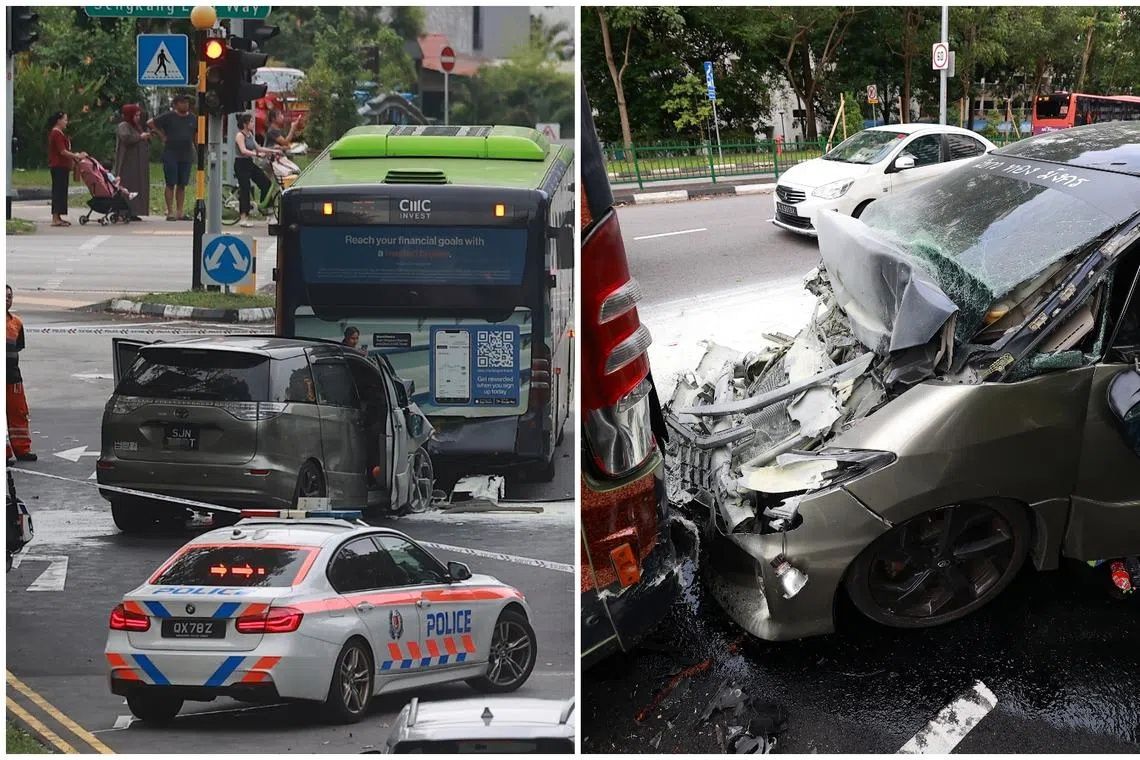
Singapore is facing a mounting public health crisis on its roads as an alarming number of traffic accidents involve drivers impaired by drugs and a newly emerging threat: etomidate-laced vaping devices known as Kpods. The concern has grown sufficiently acute that medical professionals and law enforcement officials are now sounding urgent warnings about the dangers these substances pose not only to drivers themselves but to all road users, including passengers, pedestrians, and fellow motorists.
Over a 12-day span in June alone, three men found themselves before the courts charged with operating vehicles under the influence of controlled substances. Two were accused of consuming methamphetamine, colloquially known as "Ice," whilst driving, while a third allegedly drove whilst impaired by etomidate, an anaesthetic compound that has surfaced in the vaping market. The three cases highlight what medical and law enforcement experts describe as an emerging pattern rather than isolated incidents.
Jonathan Tang, a clinical toxicologist at the National University Hospital's Emergency Medicine Department, has treated multiple patients sustaining traumatic injuries from traffic collisions involving etomidate-impaired drivers. His professional assessment parallels that of alcohol intoxication: the substance fundamentally degrades motor control and cognitive function necessary for safe vehicle operation. Tang emphasises that impairment from etomidate specifically compromises reaction times, hazard detection, and vehicle handling—precisely the capabilities motorists rely upon during split-second emergencies. This combination of factors creates a compounding danger not merely to the impaired driver but to every other person sharing the road.
The human toll underscores the gravity of the situation. In May 2025, a collision in Punggol claimed the life of a 28-year-old female passenger when the vehicle she occupied struck a bus. Subsequent testing revealed etomidate in both the driver's and victim's blood. Police recovered 42 vaping devices and over 1,200 pods from the vehicle, many containing etomidate. This tragedy exemplifies why the medical community views the issue as extending far beyond individual driver negligence.
Parliamentary scrutiny has intensified the focus. In February, Member of Parliament Valerie Lee raised the matter, questioning whether traffic police routinely screen accident-involved motorists for vape and drug use. Coordinating Minister for National Security K. Shanmugam confirmed that officers do assess drivers for impairment and conduct blood tests when drug or etomidate use is suspected, with potential prosecution under impaired-driving statutes. However, the disclosed statistics reveal the scale of the problem has accelerated dramatically. Between 2023 and 2025, authorities linked 38 traffic accidents to drug or etomidate use—yet 29 of these 38 accidents occurred in 2025 alone, with 18 involving etomidate and seven involving both substances.
The fatality rate compounds the concern. Of the 38 drug or etomidate-related accidents, 19 proved fatal. Nine fatalities involved etomidate specifically, whilst ten involved other drugs. These deaths represent not mere statistics but families destroyed and communities disrupted. Singapore's overall traffic fatalities reached a decade-high of 149 in 2025, compared with 141 in 2016 and 142 in 2024. Injury counts similarly climbed from 9,342 in 2024 to 9,955 in 2025.
Tang further warns that etomidate-laced vapes carry psychiatric dimensions beyond impaired driving. Users report depressed mood, heightened aggression, and impulsive behaviour—sometimes culminating in suicide attempts. These neuropsychiatric effects directly undermine the rational judgment and emotional regulation essential for vehicle operation, creating a multiplied risk vector that distinguishes etomidate from traditional drugs of abuse. The substance essentially compromises not just physical coordination but psychological stability whilst behind the wheel.
Three recent court cases illustrate the pattern. Mohamed Firdouz Mohamed Akram, a 36-year-old, faced multiple charges in June after a taxi collision in Kallang injured two people. Police discovered Ice, drugs, vaporisers, and weapons in his vehicle; he fled the scene before apprehension. Puah Zhe Cong, aged 34, was accused of operating a vehicle under etomidate's influence, allegedly causing one death and two injuries before evading the accident scene. Sivakandesh, 32, allegedly drove a Mercedes-Benz whilst impaired by methamphetamine, the car striking bollards, a parked vehicle, and a rubbish chute in Yishun Street.
Singapore's legal framework provides graduated penalties. First-time offenders face imprisonment up to one year, fines up to S$10,000, or both. Repeat offenders face up to two years' jail and fines reaching S$20,000. Yet prosecutors and medical experts argue that escalating legal consequences alone cannot address the underlying epidemiology. The substance's increasing availability through vaping devices—which circumvent traditional drug interdiction—combined with its psychiatric effects and growing user acceptance, suggests demand-side interventions require equal emphasis.
For Malaysian readers, the Singapore situation warrants close attention. Both nations share similar urban infrastructure, automotive cultures, and increasingly overlapping drug distribution networks. The emergence of etomidate-laced vapes as a driving hazard represents a novel threat trajectory; Malaysian authorities may benefit from studying Singapore's screening protocols and prosecution frameworks before similar patterns emerge domestically. The data suggests that reactive prosecution alone cannot contain the problem—prevention, public awareness, and comprehensive detection mechanisms require equal investment.
The public health dimension extends beyond road safety narrowly conceived. Drug-driving represents a failure of both individual judgment and systemic safeguards. Tang and police authorities frame the matter as a collective responsibility, with all road users obligated to report suspected impaired driving and support enforcement efforts. Emergency departments across the region should similarly prepare for potential surges in drug-related trauma presentations as vaping-based substance use evolves.

