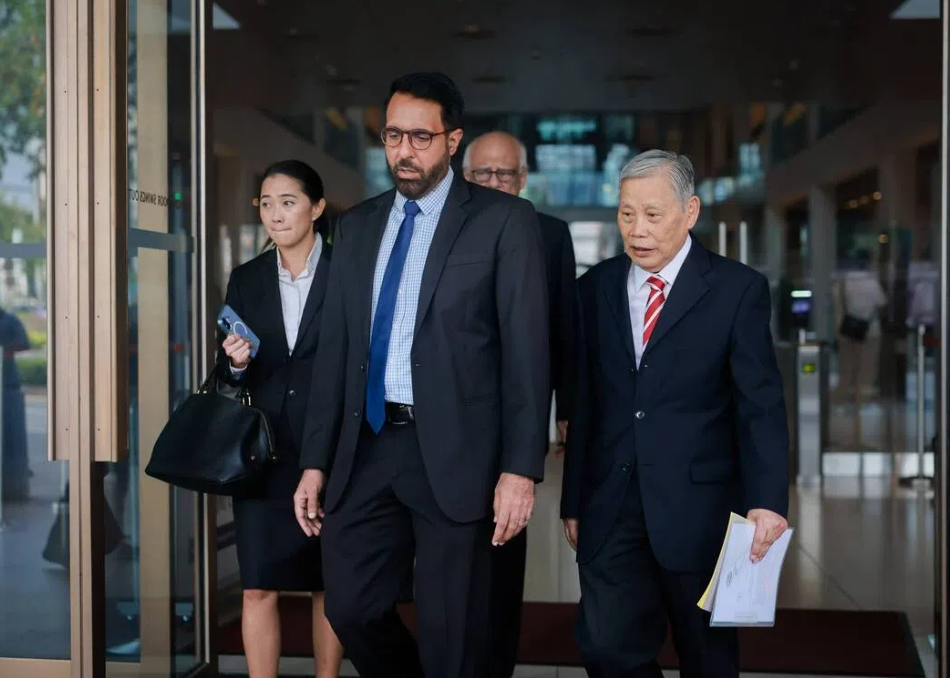
Pritam Singh, head of Singapore's Workers' Party and a Member of Parliament representing Aljunied GRC, has been removed from the legal profession following a disciplinary ruling delivered on Thursday, August 13. The decision came from the Court of Three Judges, the apex body responsible for regulating lawyer conduct in Singapore, which determined that his criminal conviction for dishonesty warranted the most severe professional sanction available under the Legal Profession Act. The panel hearing the case comprised Chief Justice Sundaresh Menon, Justice Kannan Ramesh and Justice See Kee Oon. Significantly, both the Law Society of Singapore and Singh's own legal representatives acknowledged during proceedings that the stringent legal criteria necessary to avoid such a striking-off had not been satisfied.
Singh's troubles stem from events rooted in February 2025, when a district judge convicted him on two counts of giving false evidence under oath to the Committee of Privileges, a parliamentary body responsible for investigating breaches of parliamentary protocol and member conduct. The underlying matter centred on revelations concerning Raeesah Khan, a former Workers' Party Member of Parliament, who had made statements in the legislature during 2021 regarding an alleged sexual assault case. Khan's claims specifically questioned how police authorities had dealt with the victim's complaint. When the veracity of Khan's assertions came under scrutiny, the investigation pivoted to whether Singh, as party leader, had misled the Committee of Privileges during his testimony about what he knew and when he knew it regarding Khan's original parliamentary statements.
Following his conviction, Singh pursued an appeal to the High Court, but this effort proved unsuccessful when the court upheld the original verdict in December 2025. The punishment imposed at that stage included a financial penalty of 14,000 Singapore dollars. However, the criminal conviction itself triggered mandatory disciplinary machinery within the legal profession. On March 4, 2026, the Law Society of Singapore initiated formal disciplinary proceedings against Singh, acting on information from the Attorney-General's Chambers that he had been convicted of offences meeting the statutory definition of "fraud or dishonesty." The Legal Profession Act creates an automatic requirement for the Law Society to petition the court for disciplinary action whenever a practising lawyer receives a conviction for such offences.
During the striking-off hearing, the Law Society presented its case through Senior Counsel Cavinder Bull, who outlined the established legal precedent governing such matters. Bull emphasised that Singapore's legal framework treats misconduct involving dishonesty as a particularly grave transgression within the profession, one that typically results in striking-off unless the specific circumstances of the case qualify as genuinely exceptional. The senior counsel stressed that lawyers occupy positions of public trust and that their credibility and integrity form the foundation upon which the entire judicial system depends. Bull explicitly rejected any suggestion that Singh's public service as an elected Member of Parliament could constitute the kind of exceptional circumstance that might warrant a departure from the standard sanction.
Bull further argued that Singh's prominence within the political sphere and his elevated public profile actually strengthened, rather than weakened, the case for striking him off. The reasoning underlying this submission reflects the principle that senior public figures bear heightened responsibility for maintaining professional standards and that breaches of honesty by such individuals carry amplified reputational consequences for the institutions they represent. By lying to a parliamentary committee, Singh had not merely committed a personal breach of professional ethics but had also undermined the integrity of parliamentary proceedings themselves. The Law Society contended that allowing such conduct to pass without the ultimate professional sanction would send an inappropriate message about the consequences of dishonesty among prominent lawyers.
In a significant moment within the proceedings, Singh's counsel, Senior Counsel Chelva Rajah, conceded the fundamental legal point at issue. Rather than contest whether dishonesty had been established as part of Singh's conviction, Rajah acknowledged that fraud or dishonesty indeed constituted an essential element of the offence for which Singh had been found guilty. This concession effectively removed any possibility of arguing that the underlying criminal conviction lacked sufficient gravity. Rajah accepted that the established legal threshold—one that demands truly exceptional mitigating circumstances—had not been satisfied in this case. This approach, while potentially limiting Singh's immediate options for judicial review, may have been calculated to preserve his dignity and avoid further adverse findings that could have complicated his broader legal standing.
The case carries significant implications for the Malaysian legal community and regional politics, particularly regarding how courts balance professional responsibility with public service. Unlike Malaysia, where the Legal Profession Act similarly provides for striking-off following dishonesty convictions, the Singapore judgment demonstrates rigorous adherence to principle without exception-making for political status. The ruling illustrates how judicial systems in the region address conflicts between professional standards and the public roles that lawyers hold, a tension increasingly relevant as lawyers move between law practice and elected office across Southeast Asia.
For the Workers' Party, the striking-off represents a notable diminishment of Singh's legal credentials, though it does not automatically disqualify him from his parliamentary seat. The combination of his criminal conviction and professional disbarment, however, raises questions about his continued leadership of the party and his political viability. In Singapore's political context, such developments create pressure on both party colleagues and voters regarding his suitability for continued public office. The case also underscores the vulnerability of political figures to criminal and professional consequences when their conduct falls beneath the standards expected of legal professionals, a cautionary note for politicians across the region who maintain practising licences.
The decision reflects Singapore's institutional approach to professional regulation, whereby even high-ranking public figures face consistent application of disciplinary standards. The Court of Three Judges' ruling sends a clear message that professional misconduct involving dishonesty will be treated seriously regardless of the practitioner's other achievements or roles. This consistency, while potentially harsh on Singh personally, strengthens public confidence in the legal profession's self-regulatory mechanisms and demonstrates that professional integrity trumps political or public standing. For legal practitioners in Malaysia and the broader region, the judgment reinforces the principle that lawyers cannot rely on their non-legal roles or public service as shields against consequences for professional dishonesty.

