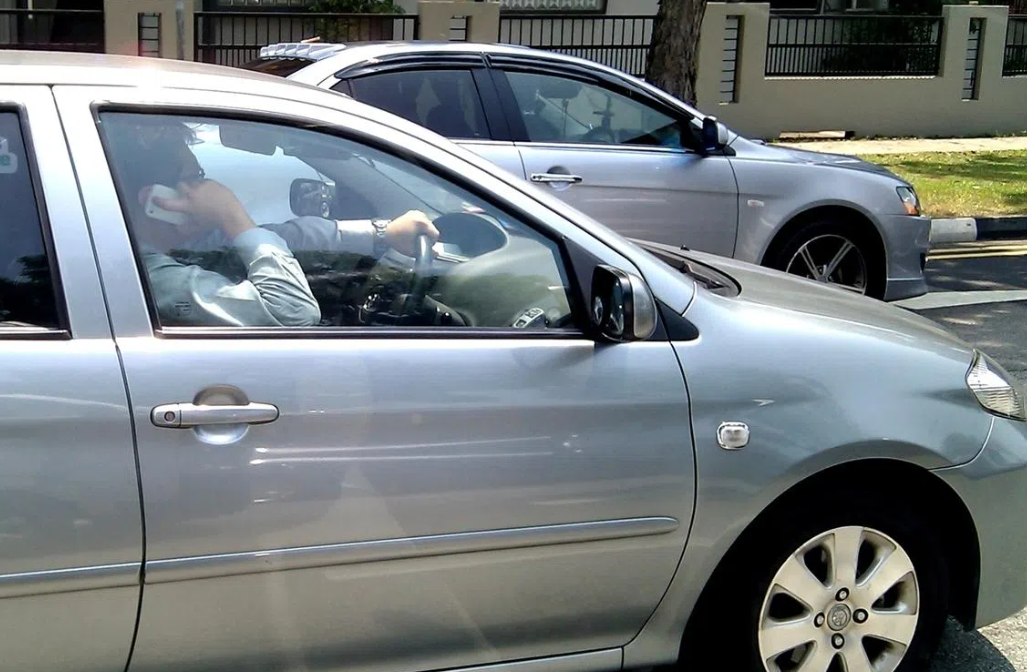
Singapore is preparing sweeping changes to its road traffic legislation, targeting a concerning rise in accidents and fatalities that has prompted the Ministry of Home Affairs to table the Road Traffic (Miscellaneous Amendments) Bill this week. The crackdown reflects growing alarm at deteriorating road safety: traffic deaths have climbed to a decade-high of 149 in 2025, representing a steep 24 per cent increase from 2021 levels, while traffic violations have surged by 38 per cent over the same period. Injury numbers have also worsened, with 9,955 people hurt on the roads last year compared to 9,342 in 2024. These statistics paint a troubling picture of a transport system under increasing strain and underscore the government's determination to reverse the trend through harder penalties and expanded enforcement mechanisms.
The most significant change targets mobile phone use behind the wheel, shifting the burden of proof away from authorities in a move that will fundamentally reshape enforcement practices. Under existing law, drivers caught texting or calling while holding a phone receive 12 demerit points and face fines ranging from $400 to $500. Serious repeat offences can result in up to six months' jail and $1,000 fines for first-time court convictions, escalating to a year's imprisonment and $2,000 for repeat offenders. However, these penalties require authorities to prove the phone was actually being used—a cumbersome requirement that necessitates police observation and manual verification of the offence as it occurs. This evidentiary burden has hampered enforcement effectiveness and allowed offenders to escape detection.
The proposed legislation eliminates this requirement by criminalising the mere act of holding a mobile device while a vehicle is in motion, regardless of whether the phone was being actively used. The Ministry's reasoning is straightforward: holding a phone while driving inherently distracts the operator and compromises road focus, making it inherently dangerous conduct. This recalibration will enable Traffic Police to identify violations through camera surveillance and footage submitted by the public, dramatically expanding the enforcement net beyond what officers can witness directly. The change does not affect drivers using securely mounted devices or using phones when vehicles are stationary, preserving practical flexibility while targeting the most problematic behaviours.
For Malaysian readers, this development carries particular resonance given similar concerns about phone-related driving distractions across the region. Road safety campaigns in Malaysia have repeatedly highlighted mobile phone use as a significant accident factor, though legislative responses have been more fragmented. Singapore's approach—treating possession itself as an offence rather than requiring proof of usage—represents an aggressive policy choice that other Southeast Asian jurisdictions may study as they evaluate their own traffic laws. The shift also demonstrates how technology can enable enforcement: camera systems and crowdsourced footage allow governments to scale penalty application beyond traditional policing capacity.
Beyond phone use, the Bill introduces new offences addressing intentional vehicle-based harm, responding to high-profile cases that have exposed gaps in current law. The government has identified a troubling category of drivers who deliberately endanger others using vehicles as weapons, sometimes with fatal consequences. The landmark case of Jarrett Tee Lee Kiat exemplified this problem: despite showing no remorse after his reckless expressway racing caused the death of an 18-year-old, he received only five years and eight months' jail for dangerous driving. The Ministry argued that such conduct warrants graver consequences commensurate with the perpetrator's culpability and resulting harm.
To address this gap, the legislation introduces a new offence of purposeful endangerment using a vehicle causing death or serious injury. Conviction carries a maximum 15-year jail sentence, potential fines, corporal punishment through caning, and lifetime driving disqualification (or minimum 10 years if extenuating circumstances apply). This represents a dramatic escalation compared to existing dangerous driving provisions, signalling the government's determination to punish reckless conduct that exhibits elements of deliberate endangerment. The distinction matters legally: existing offences like dangerous driving causing death carry only eight-year maximums because prosecutors must prove the driver acted recklessly rather than intentionally, a higher evidentiary threshold that murder and culpable homicide require but that dangerous driving does not.
The Bill also strengthens penalties for driving under the influence, prompted by cases like that of Yoong Kok Kai. In December 2025, a High Court judge increased Yoong's sentence from three-and-a-half years to five years after he drove home drunk following multiple drinking sessions, lost control near Tuas Checkpoint, and left an auxiliary police officer in a vegetative state. The judge's comments revealed judicial frustration with existing maximum sentences, noting that they might be inadequate for the most serious cases. The legislature has now heeded this concern by raising maximum jail terms for dangerous driving causing grievous hurt from five years to seven years for first offenders, and from 10 to 13 years for repeat offenders. Offenders subject to aggravating factors—such as simultaneous drink-driving—face an additional 18 months' jail, increased from the previous one-year uplift.
These enhancements reflect a broader philosophy of proportional punishment that extends beyond drunk driving. The Bill increases penalties for careless driving causing grievous hurt and explicitly targets dangerous driving when combined with substance abuse. This granular approach acknowledges that offence severity varies based on context: a momentary lapse causing injury differs fundamentally from a pattern of reckless conduct or deliberate endangerment. By calibrating penalties to these distinctions, Singapore aims to ensure consequences reflect the severity of harm and the driver's culpability, addressing judicial observations that maximum sentences sometimes felt insufficient for the worst conduct.
The legislation also introduces drug-driving offences, extending the enforcement framework beyond alcohol to cover other impairing substances. This addition aligns Singapore with international best practices and addresses a growing concern as recreational drug use patterns evolve. The specifics of drug-driving provisions remain less detailed in available reporting, but their inclusion signals recognition that substance-related impairment extends beyond alcohol—a lesson learned through traffic policing experience across developed jurisdictions.
For the broader Southeast Asian region, Singapore's legislative evolution offers instructive lessons about managing rapid motorisation and the traffic safety challenges it produces. As economies across ASEAN develop and vehicle ownership grows, road fatality and injury rates tend to spike unless accompanied by strengthened enforcement and penalties. Singapore's approach combines legislative precision—targeting specific dangerous behaviours like phone use and deliberate endangerment—with pragmatic enforcement innovations like camera-based detection. The model suggests that effective road safety requires not merely harsher penalties in isolation, but rather legislative frameworks that facilitate enforcement, address genuine safety gaps, and calibrate consequences to reflect actual harm.
The phone-holding offence particularly merits regional attention because it addresses a genuinely difficult enforcement challenge. Many developing nations struggle to prosecute phone-use violations because requiring proof of active usage demands officer observation and manual verification—resource-intensive processes that overwhelmed traffic agencies cannot sustain. By criminalising possession itself, Singapore sidesteps this limitation while acknowledging that holding a phone distracts drivers regardless of whether they actively use it. This pragmatic reframing may appeal to other jurisdictions wrestling with enforcement capacity constraints.
The Bill's emphasis on proportional punishment for deliberate endangerment also reflects evolving judicial and legislative thinking about culpability. Existing dangerous-driving laws focus on recklessness—the defendant acted knowing a risk existed but proceeded anyway. Deliberately endangering others involves a more aggravated mental state: the driver seeks to harm or is indifferent to creating substantial danger. By introducing a specific offence for this conduct with much higher penalties, Singapore acknowledges that existing frameworks sometimes fail to capture the gravity of such actions. This mirrors debates occurring in other jurisdictions about whether current assault and endangerment laws adequately address vehicle-related violence.
Implementation will be critical. Introducing camera-based enforcement for phone offences requires investment in technology, staff training, and public communication to ensure drivers understand the new rules. The more serious offences—purposeful endangerment and aggravated dangerous driving—will place greater demands on prosecutors and courts to establish the elevated mental states required for conviction. Public perception will also matter: if drivers feel penalised unfairly for merely holding phones, compliance may falter unless the rationale is clearly communicated. Singapore's experience deploying these reforms will likely generate valuable data about their effectiveness and any unintended consequences, potentially informing policy decisions across the region as other governments confront similar traffic safety crises.

