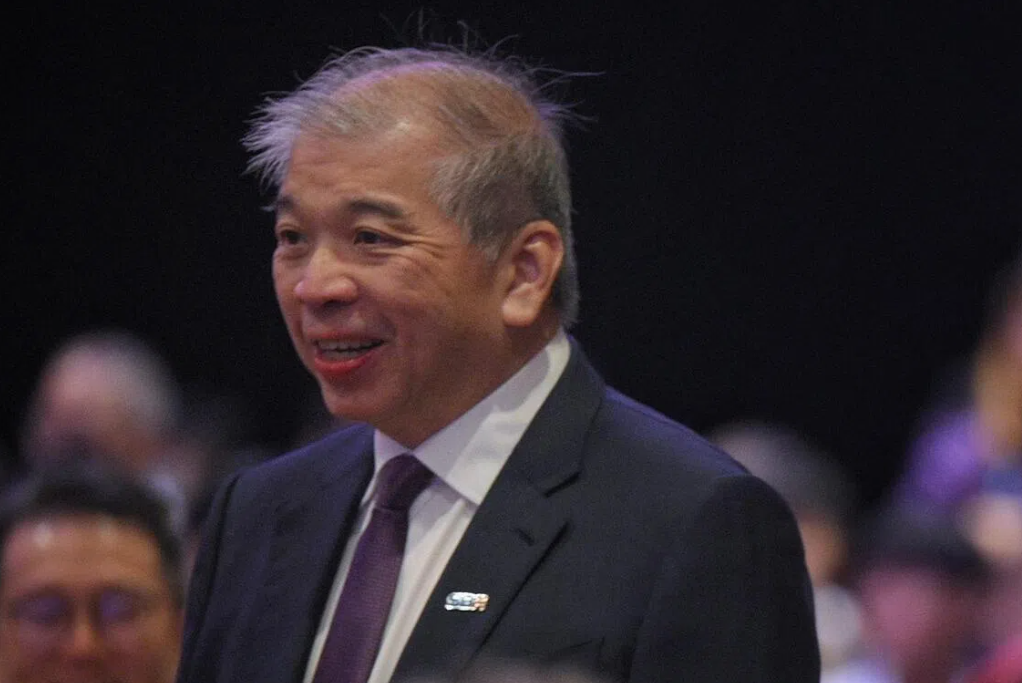
Singapore shipping magnate Teo Siong Seng, chief executive of Singamas Container Holdings, has been named alongside several other industry executives in two separate civil lawsuits filed in California federal court, marking a dramatic escalation in the container industry's price-fixing scandal. The lawsuits, filed by American manufacturing and logistics firms seeking to recover substantial losses, represent a private-sector counterattack following criminal charges brought by the US Department of Justice against the alleged cartel members.
The civil cases were initiated in June by C.A. Spalding Company and Daybreak Express, both based in the United States, in the District Court for the Northern District of California. These actions operate independently from the criminal indictment unsealed in May, which identified a consortium of container manufacturers responsible for producing approximately 95 per cent of the world's standard dry containers. The addition of civil suits creates a significantly more complex legal exposure for the accused executives and their companies, as they now face potential financial liability alongside criminal prosecution.
The allegations centre on a coordinated scheme spanning several years in which executives from China International Marine Containers (CIMC), Shanghai Universal Logistics Equipment, CXIC Group Containers, and Singamas Container Holdings allegedly collaborated to artificially restrict container supply and manipulate prices upward. According to court documents, the conspirators implemented deliberate production controls by limiting the number of shifts and operating hours across manufacturing lines. More remarkably, investigators uncovered evidence that the cartel installed 87 surveillance cameras distributed across 49 production lines at their factories to enforce compliance with agreed-upon output restrictions.
The financial impact of this alleged manipulation proved substantial. Shipping container prices for standard 20-foot units more than doubled between 2019 and 2021, climbing from approximately US$1,600 to US$3,500 during this period. This dramatic price surge had cascading effects throughout global supply chains, affecting manufacturers, retailers, and logistics providers worldwide. For American businesses in particular, the inflated container costs represented a significant competitive disadvantage as they competed against firms potentially sheltered from price increases or operating with different supply arrangements.
The profitability gains achieved by the cartel members during this period are starkly documented in financial records cited by prosecutors. CIMC's container manufacturing division generated profits of approximately 137 million yuan in 2019, which surged to 1.99 billion yuan in 2020 and reached 11.3 billion yuan by 2021—a roughly 82-fold increase over two years. Singamas Container Holdings exhibited an equally dramatic financial turnaround, transitioning from a net loss of roughly US$110 million in 2019 to profits exceeding US$186.8 million by 2021. These financial transformations provide compelling circumstantial evidence of the scheme's effectiveness and the defendants' awareness of its unlawful nature.
The civil litigation carries significantly enhanced financial consequences through the application of treble damages provisions available under US antitrust law. If found liable, Teo and his co-defendants could be required to pay three times the actual damages proven to have been suffered by the plaintiff companies. This punitive multiplier is designed to deter cartel behaviour and compensate injured parties more comprehensively than simple restitution would allow. For executives and corporations already facing criminal prosecution, the prospect of treble damages substantially increases the stakes and may prompt consideration of settlement negotiations or plea arrangements.
Teo, a 71-year-old Singaporean, has responded to the mounting legal pressure by taking a strategic withdrawal from public and corporate roles. He resigned from executive positions at Pacific International Lines, where he had served as executive chairman, and subsequently stepped back from his role as chairman of the Singapore Business Federation. He also relinquished positions on several prestigious boards and taskforces, including his appointment as pro-chancellor at the National University of Singapore and his seat on the Enterprise Singapore board. His spokesperson announced on May 28 that Teo had proactively taken these leaves of absence to manage the legal matter and protect the interests of the organisations affected by his involvement.
Teo's departure from the Singapore Business Federation represents a particularly notable development in regional business circles. Having assumed the chairmanship position just weeks earlier on May 20, 2025, following the early retirement of his predecessor Lim Ming Yan, Teo announced he would not seek re-election when his brief term concludes on June 24. His previous tenure as SBF chairman from 2014 to 2020, during which he served three consecutive two-year terms, underscores his previously prominent position in Singapore's business establishment. The rapid reversal from elder statesman to defendant under legal pressure illustrates the profound reputational consequences of the allegations.
Other executives named in the civil actions include Mai Boliang, who transitioned from CIMC's presidency to the chairmanship in August 2020; CIMC vice-president Huang Tianhua; Wan Yongbo, who managed CIMC's operations; Li Qianmin at Shanghai Universal Logistics Equipment; and Zhang Yuqiang, chief executive of CXIC Group Containers. All are Chinese nationals. Additionally, Vick Ma, the marketing director of Singamas Container Holdings, has been identified as a defendant while awaiting extradition to the United States following his arrest in France in April. The geographically dispersed defendant pool reflects the international structure of the container manufacturing and logistics industry.
US federal court records show that summonses were issued on June 8 and 11, requiring the named parties to formally respond within 21 days. Failure to respond within this timeframe could result in default judgments against the defendants, which would establish liability without requiring proof of the allegations. Teo declined to provide any substantive comment regarding the civil lawsuits when contacted by journalists, maintaining a position of legal silence that is standard practice in such proceedings. His single public statement, released through official channels on May 28, expressed his intention to focus on the legal challenges while minimizing damage to the institutions with which he has been affiliated.
For Malaysia and Southeast Asia, this case carries broader implications for regional business regulation and the consequences of participating in international cartels. The enforcement actions demonstrate that US authorities are aggressively pursuing cartel participants regardless of nationality or the location of their primary operations, and that private parties injured by such schemes have robust legal mechanisms through which to recover damages. Malaysian companies operating in container logistics, manufacturing, or shipping sectors should carefully review their commercial practices and ensure compliance with antitrust principles. The case also underscores the importance of corporate governance and the significant reputational and financial risks that can accrue to individual executives implicated in such schemes.