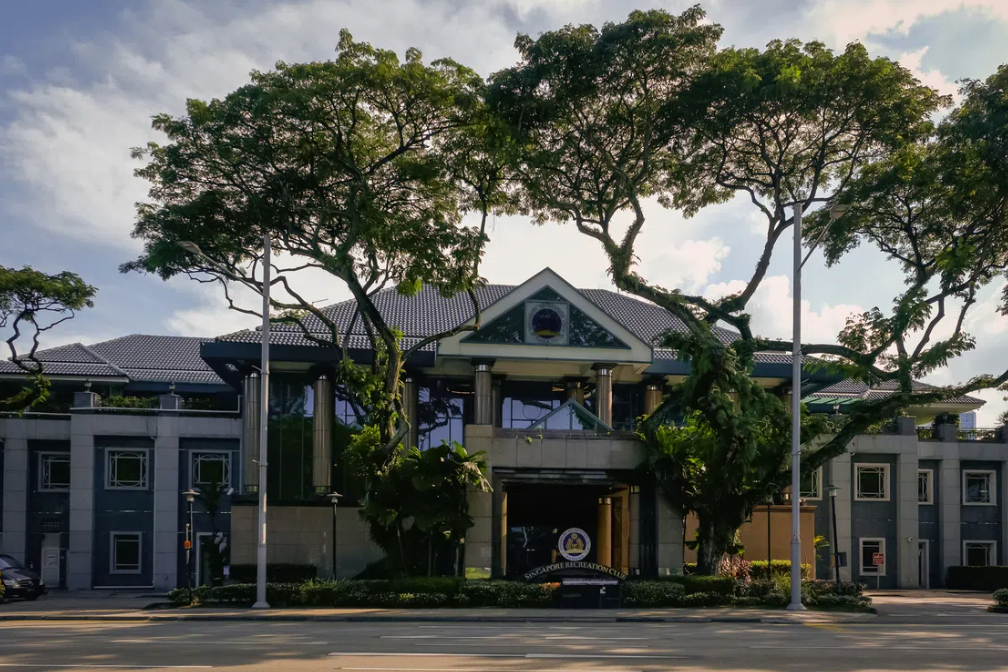
A Singapore High Court has ordered a full trial to determine the legitimacy of a controversial vote by the Singapore Recreation Club to convert its billiards room into a co-working space, ruling that two challenging members have raised substantial legal questions about the voting process. Senior Judge Chan Seng Onn, in written grounds released in late August, overturned an earlier decision that would have dismissed the entire case, finding that the dispute involves genuine issues of law and fact that require judicial determination at trial.
The legal challenge centres on how the club conducted voting at an extraordinary general meeting on October 18, 2025, where members were presented with proposals following cost escalations in a multi-million-dollar club renovation project. Two billiards section members, Sean Kerwin Mathews and Mu Yee Shyong, argue the resolution passed with only 151 affirmative votes lacks the constitutional authority to proceed, claiming the club's governing rules explicitly required approval by a majority of those physically attending the meeting.
The dispute arises from a $16.6 million transformation plan originally approved in March 2024 that would relocate the billiards room from the second floor to the basement and establish a co-working space in its place. The club budgeted S$1.5 million for land betterment charges—a form of property tax imposed when land increases in value—but when these charges nearly quadrupled to S$4.9 million, the management committee deemed the relocation financially unrealistic and called an extraordinary general meeting to reconsider options.
The voting arrangement at the October meeting reveals the central complaint. Members received two voting slips with a specific structure: the first asked whether to proceed with the original relocation plan and approve payment of the S$4.9 million charges, offering clear yes-or-no boxes. However, those voting yes on the first slip were instructed that the second slip was inapplicable to them. The second slip forced members to choose between two competing alternatives—converting the existing billiards room into a co-working space, or integrating the billiards room within a larger co-working facility—without allowing them to reject both options.
Judge Chan identified a critical procedural flaw in this voting mechanism. Members wishing to oppose both alternative proposals would be forced to spoil their second voting slip or leave it blank, yet the club's management later claimed these spoilt and blank votes should not count against the resolutions. Of the 514 votes cast, 151 supported the winning resolution and 125 opposed it directly, but 183 votes were spoilt and 55 were blank. Under the club members' reading of the constitution, all votes—whether cast as deliberate votes or blank ballots—should be counted when determining whether a majority of attendees approved the measure.
The mathematical dispute carries important implications. The challengers argue that blank votes, particularly under these constrained voting circumstances, represent a deliberate expression of opposition when members have been denied a genuine option to reject both alternatives. With the blank and spoilt votes totalling 238, and direct opposition votes reaching 125, combining them would total 180 against the resolution—exceeding the 151 votes in support. Under this calculation, the resolution would not have achieved the necessary majority of the 280 members needed among the 559 attendees.
The club's management committee, represented by counsel Walter Alexander, contended that invalidating the resolution would serve no purpose and leave the club paralysed in decision-making. However, the judge rejected this argument, noting that even if the resolution were overturned, the club could simply conduct another vote with improved procedures that genuinely allowed members to express their preferences. Judge Chan emphasised that the claimants were not seeking to block the co-working space project entirely but rather to obtain a fair voting process that respected members' constitutional rights.
This case resonates beyond Singapore's established social clubs, touching on broader governance principles affecting how voluntary associations conduct internal democracy. The decision highlights how even established organisations with formal constitutions can inadvertently structure votes in ways that constrain members' genuine choices, particularly when voting mechanisms are designed with certain outcomes in mind. The judge's finding that members' voting entitlements were arguably undermined suggests that institutional procedures, however well-intentioned, must preserve authentic options for dissent.
For the Singapore Recreation Club's 7,000 members, the trial's outcome will determine not just whether the co-working space conversion proceeds, but whether the club's governance framework adequately protects members' voices in major financial decisions. The S$4.9 million land betterment charges represent a substantial unanticipated cost increase that fundamentally altered the project's feasibility, making the voting process all the more significant in members' eyes.
The case also illuminates practical challenges facing social institutions navigating between effective management and democratic legitimacy. The management committee's decision to structure the voting in a particular way was likely motivated by desire to move the project forward, yet the judge's careful analysis of how the ballot design restricted genuine choice suggests courts will scrutinise such procedures carefully. Similar governance questions face clubs, associations, and cooperative bodies across Southeast Asia, where rapid development and changing financial circumstances often force organisations to revisit earlier member approvals.
The trial will now require the club to justify not only the substance of the decision but the fairness of the process through which it was reached. Both sides will present evidence regarding constitutional interpretation, the proper method for counting different types of votes, and whether the club's management acted within their authority when structuring the October voting process. The outcome will establish important precedent for how Singapore courts treat voting disputes within private membership organisations.

