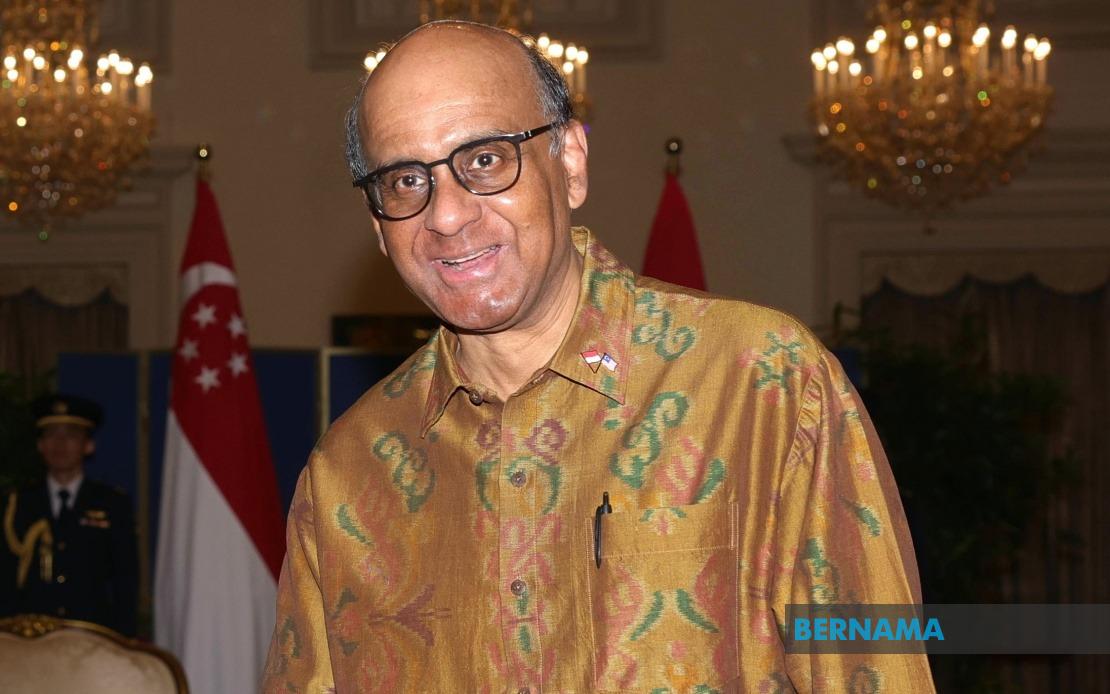
Singapore President Tharman Shanmugaratnam will undertake a three-day state visit to Malaysia from July 13 to 15, marking a significant diplomatic engagement between the two neighbouring nations. The visit represents President Tharman's first official state journey to Malaysia since he assumed the presidency on September 14, 2023, and comes as a reciprocal gesture following His Majesty Sultan Ibrahim's state visit to Singapore on May 6 and 7 last year.
The invitation from the Malaysian monarch reflects the enduring partnership between Kuala Lumpur and Singapore, two nations whose economies are deeply intertwined and whose political relationship carries considerable weight in Southeast Asian affairs. Malaysia's Foreign Ministry emphasized in a statement that the high-level visit demonstrates the commitment both countries maintain towards their bilateral relationship and signals continued momentum in deepening cooperation across sectors of mutual strategic importance.
President Tharman will be accompanied throughout his visit by his spouse, Jane Ittogi Shanmugaratnam, alongside a delegation comprising several government ministers and senior officials. This composition of the presidential entourage underscores the significance Malaysia and Singapore accord to the visit, with multiple ministerial-level participants expected to engage in substantive discussions on shared challenges and opportunities across various policy domains.
The itinerary planned for the President's stay in Malaysia reflects the ceremonial importance of a state visit. Upon arrival, he will receive a formal State Welcoming Ceremony before proceeding to Istana Negara for an official audience with His Majesty Sultan Ibrahim. The programme will culminate in a State Banquet, where President Tharman will be formally honoured as the guest of the Malaysian sovereign. Additionally, Prime Minister Datuk Seri Anwar Ibrahim is scheduled to hold a courtesy call with the visiting President, providing an opportunity for bilateral discussions at the highest executive level.
The economic dimension of the Singapore-Malaysia relationship cannot be overstated. Singapore functions as Malaysia's second-largest trading partner globally and represents Malaysia's most significant trading relationship within the ASEAN bloc. This commercial prominence reflects decades of integration across manufacturing, finance, logistics, and technology sectors, with both nations benefiting substantially from their geographic proximity and complementary economic structures.
Bilateral trade statistics demonstrate the robustness of economic ties between the two countries. In 2025, total bilateral trade reached RM402.35 billion, equivalent to approximately US$93.97 billion, recording a year-on-year increase of 1.5 percent relative to 2024 figures. More impressively, the first five months of 2026 revealed accelerating momentum, with bilateral trade expanding by 14.5 percent to RM189.90 billion compared to the corresponding period in 2025, when trade had totalled RM165.93 billion. These statistics indicate not merely maintenance of existing commercial relationships but meaningful expansion of cross-border business activity.
For Malaysian policymakers, the significance of Singapore as both a trading partner and a regional anchor cannot be underestimated. The island nation's position as a global financial centre, its role as a major transhipment hub, and its technological capabilities make it indispensable to Malaysia's economic prosperity. Conversely, Malaysia provides Singapore with crucial access to broader regional markets and natural resources, creating a relationship of genuine interdependence rather than subordination.
The timing of President Tharman's visit arrives at a moment when ASEAN faces mounting external pressures and internal coordination challenges. Regional stability depends significantly on bilateral relationships functioning smoothly, and high-level diplomatic engagements serve not only to cement existing ties but to demonstrate political commitment to addressing emerging issues jointly. The visit provides an appropriate forum for discussions on maritime security, climate change, digital economy development, and other transnational matters requiring coordinated regional responses.
For Malaysian readers, this state visit carries practical implications extending beyond diplomatic symbolism. Strengthened political relationships between Kuala Lumpur and Singapore frequently translate into expanded business opportunities, facilitated labour movement for skilled professionals, and enhanced cooperation on infrastructure projects that benefit both nations. The discussions occurring during presidential meetings often establish frameworks that commercial entities and lower-level officials subsequently operationalize across multiple sectors.
The reciprocal nature of these state visits—Sultan Ibrahim's May 2024 journey to Singapore now matched by President Tharman's July visit to Malaysia—demonstrates adherence to diplomatic protocols that maintain equilibrium in bilateral relations. Such reciprocity ensures neither nation perceives itself as subordinate and reinforces the principle that both sovereigns regard each other as equals worthy of the highest ceremonial honours their respective states can bestow.
Regionally, the Malaysia-Singapore relationship serves as a barometer for ASEAN's overall health. When ties between these two economically significant and geographically adjacent neighbours remain robust, it facilitates broader cooperation across the association. Conversely, tensions or perceived slights between Kuala Lumpur and Singapore can reverberate throughout regional forums and mechanisms. President Tharman's visit thus acquires significance extending beyond bilateral concerns to encompass broader questions of regional architecture and stability in an era of competing great-power interests in Southeast Asia.

