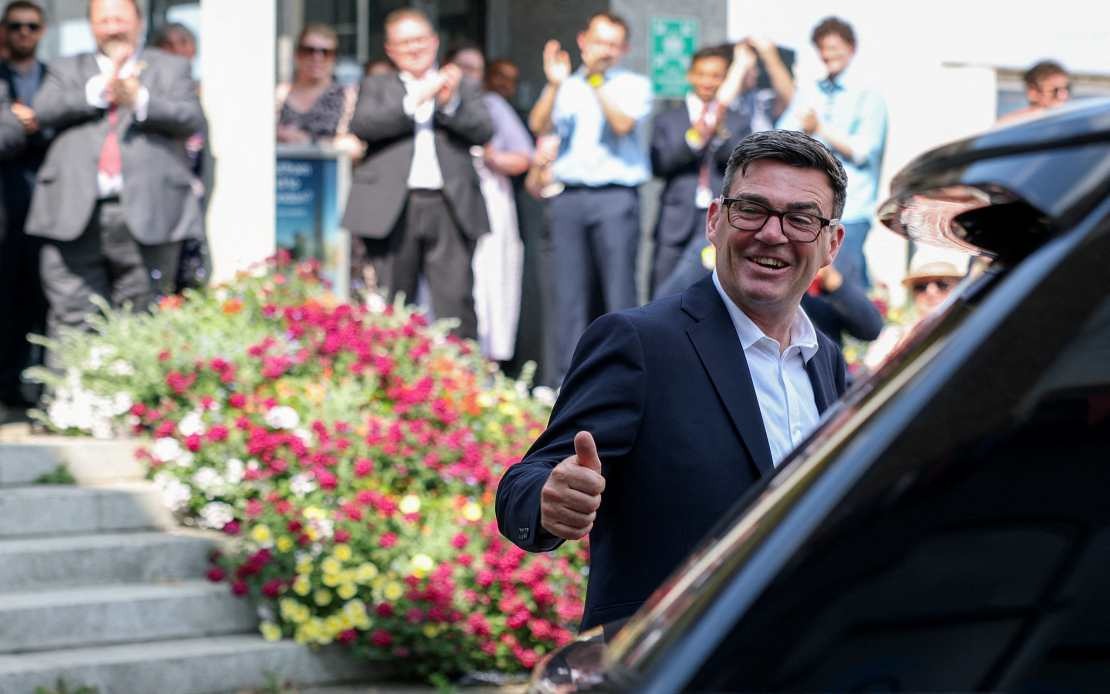
Singapore Prime Minister Lawrence Wong extended formal congratulations to Andy Burnham on Monday following the Labour Party leader's appointment as the United Kingdom's new prime minister, signalling a commitment to maintaining and strengthening ties between the two nations during a period of global political transition. Burnham met King Charles III at Buckingham Palace and received the invitation to form a government, officially assuming the role after his party's electoral victory. Wong's letter of congratulation underscored Singapore's confidence in Burnham's ability to guide Britain through considerable geopolitical and economic turbulence whilst securing prosperity for the British people.
The warmth of the official greeting reflects the historical depth and institutional robustness of Singapore-UK relations, anchored in the Strategic Partnership framework that has evolved over decades of consistent engagement. Wong articulated this foundation by highlighting how bilateral cooperation spans traditional diplomatic channels and encompasses substantive collaboration in innovation, scientific research, technological development, and defence matters. These domains represent the contemporary pillars of the relationship, moving beyond historical colonial ties to encompass modern strategic alignment based on shared interests and compatible governance philosophies.
Beyond bilateral engagement, Wong emphasised Singapore's particular appreciation for Britain's sustained regional involvement through mechanisms that underscore London's commitment to Southeast Asian stability and prosperity. The UK's status as an ASEAN Dialogue Partner grants it structured access to regional deliberations, whilst its participation in the Five Power Defence Arrangements—a Cold War-era security framework involving Singapore, Malaysia, Australia, New Zealand, and the United Kingdom—demonstrates long-standing military and security cooperation. These institutional relationships ensure that despite geographical distance, British influence and interest in Southeast Asian affairs remain institutionally embedded and operationally significant.
Wong's letter also illuminated a forthcoming alignment of leadership responsibilities that presents opportunities for enhanced cooperation on the world stage. Singapore assumes the ASEAN Chairmanship during a period when regional integration and external engagement face mounting pressures from great power competition, trade fragmentation, and climate challenges. Simultaneously, the United Kingdom will hold the G20 Presidency in 2027, positioning it to shape global economic governance discussions. This convergence of leadership roles creates a natural platform for coordinated diplomacy addressing transnational issues ranging from sustainable development to multilateral institution reform.
The timing of this transition also carries significance for Southeast Asia's broader strategic environment. As major powers reassess their commitments to regional engagement, Britain's continued emphasis on ASEAN partnership and multilateral cooperation provides reassurance regarding the stability of institutional frameworks that smaller nations like Singapore have long relied upon for security and predictability. Burnham's appointment comes amid broader discussions about Britain's post-Brexit strategic orientation, and Singapore's early engagement signals an expectation that enhanced rather than diminished engagement in the Indo-Pacific region will characterise his administration.
Wong's specific reference to working together despite "profound global uncertainty" carries particular resonance for Southeast Asian observers accustomed to navigating competing geopolitical pressures. The phrasing suggests a shared understanding that traditional alliances and partnerships require active maintenance and recommitment, particularly when external circumstances threaten to pull focus elsewhere. For Malaysia and other regional nations, the robustness of Singapore-UK ties provides a template for how smaller states can maintain meaningful relationships with major powers whilst preserving autonomy and regional cohesion.
The multilateral cooperation angle outlined in Wong's letter extends beyond security and economic spheres to encompass shared commitments to international norms and governance standards. Singapore, despite its size, has consistently positioned itself as a champion of rules-based international order and has sought to anchor major powers within institutional frameworks rather than allowing purely bilateral arrangements to dominate regional dynamics. Britain's participation in ASEAN dialogues and regional security arrangements aligns with this preference for transparent, institutionalised engagement over informal spheres of influence.
From a Malaysian perspective, the renewal and deepening of Singapore-UK cooperation matters considerably given the interconnected nature of Southeast Asian security and prosperity. Both countries maintain substantial commercial relationships with Malaysia, and institutional frameworks that reinforce regional stability benefit all member states. The emphasis on innovation, science and technology cooperation also suggests potential spillover benefits for regional technological advancement, particularly in emerging domains like artificial intelligence, green energy, and digital infrastructure where multinational collaboration increasingly drives progress.
The appointment of Burnham also arrives at a juncture when Britain is actively rebuilding its international relationships following the Brexit process and associated strategic recalibrations. Wong's language—emphasizing enduring partnership and the fruits of working together through uncertainty—indicates Singapore's interest in cementing Britain's continued commitment to Asia-Pacific engagement rather than allowing London to retreat into Atlantic-centric focus. This positioning reflects a broader Southeast Asian concern about maintaining pluralistic engagement with multiple developed economies rather than facing bifurcated great power competition.
Looking forward, the convergence of Singapore's ASEAN Chairmanship and Britain's G20 Presidency creates concrete opportunities for agenda-setting on issues critical to the region. Climate change, digital governance, supply chain resilience, and sustainable development financing all appear on both forums' agendas. The institutional capacity to coordinate positions across these platforms could amplify developing nations' voices in global discussions and ensure that Asian perspectives receive adequate consideration in international policymaking. Wong's congratulatory message thus functions not merely as diplomatic courtesy but as an investment in future collaborative capacity.

