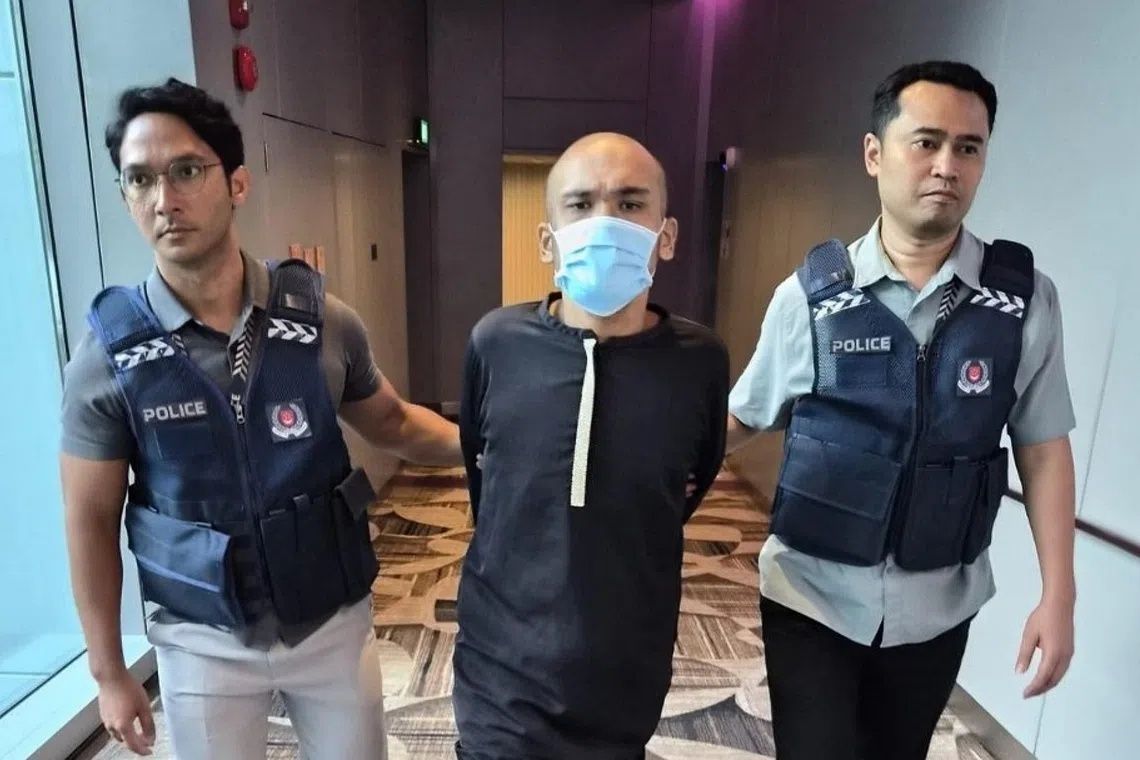
A 27-year-old man is set to appear before a Singapore court on Friday, August 7, to face charges stemming from insulting and profane social media videos directed at the Muslim community. The case underscores Singapore's zero-tolerance approach to religious incitement and highlights the swift cross-border law enforcement coordination that authorities employ to address such offences.
The man's problematic content was originally uploaded earlier in 2026, but police did not receive a report until March 1. By that time, he had already departed Singapore, complicating immediate enforcement action. However, with assistance from the Royal Malaysia Police, authorities tracked his movements and secured his deportation from Malaysia on August 6. Upon landing back in Singapore that same day, he was taken into custody.
If the court finds him guilty of insulting the religion of another person—a charge that carries particular weight in Singapore's multicultural society—he faces a potential jail sentence of up to five years, a monetary fine, or both. The severity of the potential punishment reflects how seriously Singapore treats threats to religious harmony, an issue that authorities regard as central to the nation's social stability and cohesion.
Beyond the video-based charges, the suspect is cooperating with police investigations into a separate but related matter involving footage that circulates on social media depicting a man stepping on a Quran. The Straits Times has established that the individual captured on camera in that incident is the same accused man. Police investigations suggest the desecration was filmed aboard a public bus in Singapore, making it a matter of considerable public concern given its highly visible nature.
The Quran incident represents a more direct and visceral form of religious provocation than the earlier insulting remarks. Placing one's feet on a sacred religious text—particularly in a shared public space like public transport—constitutes an act many interpret as deliberately calculated to cause maximum offence and distress to Muslim believers. The timing and context of both incidents suggest a pattern of behaviour rather than an isolated lapse in judgment.
Authorities moved swiftly to contain the spread of inflammatory material once alerted. On March 7, police issued five disabling directions to Meta, the parent company of Facebook and Instagram, mandating that access to the offending videos be restricted for Singapore-based users. This action demonstrates how law enforcement agencies coordinate with technology platforms to prevent the viral amplification of religiously divisive content, though the initial damage in terms of community sentiment may already have occurred.
The involvement of Malaysian authorities in locating and deporting the suspect illustrates the interconnected nature of law enforcement in Southeast Asia, where individuals can attempt to evade accountability by crossing borders. The cooperation between Singapore and Malaysia—despite occasional diplomatic tensions—reflects a shared commitment to addressing transnational crime and social disorder. Such coordination is essential in a region where geographic proximity makes it relatively simple for suspects to flee jurisdiction.
For Malaysian readers, the case carries particular resonance given that the suspect was apprehended in Malaysia before deportation. It highlights how both Singapore and Malaysia take religiously motivated offences seriously, and how authorities in each nation support one another in prosecuting individuals who threaten communal peace. The swift deportation also signals that Malaysia does not serve as a haven for those seeking to escape consequences for religious incitement.
Singapore's police statement issued on August 6 made explicit the government's uncompromising stance on the matter. Officials declared that they take a serious view of any acts threatening racial and religious harmony, and that anyone making remarks or engaging in conduct that generates enmity, hatred, ill-will, or hostility between different racial or religious groups will face swift and firm legal action. This declarative statement serves both as a warning to potential offenders and as reassurance to the Muslim community that their concerns will be addressed through the full force of law.
The broader context reveals how social media has complicated religious coexistence in Southeast Asian cities. Inflammatory content can spread rapidly across platforms, reaching audiences far beyond the original intent and inflaming sensitivities across religious communities. What might once have remained a private transgression now becomes public spectacle, capable of triggering broader communal reactions and undermining the careful balance of interfaith relations that authorities work continuously to maintain.
The case also illustrates the distinction between offensive speech and criminal conduct in Singapore's legal framework. While the country is generally permissive of political expression, it draws firm boundaries around speech and action that directly target religious identity and beliefs. This reflects a deliberate policy choice to protect religious minorities while maintaining broader freedoms, a balance that remains contested in many democracies.
As the case proceeds through Singapore's courts, it will likely serve as a significant precedent regarding the boundaries of acceptable conduct toward religious communities in digital spaces. The outcome will send important signals to the broader region about consequences for religious incitement, potentially influencing how individuals and platforms approach sensitive religious content across Southeast Asia. For Malaysian observers, the prosecution represents an opportunity to reflect on how their own jurisdiction manages similar challenges to religious harmony.

