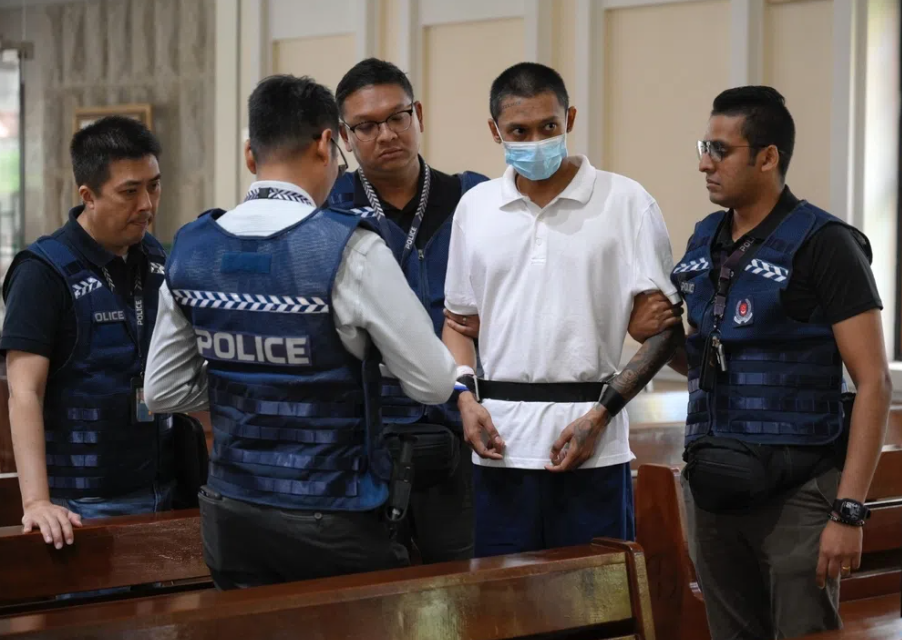
A 38-year-old Singapore resident has received a sentence of four years and three months in prison along with nine strokes of the cane for attacking a Catholic clergyman during a religious service at St Joseph's Church. Basnayake Keith Spencer entered guilty pleas on Friday, August 21, to charges of voluntarily causing serious bodily harm using a dangerous implement and illegal possession of weapons. The conviction represents a severe judicial response to an assault that shocked Singapore's religious community and raised fresh concerns about violence in places of worship across the region.
The assault occurred on the evening of November 9, 2024, during a children's mass that drew approximately 900 worshippers. Basnayake had arrived at the church unaccompanied around 5.30pm and seated himself in a central pew. During the service, he consumed multiple tablets, initially ingesting two pills to maintain concentration and subsequently taking three additional pills to manage anxiety upon recognising the service was specifically for children. This pattern of behaviour and drug consumption would later become central to understanding his mental state at the time of the attack.
When the moment came for congregants to receive communion, Reverend Christopher Lee, then aged 57, stood alongside another priest to administer the sacrament. Basnayake had initially joined a queue for the other priest but later repositioned himself to stand behind Father Lee's line. At approximately 6.15pm, when his turn arrived, Basnayake rapidly produced a folding knife measuring 23 centimetres in length with a 10-centimetre blade and thrust the weapon into the priest's mouth with deliberate force. The violence was sudden and unprovoked, leaving Father Lee profusely bleeding.
The priest's immediate response may have prevented an escalation of the attack. Sensing the danger continued, Father Lee grabbed the rear pocket of Basnayake's trousers to physically restrain him and prevent further harm to other congregation members. Witnessing the assault, church members swiftly intervened, with one off-duty police officer among those who subdued the attacker until law enforcement arrived. Basnayake was arrested at the scene without further incident.
The injuries sustained by Father Lee were severe and required immediate hospitalization. The stabbing caused an eight-centimetre laceration across his tongue, combined with a three-centimetre wound on his upper left lip and a four-centimetre cut at the corner of his mouth. He remained hospitalised for six days, being discharged on November 15, and subsequently received 40 days of medical leave. Beyond the physical recovery, he required speech therapy for months afterward, underscoring the lasting impact of the attack on his ability to perform his duties as a priest.
Investigations revealed that Basnayake had been carrying multiple weapons at the time of his arrest. Authorities discovered a 14.5-centimetre penknife, a flip knife, and a fishing gaff—a pole fitted with a sharp hook designed for catching fish. The possession of multiple bladed implements raised concerns about the premeditated nature of his visit to the church, though prosecutors would argue his actions were influenced by both intoxication and drug-induced psychosis.
Barring was denied in December 2024 when prosecutors submitted that Basnayake posed an exceptionally dangerous risk of reoffending, a characterisation that proved persuasive to the court. He remained in custody awaiting trial for more than 19 months. His criminal background added weight to concerns about public safety. In 2019, Basnayake had been convicted of voluntarily causing hurt using a dangerous weapon and sentenced to one year imprisonment after stabbing his then-girlfriend in the buttocks with a kitchen knife whilst under the influence of methamphetamine. That prior conviction demonstrated a pattern of violence escalating under the influence of drugs.
The prosecution presented arguments recommending a custodial sentence ranging between four years and three months to four years and 11 months, combined with nine strokes of the cane. Prosecutors acknowledged that Basnayake was intoxicated and experiencing drug-induced psychotic symptoms during the incident, yet maintained that he retained sufficient awareness of his actions to be held fully culpable. They emphasised that substance abuse could not serve as mitigation for such serious violence.
Balancing these considerations, District Judge Shaiffudin Saruwan imposed a sentence at the lower end of the prosecution's recommended range. The judge declared that the attack was wholly unprovoked, inflicted severe physical injury upon a defenceless clergyman, and demanded a sentence reflecting the full seriousness of the offence. The judge further noted that the assault occurred at the precise moment Father Lee was administering a sacred religious ritual, creating real potential for panic among the 900 present and heightened risk of additional casualties.
The judgment underscores Singapore's commitment to protecting religious spaces from violence whilst attempting rehabilitation through custodial sentences. The case carries particular significance for Southeast Asia's diverse religious communities, reinforcing the principle that houses of worship must remain sanctuaries free from fear. For Malaysian observers, the incident serves as a cautionary reminder about vulnerability in shared religious spaces and the dangers posed by individuals with untreated mental health conditions and substance dependencies who may not receive timely intervention.
Barsnayake's defence counsel, Ashwin Ganapathy from the Public Defender's Office, had sought a sentence below four years coupled with nine strokes, arguing that his client expressed genuine remorse and shame. Nevertheless, the court determined that public safety and the seriousness of attacking a religious figure during a sacred ceremony justified the more substantial penalty imposed. Under Singapore's penal framework, voluntarily causing grievous hurt with a weapon carries maximum penalties of life imprisonment or up to 15 years' detention, along with fines and caning, providing context for the relatively moderate sentence issued.
The case illustrates the intersection of mental health, substance abuse, and violent crime within urban Southeast Asia. Basnayake's prior incidents and this assault suggest deteriorating impulse control and escalating violence. Yet the judiciary's approach reflects recognition that rehabilitation, coupled with adequate prison time and deterrence, remains a stated objective. For Malaysia and the broader region, the case prompts reflection on how communities can better identify and support individuals displaying warning signs of psychosis and substance abuse before they commit acts of violence, particularly in settings where large gatherings of vulnerable populations congregate.

