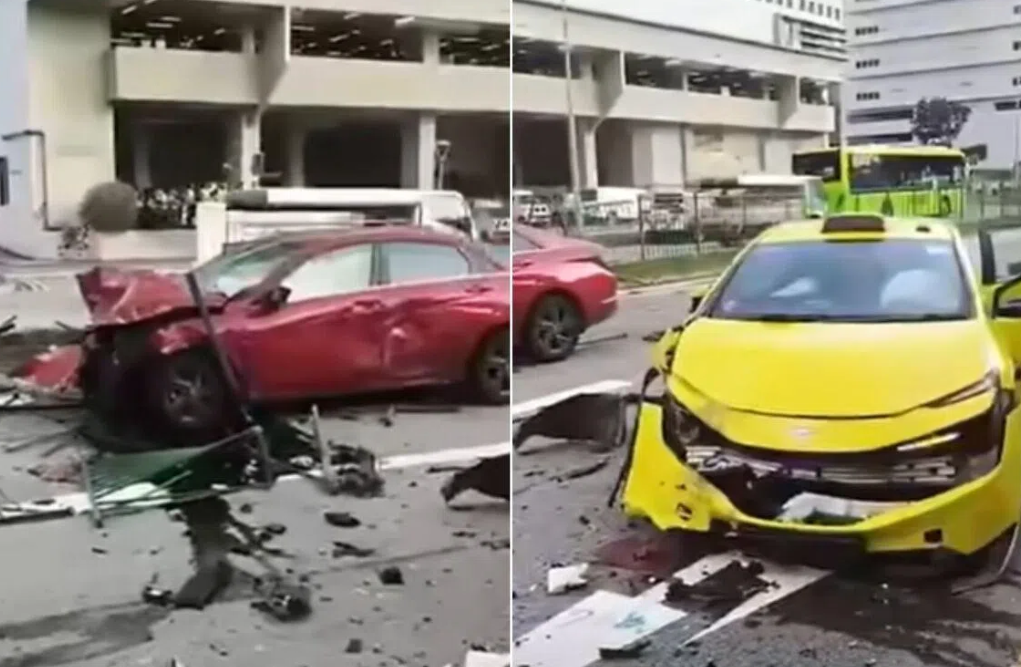
A Singapore driver has faced a string of serious charges following a reckless driving incident in Kallang that resulted in a collision with a taxi and injuries to two passengers. Mohamed Firdouz Mohamed Akram, aged 36, was presented in court on June 19 with multiple offences including operating a motor vehicle without proper licensing, driving whilst impaired by methamphetamine commonly known as Ice, and causing bodily harm through dangerous driving practices. The case has drawn attention to the growing intersection between drug abuse and traffic safety in Singapore, highlighting the enforcement challenges faced by authorities in combating substance-impaired motoring.
The incident occurred during morning rush hour on June 17, when Firdouz allegedly piloted his vehicle along Kallang Bahru at approximately 8 in the morning. According to police investigations detailed in court documents, the 36-year-old had consumed Ice prior to getting behind the wheel. Rather than maintaining the careful control required on busy urban roads, he allowed his vehicle to veer out of proper lanes, ultimately colliding with a taxi that was lawfully operating in the area. The impact was forceful enough to cause physical trauma to the cab's occupants, a driver aged 60 and a female passenger of 43 years, both of whom required medical attention for their injuries sustained in the crash.
Following the collision, Firdouz's behaviour further compounded the seriousness of the situation. Instead of remaining at the scene to provide assistance and cooperation with law enforcement, he abandoned his damaged vehicle and fled the crash location before police units could arrive. This action—leaving a scene where persons had been injured—constitutes an additional violation that demonstrates a flagrant disregard for legal obligations and public safety. Police responded swiftly to reports of the accident and began a pursuit to locate the driver, ultimately identifying and apprehending him within five hours of the initial incident report.
Investigations conducted at the crash scene and during the subsequent search of Firdouz's abandoned vehicle uncovered evidence suggesting a pattern of illegal activity extending beyond the immediate driving offence. Officers recovered suspected drug materials, apparatus for drug consumption including vaporising equipment, and a weapon classified as a knuckleduster. These items were formally seized as evidence in the case. The discovery of drug paraphernalia corroborated the allegation that Firdouz had been under the influence during the incident and suggested possible substance dependency or regular use habits.
Further investigation revealed that Firdouz was not carrying lawful authorisation to operate a Class 3 vehicle, the category required for standard motor cars. This licensing violation adds another layer of culpability, suggesting that his operation of the vehicle was fundamentally unauthorised under Singapore's transport regulations. The combination of driving without appropriate licensing, operating whilst intoxicated by controlled substances, and fleeing the scene creates a compelling picture of multiple breaches of traffic and criminal law.
Court documents additionally indicate that authorities discovered two knives in Firdouz's possession during a search conducted at approximately 1 o'clock on the afternoon of June 17 at a location identified as the Village Hotel Katong on Marine Parade Road. The presence of these weapons led to two separate charges related to unlawful possession of weapons, further complicating the charges he faces before the courts. While the connection between the weapons and the traffic incident remains unclear from publicly available information, their discovery signals to prosecutors and the court a pattern of potentially dangerous behaviour extending beyond the single collision.
The medical consequences of the collision, though not life-threatening, nonetheless caused demonstrable harm to innocent parties simply going about their daily activities. The taxi driver reported experiencing chest pain consistent with potential trauma, whilst his passenger sustained tailbone injuries requiring medical evaluation. These injuries, whilst not classified as severe, represent real suffering inflicted upon members of the public who bore no responsibility for Firdouz's decision to drive whilst impaired and unlicensed.
Singapore's legal framework provides substantial penalties for those convicted of driving under the influence of drugs. An offender found guilty of operating a vehicle whilst under the influence of controlled substances faces potential imprisonment for up to one year, financial penalties reaching S$10,000, or a combination of both sanctions. For those responsible for causing injuries to others through dangerous driving practices, the court may impose imprisonment of up to one year alongside fines ranging from S$2,000 to S$10,000. These statutory maximums reflect the legislature's recognition that impaired driving poses acute risks to public safety.
The case underscores growing concerns across Singapore regarding substance abuse and its intersection with road safety. Methamphetamine use, in particular, has shown increasing prevalence in enforcement statistics, with the drug affecting cognitive function, reaction time, and judgment—all critical factors in safe vehicle operation. For Malaysian observers and regional transport authorities, the case serves as a reminder of the transnational nature of drug-related traffic offences, particularly given cross-border traffic patterns and the substance trafficking networks that operate throughout Southeast Asia.
The court has scheduled a further mention of Firdouz's case for July 17, at which point the proceedings will progress toward resolution. The eventual outcome will likely influence how prosecutors and judges in Singapore approach similar cases involving drug-impaired driving, particularly those where injuries result and the accused flees the scene. The matter also reflects systemic questions about early intervention for substance users who present dangers to public safety, and whether traffic enforcement can serve as an effective touchpoint for identifying individuals requiring drug rehabilitation services.
For the broader Southeast Asian region, this case illustrates the operational challenges that authorities face in combating impaired driving. Unlike alcohol, whose presence can be detected through breathalyser testing at roadside, drug impairment requires more sophisticated detection methods and trained personnel, creating investigative delays and complications. Singapore's relatively advanced enforcement capabilities mean it can prosecute such cases effectively, but neighbouring jurisdictions may face greater obstacles, potentially resulting in under-detection and under-prosecution of similar offences that endanger regional road users.
The incident serves as a cautionary reminder to motorists regarding the legal and human consequences of substance-impaired driving. Beyond the criminal penalties and potential imprisonment, such reckless behaviour places innocent lives at risk and can result in permanent disability or death. As urban populations across Malaysia and the broader region grow, and as drug use patterns evolve, traffic safety authorities must continue developing strategies to detect, deter, and prosecute drivers operating under the influence of controlled substances.

