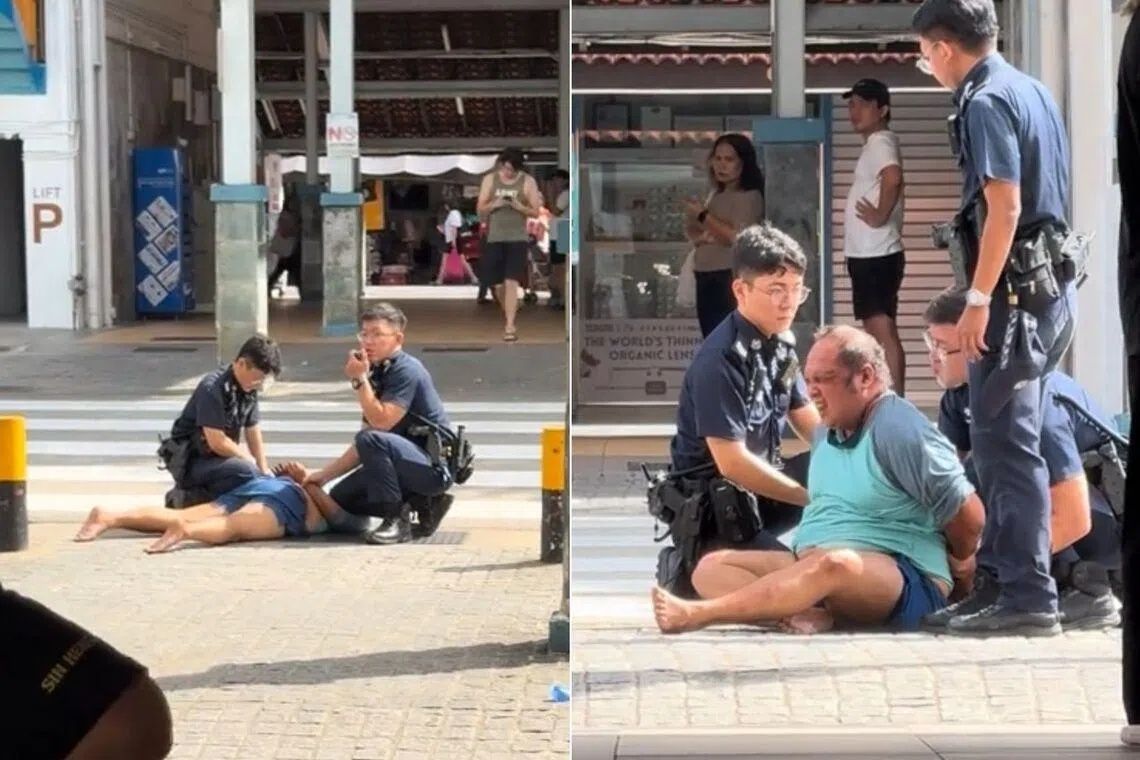
A 36-year-old man has been taken into custody in Singapore's Toa Payoh district after a disturbing incident that saw him assault a police officer and commit an obscene act in public. The altercation unfolded on Sunday morning, June 28, when police responded to reports of a disturbance at a coffee shop in the residential neighbourhood, marking another instance of violence directed at law enforcement in the city-state.
Authorities received a call for assistance at approximately 9.45am at Block 184 Toa Payoh Central, where witnesses reported a man creating a commotion inside the establishment. The exact nature of the initial disturbance remains unclear, though police confirmed that the individual was engaged in conduct deemed indecent in a public setting. Officers were dispatched to the scene to manage the situation and restore order within the coffee shop.
The encounter between the man and police escalated dramatically when officers moved to apprehend him. During the arrest process, the suspect punched one of the responding officers directly in the face, a deliberate act of violence against a person carrying out lawful duties. The assaulted officer, a 19-year-old constable, sustained minor injuries in the confrontation but remained conscious and was subsequently transported to hospital for medical evaluation and treatment.
TikTok user Kee Wee Shang captured footage of the incident, which circulated online and provided documentation of the scene. Video evidence shows two police officers restraining a barefooted man on the ground as they worked to bring the situation under control. Additional footage recorded by the same user depicts a third officer present at the location, with the suspect already handcuffed and being escorted away by multiple personnel.
The arrested individual now faces two serious charges: committing an obscene act in public and voluntarily causing hurt to a public servant in a manner intended to deter that person from performing their official duties. These charges reflect Singapore's strict approach to both indecent conduct and violence perpetrated against law enforcement personnel. The second charge carries particular significance, as it demonstrates that authorities view assaults on police officers as attempts to undermine their capacity to maintain public order.
For Malaysian readers, this incident highlights the operational challenges faced by police forces across Southeast Asia in maintaining civil order while protecting their personnel from harm. Singapore's robust enforcement mechanisms and rapid response protocols showcase how a developed city-state tackles such disturbances, though similar incidents have been reported in Malaysia and other regional jurisdictions. The involvement of bystanders recording and sharing video evidence reflects the modern reality of policing in the digital age, where incidents are frequently documented and disseminated through social media platforms.
The assault on the young police officer is particularly noteworthy given his age and relative inexperience in the force. Attacks on emergency service workers remain a concern across the region, with officers increasingly facing hostile situations during routine interventions. This incident underscores the occupational risks that police officers encounter, even during seemingly straightforward disturbance calls at public establishments.
Singaporean authorities have indicated that investigations into the matter are continuing, suggesting that additional details may emerge as police gather statements from witnesses and review all available evidence. The police statement did not specify whether the suspect has a prior history with law enforcement or whether substance abuse played a role in his behaviour, factors that often provide context for such incidents.
The online circulation of footage from the incident raises questions about evidence preservation and the role of eyewitness documentation in contemporary policing. While video evidence can support investigations and provide transparency regarding police operations, it also reflects broader societal shifts in how law enforcement is monitored and held accountable.
This occurrence comes as regional police forces continue to grapple with escalating violence targeting their personnel. Singapore, despite its reputation for low crime rates and efficient law enforcement, is not immune to such incidents. The episode serves as a reminder that public order challenges can emerge unexpectedly in any jurisdiction, requiring trained, equipped, and resilient police services to respond effectively while minimising harm to both officers and members of the public.

