Singapore has taken action against two radicalised individuals under the Internal Security Act, marking the latest cases where the Israeli-Palestinian conflict has driven citizens towards violent extremism. A 19-year-old student named Cyrus Dzulqarnain Al-Shahriar received a restriction order, while Tarmizi Mohd Taha, a 30-year-old customer service officer, was detained. The announcements by the Internal Security Department on June 24 highlight growing concerns about how global conflicts are triggering domestic security threats within multicultural Southeast Asian societies.
Cyrus's pathway to radicalisation reveals the complex digital ecosystem through which young people are exposed to layered extremist narratives. Beginning in 2022, the teenager joined online religious learning groups to deepen his Islamic knowledge. However, the spaces he frequented exposed him to anti-Western and anti-LGBTQ content. He began posting material inciting violence against LGBTQ communities, demonstrating how religious inquiry can be corrupted by extreme ideological framing when safeguards are absent. This early exposure set the foundation for more dangerous radicalism to take hold.
The October 2023 Hamas attacks on Israel provided a powerful catalyst that redirected Cyrus's developing extremism towards jihadi narratives. He engaged with pro-Hamas content online, came to view the killing of Israeli civilians as a legitimate form of religious struggle, and even contemplated travelling to Gaza to fight. Though he abandoned these plans due to practical constraints and fear of physical combat, the ideological shift was profound. This pattern mirrors radicalisation processes observed across the region, where international conflicts provide emotional catalysts that transform isolated grievances into perceived religious obligations.
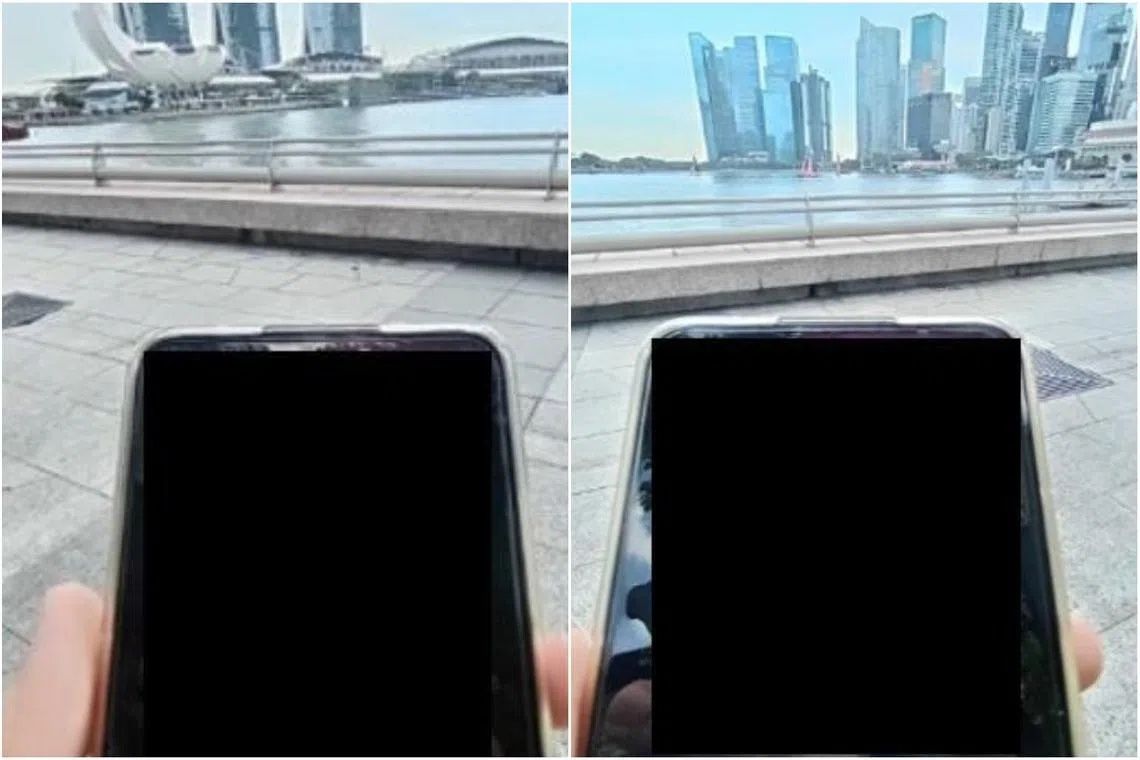
Cyrus subsequently encountered a niche online Islamist extremist group subscribed to what authorities term composite violent extremism—a "salad bar" approach where adherents blend incompatible ideologies into personalised justifications for violence. This particular group believed in accelerationist violence designed to destabilise the global order, viewing the West and Singapore itself as extensions of American and Zionist control. In early 2025, Cyrus joined their private chat channels and became increasingly immersed in celebrating past terrorist attacks, including Al-Qaeda's September 11 operations and the 2002 Bali Bombings. His commitment deepened when he photographed the group's materials at Marina Bay Sands and publicly shared these images on social media, effectively pledging allegiance to the network.
Within this radicalised echo chamber, Cyrus embraced what the group called "digital jihad"—campaigns of online harassment against those critical of Islam. He disseminated false information targeting these individuals, incited violence against them, and promoted both Hamas and the Syrian militant group Hay'at Tahrir al-Sham. His extremism was not monolithic but rather a dangerous fusion of Islamist violence justifications with other marginalised belief systems circulating online. The sophistication lay in how he wove together seemingly separate ideological threads into a coherent personal worldview that legitimised violence across multiple dimensions.
In a concerning divergence, Cyrus also became absorbed by content related to Elliot Rodger, the 2014 school shooter who killed six people near the University of California, Santa Barbara. Through exposure to online incel forums—communities of predominantly male individuals who blame women and society for their romantic failures—Cyrus adopted this identity and began posting threats of sexual violence and murder targeting women, using dehumanising terminology like "foid." He fantasised about committing attacks at his school against LGBTQ individuals and couples, representing a disturbing convergence of misogynist and jihadist extremism. Importantly, these violent fantasies remained at the ideation stage without progression toward concrete planning or execution.
Tarmizi Mohd Taha's case presents a different but equally serious security concern. The 30-year-old customer service officer explicitly stated his willingness to conduct attacks within Singapore if instructed by Hamas. Critically, Tarmizi possessed operational advantages through his prior service as a logistics assistant in the Singapore Police Force, knowledge he believed would make him valuable to the militant group and accelerate his path to martyrdom. His case demonstrates how even moderate professional positions can become security vulnerabilities when ideology overrides loyalty to one's country. While no specific attack planning has been identified, his stated readiness combined with relevant expertise represents a qualitatively different threat profile from Cyrus's ideological extremism.
The Internal Security Department emphasised that though these cases are unrelated, both individuals were radicalised through exposure to the ongoing Israeli-Palestinian conflict following October 2023. They represent the seventh and eighth Singaporeans dealt with under the ISA whose extremism traces directly to this geopolitical event. For Malaysia and broader Southeast Asia, this pattern underscores how regional stability can be affected by conflicts originating thousands of kilometres away, particularly in an era where digital platforms instantly globalise grievances and frame local conditions through international religious and political struggles.
The composite violent extremism evident in Cyrus's case poses novel challenges for security services accustomed to addressing coherent ideological movements. By drawing selectively from Islamist, accelerationist, incel, and other extremist frameworks, individuals construct personalised justifications for violence that are harder to counter through conventional counter-narratives targeting specific ideologies. The diversity of beliefs incorporated into his worldview—from anti-Western jihadism to anti-feminist violence—suggests that single-issue deradicalisation approaches may prove insufficient. The lack of organisational structure or clear hierarchy, typical of such "salad bar" extremism, also complicates detection and intervention compared to centralised terror groups.
Cyrus will undergo a rehabilitation regime designed to address his radical beliefs, though the effectiveness of such programmes remains contested, particularly for individuals deeply embedded in online communities reinforcing their worldviews. The authorities have determined that his violent ideations did not extend to family or schoolmates, meaning immediate offline risks appear contained. However, his continued access to the digital spaces where he became radicalised, absent active intervention, would likely perpetuate and deepen his extremism. The case raises questions about platform responsibilities, parental monitoring, and the adequacy of institutional safeguards—questions increasingly urgent across Malaysia and the region as youth engagement with global extremist narratives accelerates.
For Malaysia, which shares Singapore's multicultural character and faces comparable radicalisation pressures, these cases offer important cautionary insights. The speed with which Cyrus progressed from religious learning to violent extremism over roughly three years demonstrates how quickly digital pathways can transform vulnerable young people into security concerns. The intersection of global conflict narratives with local grievances, combined with the algorithmic amplification of extreme content, creates conditions where ideological contagion spreads rapidly across borders. Malaysian authorities and society more broadly must consider how to strengthen digital literacy, community monitoring, and early intervention mechanisms without compromising the religious freedom and open discourse essential to multicultural cohesion.

