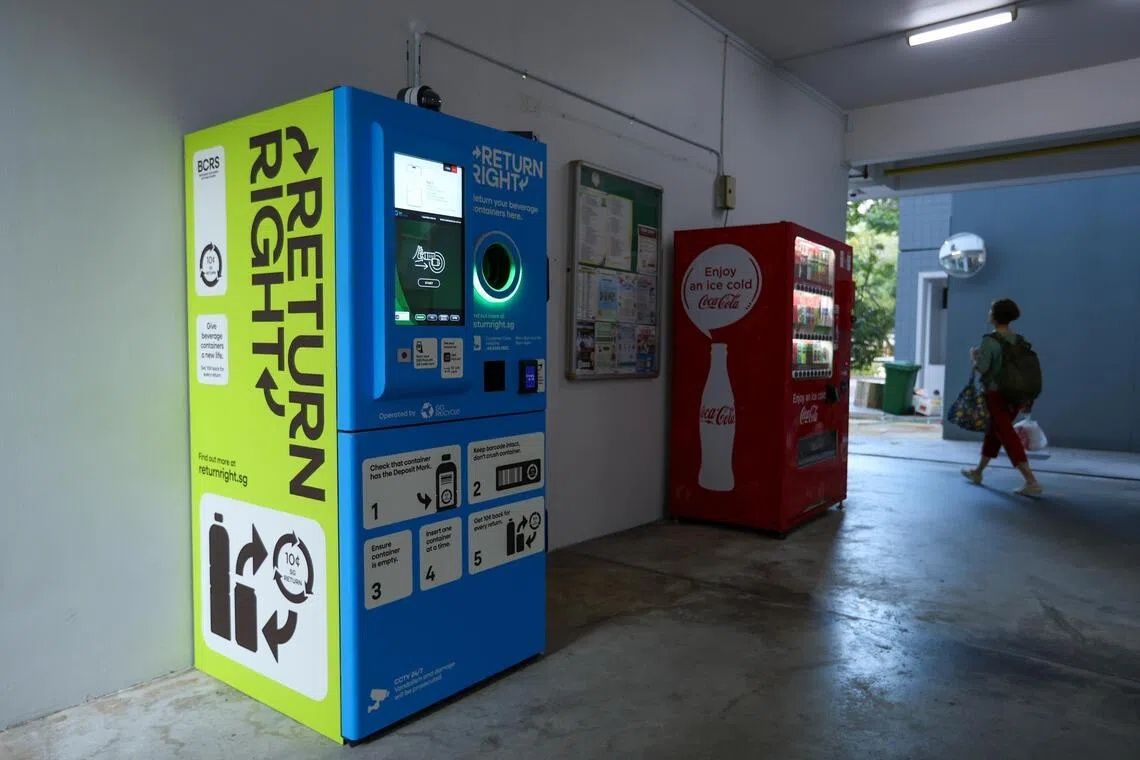
Singapore's National Environment Agency has moved swiftly to counter allegations of financial impropriety levelled at its flagship Beverage Container Return Scheme, asserting through a public statement on August 15 that such accusations stem from a fundamental misreading of official data. The defence comes after parliamentary disclosures about the recycling initiative triggered online speculation that deposits were being improperly withheld from consumers, prompting the agency to issue a detailed rebuttal addressing what it characterised as widespread misinterpretation.
The controversy centres on figures disclosed by Senior Minister of State for Sustainability and the Environment Janil Puthucheary during parliamentary proceedings on August 5. He reported that between April and July, over one million successful refund transactions had been processed across the scheme's network of reverse vending machines, which collectively received 5.5 million used beverage containers. This data point became the flashpoint for online discussion, with some commenters concluding that only one million containers out of the 5.5 million returned had been refunded to consumers, implying that roughly 4.5 million containers had been processed without corresponding deposit payments.
The NEA's rebuttal hinges on clarifying the distinction between transaction counts and container volumes. The agency explained that its refund figure represents the number of separate occasions on which consumers activated the machines, not the number of individual containers processed. This distinction carries significant practical implications for understanding the scheme's operation. Consumers routinely deposit multiple containers in a single visit to a reverse vending machine, meaning each refund transaction encompasses multiple bottles and cans rather than representing a one-to-one relationship between transactions and items returned.
According to NEA calculations, the mathematics reveal an average of 5.5 containers returned per transaction across the four-month trial period. With each beverage container carrying a standardised 10-cent deposit, this translates to approximately S$550,000 (US$429,822) in refunds distributed to participating consumers. The agency's position is that this straightforward arithmetic demonstrates full accountability for deposits collected, effectively negating suggestions of systematic misappropriation. For Malaysian observers, this episode underscores how government data presentation can be vulnerable to misreading in digital spaces, particularly when statistical context is absent from initial announcements.
The Beverage Container Return Scheme represents Singapore's attempt to incentivise recycling through a deposit-refund mechanism, requiring consumers to pay an additional 10 cents when purchasing canned or bottled beverages. This surcharge becomes refundable upon returning the empty container to designated reverse vending machines located across the island. The model builds on established international precedent, operating similarly to deposit systems in countries including Germany, Australia, and various Scandinavian nations. For regional context, Malaysia has explored similar deposit-based recycling mechanisms, making Singapore's implementation and public reception particularly relevant to domestic policymakers considering comparable interventions.
The scheme's launch on April 1 was accompanied by operational teething troubles that received media attention and consumer complaints. Users reported experiencing delays in receiving refunds due to mechanical malfunctions within the vending machines, whilst others described incidents where the equipment rejected containers despite their apparent eligibility for refund. These technical issues forced some consumers to pursue refunds through email contact with scheme administrators rather than accessing immediate returns via the automated machines. Such friction points inevitably generated frustration and contributed to the scepticism that subsequently manifested in online commentary about deposit accounting.
During his August 5 parliamentary address, Janil acknowledged that isolated technical problems had occurred but characterised such instances as exceptional rather than systemic. He indicated that the scheme operator and machine vendors had worked collaboratively to diagnose and resolve reported issues expeditiously. His framing emphasised that the overwhelming majority of transactions proceeded without difficulty, suggesting that complications affected only a marginal portion of overall refund activities. However, this emphasis on exceptional cases did little to address underlying public confusion about the overall refund figures, leaving the door open to misinterpretation.
The NEA's public response via Facebook represents a shift toward transparency, directly engaging with online discourse rather than allowing misconceptions to circulate unchallenged. This approach reflects broader recognition among government agencies across Southeast Asia that social media commentary can rapidly crystallise into public opinion if left unaddressed. By deploying straightforward arithmetic and clear explanation of transaction mechanics, the NEA attempted to reframe the narrative around the scheme from one of suspected misconduct to one of simple statistical misunderstanding. Whether this intervention successfully restores public confidence in the initiative remains to be assessed through subsequent monitoring of digital sentiment.
Operationally, the Beverage Container Return Scheme exists under formal oversight mechanisms designed to ensure continued accountability. BCRS is mandated to submit annual financial reports to the NEA, providing documented evidence of deposit collection, refund disbursement, and administrative expenditure. These reporting requirements establish an audit trail that theoretically enables detection of any sustained divergence between deposits collected and refunds distributed. The existence of such frameworks is noteworthy for Malaysian stakeholders evaluating similar schemes, as robust reporting infrastructure can serve to either prevent or quickly expose financial irregularities.
The episode also illuminates broader challenges facing environmental initiatives that depend on public participation and trust. Deposit-refund schemes require consumers to engage repeatedly with participating systems, behaviour that is sustained primarily through confidence that promised refunds will materialise reliably. When technical failures or communication gaps undermine this confidence, as occurred during the early months of Singapore's programme, public scepticism can extend beyond individual transaction disputes to encompass broader questions about scheme governance and financial integrity. This suggests that agencies implementing similar initiatives must invest substantially in both system reliability and proactive public communication about programme finances.
For Southeast Asian governments considering or implementing deposit-refund recycling schemes, Singapore's experience offers important lessons about the interconnection between operational excellence and public perception. The technical failures experienced during the BCRS launch were troublesome but ultimately remediable through standard engineering solutions. By contrast, the subsequent erosion of public confidence stemming from perceived financial opacity created a more intractable challenge requiring explicit public clarification and reputational repair. This dynamic suggests that future implementations would benefit from front-loading communication strategies that clearly explain transaction mechanics and commit to transparent, accessible reporting of financial flows. The NEA's August response, whilst effective as damage control, might have been unnecessary had such clarity been established at programme inception.

