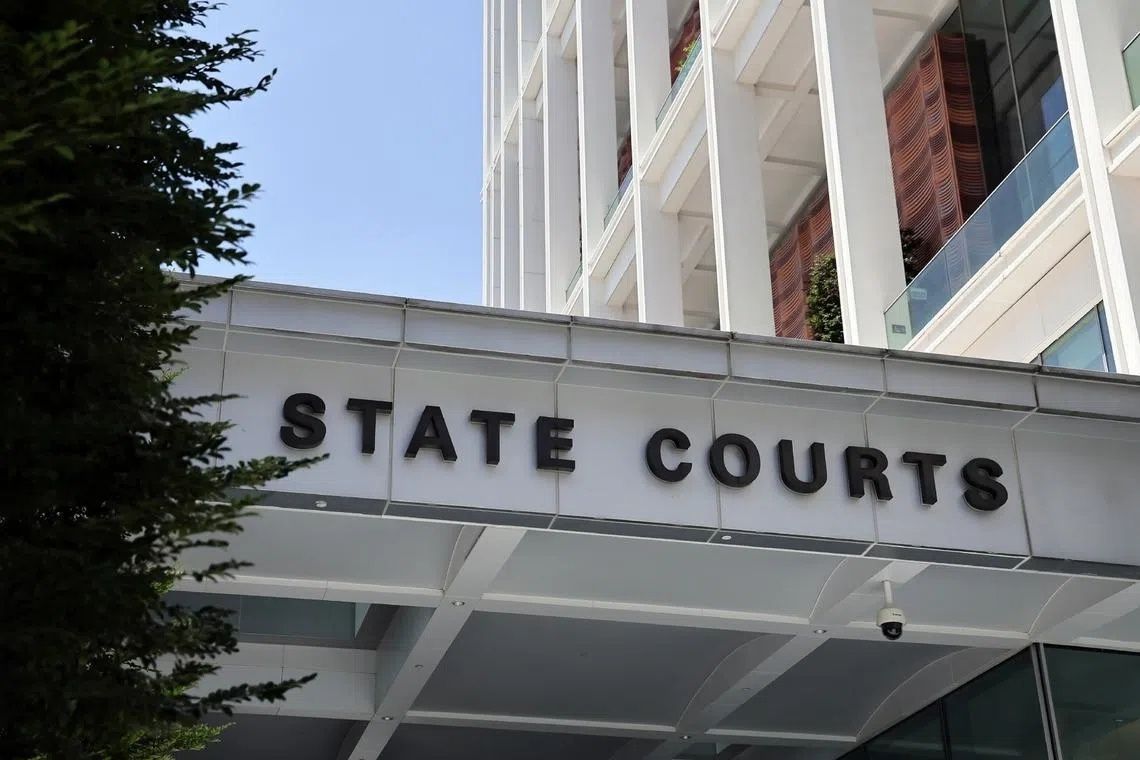
Singapore's Traffic Police have intensified enforcement against drink driving, charging 41 motorists with alcohol-related offences in a single day on June 25, highlighting the persistent dangers posed by intoxicated drivers on the island's roads. Among those hauled before the district court were three men—Tho Yu Wei Ronald, Zhong Pengzhi, and Dharuman Killivalavan—whose cases carry a troubling dimension: all three allegedly fell asleep while driving under the influence of alcohol in separate incidents, underscoring the severe impairment caused by combining intoxication with fatigue.
Tho Yu Wei Ronald, 34, allegedly abandoned his vehicle at the entrance of a multi-storey carpark at Block 176 Hougang Street 13 at approximately 11:05pm on April 30. According to court documents, he was found to have 51 micrograms of alcohol per 100 millilitres of breath, exceeding the legal limit of 35 micrograms. The charges against him include both drink driving and leaving a vehicle in a position causing undue inconvenience to others—an ancillary offence that reflects the broader disruption created when intoxicated drivers abandon vehicles in dangerous locations.
Zhong Pengzhi, 38, presented a similar scenario in a different geographic location. He allegedly left his vehicle in the second lane of a two-lane road along Clementi Avenue 5 at approximately 1:40am on May 9 after falling asleep, registering a breath alcohol reading of 48 micrograms. The early morning timing of the incident suggests a late-night drinking session that impaired his ability to maintain safe vehicle control, creating hazards for early morning commuters and delivery drivers who would have encountered the abandoned vehicle.
The most severe case among the three involved Dharuman Killivalavan, 29, an Indian national driving a lorry along Loyang Avenue at approximately 7:45pm on June 15. His breath alcohol content reached 87 micrograms—nearly two and a half times the legal limit—when he left the vehicle unattended in the extreme right lane. Recognising the severity of his conduct, Killivalavan pleaded guilty on June 25 and received a substantial fine of $7,100 along with a 36-month driving disqualification, penalties that underscore the seriousness with which Singapore treats commercial vehicle drivers who breach safety standards.
The single-day charging of 41 drivers reflects coordinated enforcement operations that aim to deter dangerous behaviour on the roads. Of this cohort, two were repeat offenders, indicating that existing penalties have failed to prevent recidivism among certain motorists. Cheng Woon Siong, 44, represented one such case. Despite a previous conviction for drink driving in December 2019, he was again stopped by police for checks and found to have 52 micrograms of alcohol per 100 millilitres of breath. The courts responded with escalated consequences: one month's imprisonment, a fine of $5,500, and a 60-month driving ban upon his release. This significantly harsher punishment compared to first-time offenders illustrates Singapore's approach to habitual offenders who demonstrate persistent disregard for traffic safety laws.
The second repeat offender, Koh Choon Lye, 48, was stopped along Tyrwhitt Road on April 16 with a breath alcohol reading of 51 micrograms. Having already been convicted of drink driving in 2018, his latest incident demonstrates that multiple convictions have not deterred dangerous driving behaviour. Such cases raise important questions about rehabilitation and the deterrent effect of existing sentencing frameworks, particularly for drivers who appear to view penalties as an acceptable cost of their conduct.
Statistical data released by the Traffic Police provides alarming context for these enforcement actions. During 2025, Singapore recorded 1,716 arrests for drink driving, alongside 12 fatal accidents attributable to intoxication. These figures underscore that despite sustained public messaging and enforcement operations, drink driving remains a persistent public safety threat on the island. The 41 drivers charged in a single day represent merely a snapshot of broader enforcement activity, though the concentration of charges suggests strategic timing or specific enforcement blitzes in response to identified problem areas or periods.
For Malaysian readers and those across Southeast Asia, Singapore's enforcement approach offers instructive parallels. The region's road safety records have long been problematic, with drink driving contributing significantly to mortality and injury statistics. Singapore's emphasis on immediate charging, court appearances, and meaningful penalties—including imprisonment for repeat offenders and extended disqualifications—represents a harder-line approach than exists in many neighbouring jurisdictions. The inclusion of ancillary charges such as leaving vehicles in inconvenient positions demonstrates an integrated approach to traffic offences that extends beyond the act of intoxicated driving itself.
The Traffic Police have explicitly cautioned that driving under alcohol influence constitutes an extremely dangerous and irresponsible act, urging the public to abstain from driving if they intend to consume alcohol. The official recommendation emphasises alternative transport modes, including taxis and private-hire vehicles, suggesting a policy environment in which authorities actively encourage ride-sharing as a harm reduction strategy. This approach acknowledges that complete abstinence from drinking may be unrealistic for many adults but that behaviour modification around driving is achievable through accessible alternatives.
The cases of Tho, Zhong, and Dharuman are particularly instructive because they demonstrate that intoxication impairs not merely judgment and reaction time but also basic consciousness itself. Falling asleep behind the wheel—whether while stationary or mobile—represents the ultimate failure of self-awareness, and the fact that three separate individuals exhibited this symptom within a relatively narrow timeframe suggests systematic problems in how many drivers assess their own fitness to operate vehicles. Public health campaigns might usefully emphasise this dimension: intoxication can render drivers so incapacitated that they lose consciousness before they lose mobility, a message that may resonate more powerfully than abstract statistics.
The aggregate one-day charging of 41 drivers also suggests that drink driving remains widespread rather than aberrational. If a single day's enforcement operations yielded 41 chargeable offences, the annual total of 1,716 arrests likely represents only those incidents detected through checkpoint stops, accident investigations, or specific complaints. The true prevalence of drink driving is presumably considerably higher, with many intoxicated drivers successfully completing journeys without police detection. This gap between detected and actual behaviour underscores enforcement limitations and suggests that even coordinated, well-resourced operations cannot eliminate the behaviour entirely.
Moving forward, Singapore's experience demonstrates that heavy penalties, including imprisonment and extended disqualifications, coexist with persistent offending, particularly among repeat violators. This paradox suggests that deterrence alone—no matter how severe—may be insufficient without complementary interventions such as alcohol treatment programmes, mandatory medical assessments for licence reinstatement, and technological solutions such as interlock devices that prevent vehicles from starting if breath alcohol levels exceed safe thresholds. The fact that individuals like Cheng and Koh reoffend despite previous sanctions indicates that current post-conviction rehabilitation and monitoring mechanisms require enhancement.
For Singapore authorities and regional transport regulators alike, the convergence of these cases on a single day represents both a snapshot of enforcement success and a reminder of the scale of underlying behavioural problems. The charged drivers will now face court proceedings and sentencing that may include additional imprisonment, higher fines, and prolonged driving bans. Yet without accompanying shifts in social attitudes toward drink driving and greater availability of safe transport alternatives, enforcement operations alone will likely continue to occupy a reactive posture, apprehending and punishing offenders rather than fundamentally preventing the dangerous behaviour that characterises intoxicated driving on regional roads.

