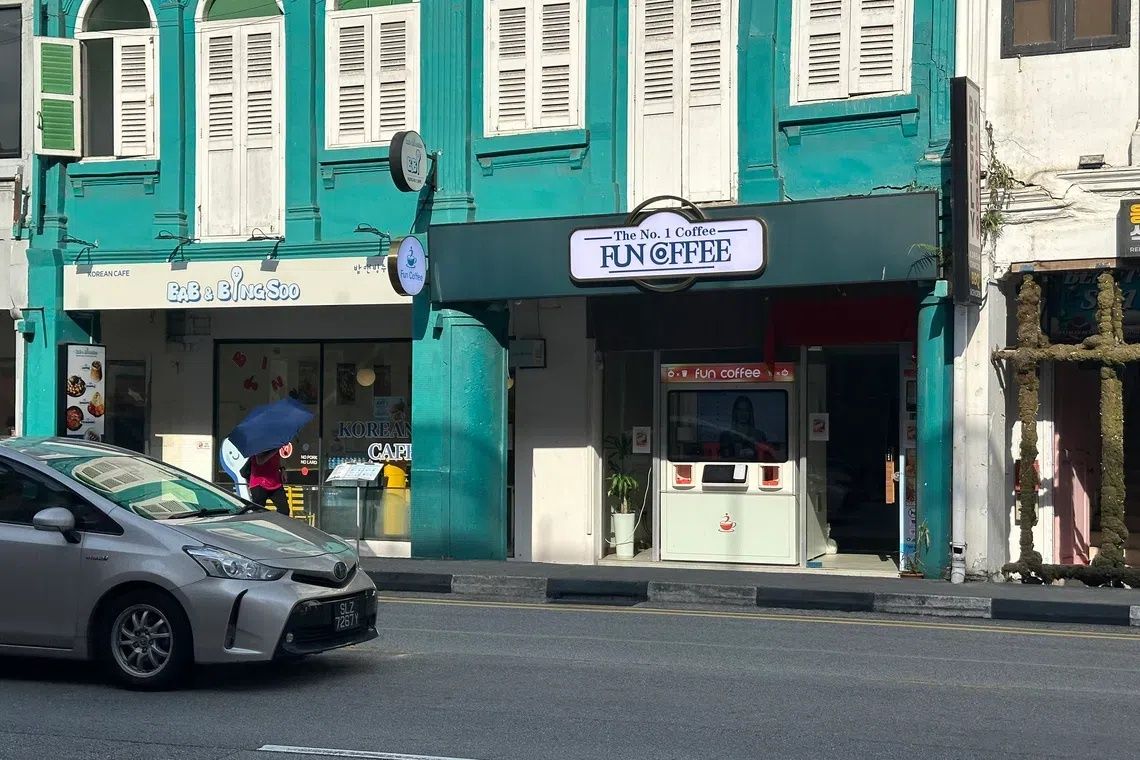
Singapore's police force has detained a 49-year-old woman in connection with the Fun Coffee platform, a scheme that authorities have identified as an elaborate investment fraud operating across multiple Asian jurisdictions. The arrest, made on August 6, marks a significant development in what police describe as an ongoing investigation into a multi-level marketing operation that has already claimed victims in several countries.
According to a police statement issued on August 8, the detainee actively worked to promote the Fun Coffee investment scheme and recruited numerous participants into the system. Her role extended beyond passive involvement; she served as an active recruiter, encouraging others to transfer cryptocurrency into accounts accessible through the platform's mobile application. This recruitment mechanism represents a hallmark characteristic of pyramid schemes, where earlier participants are incentivized to bring in new members rather than generating legitimate revenue through actual business operations.
The mechanics of the scheme reveal a sophisticated digital infrastructure designed to maximize participation and capital inflows. Interested investors downloaded a dedicated application and transferred Tether (USDT), a cryptocurrency designed to maintain parity with the US dollar, into wallet addresses provided through the platform. The system promised extraordinarily high returns on investment while simultaneously offering commission bonuses to those who successfully brought additional recruits into the operation. This dual incentive structure—combining unrealistic profit expectations with recruitment bonuses—creates the fundamental economic imbalance that characterizes pyramid schemes and makes their inevitable collapse catastrophic for late-stage participants.
One of the most troubling aspects of the Fun Coffee operation has been the systematic inability of investors to access their funds once they attempted withdrawal. Singapore participants discovered that the Fun Coffee application prevented them from converting their cryptocurrency holdings back into usable currency or removing their investments entirely. This lock-on-withdrawals mechanism essentially rendered investors' capital inaccessible, transforming what appeared to be an investment opportunity into a confiscation of funds. The woman faces charges under Singapore's Multi-Level Marketing and Pyramid Selling (Prohibition) Act, a legal framework specifically designed to combat such schemes. If convicted, she could face imprisonment for up to five years, fines reaching S$200,000, or both penalties combined.
Fun Coffee's operations extend beyond Singapore's borders, representing a transnational fraud that has affected investor populations throughout Asia. The platform, ostensibly based in Phu Quoc, Vietnam, claims on its website to possess assets exceeding US$1 billion and maintains a team comprising more than 5,000 individuals. However, these assertions require significant scrutiny given the fraudulent nature of the scheme. Recent enforcement actions across the region have intensified, with authorities in Hong Kong and Macau jointly arresting eight people linked to the operation during a concentrated crackdown. These investigations have revealed that approximately 200 individuals across the two jurisdictions lost nearly HK$100 million (S$16.3 million) through participation in the scheme.
The impact on individual investors has been devastating and concrete. One Singapore victim reported investing approximately S$400,000 into Fun Coffee, only to discover that she could not recover any portion of her capital. This loss represents not merely a financial setback but potentially a retirement fund, a child's education savings, or accumulated life savings that now evaporates due to the fraudulent operation. The cryptocurrency element of the scheme adds additional layers of complexity and irreversibility; once funds are transferred through blockchain networks, recovery becomes extraordinarily difficult even with law enforcement cooperation.
Fun Coffee's entry into Singapore occurred sometime in 2025, positioning itself as what the company's website describes as a "lifestyle brand combining coffee, wellness and digital innovation into a community experience." This marketing language exemplifies how modern investment frauds layer legitimate-sounding business concepts atop fundamentally unsustainable financial structures. The scheme's Singapore operations maintained a registered address at 202 Jalan Besar, where investigators discovered a coffee vending machine at the entrance. Handwritten instructions attached to the machine directed customers to scan a QR code to facilitate payments, suggesting a minimal physical presence and emphasizing the scheme's reliance on digital platforms rather than substantive commercial activity.
The red flags surrounding Fund Coffee's payment collection methods should alert potential investors throughout Southeast Asia to similar schemes. The reliance on personal PayNow QR codes, private mobile numbers, and overseas bank accounts represents a deliberate circumvention of standard financial regulatory oversight. Legitimate investment platforms maintain transparent payment processing through regulated financial institutions subject to anti-money laundering protocols and transaction monitoring. Schemes that explicitly avoid such oversight signal intent to conceal fund flows and operating structures. Singapore's police have issued public warnings advising citizens to cease all payments and transfers to Fun Coffee, regardless of whether requests emanate from purported company representatives or appear within the official application itself.
The emergence of Fun Coffee reflects broader vulnerabilities within the Southeast Asian investment landscape. Rapid cryptocurrency adoption, limited financial literacy regarding blockchain assets, and sophisticated digital marketing strategies have created conditions where fraudulent schemes can rapidly accumulate capital before detection. The sophistication of modern fraud—combining emerging technologies, professional-appearing platforms, and leveraging social networks—requires enhanced vigilance from both regulatory authorities and individual investors. For Malaysia and other regional economies, the Fun Coffee case provides crucial lessons regarding the necessity of understanding investment structures, recognizing recruitment-based incentive systems as fundamentally unsustainable, and maintaining skepticism toward platforms promising returns substantially exceeding market rates.
The coordinated response across multiple Asian jurisdictions suggests that regional law enforcement agencies increasingly recognize fraud as a transnational challenge requiring cooperative investigative frameworks. However, the delay between the scheme's initial operation and enforcement actions highlights the speed advantage that fraudsters maintain over regulatory response mechanisms. As cryptocurrency platforms and digital investment applications continue proliferating, financial regulators throughout Asia will require enhanced technical expertise, legislative authority, and international cooperation to identify and disrupt schemes before they accumulate the capital volumes witnessed in the Fun Coffee case. For Malaysian investors, the fundamental principle remains unchanged: investment opportunities claiming extraordinary returns while emphasizing recruitment incentives warrant immediate rejection regardless of their superficial legitimacy.

