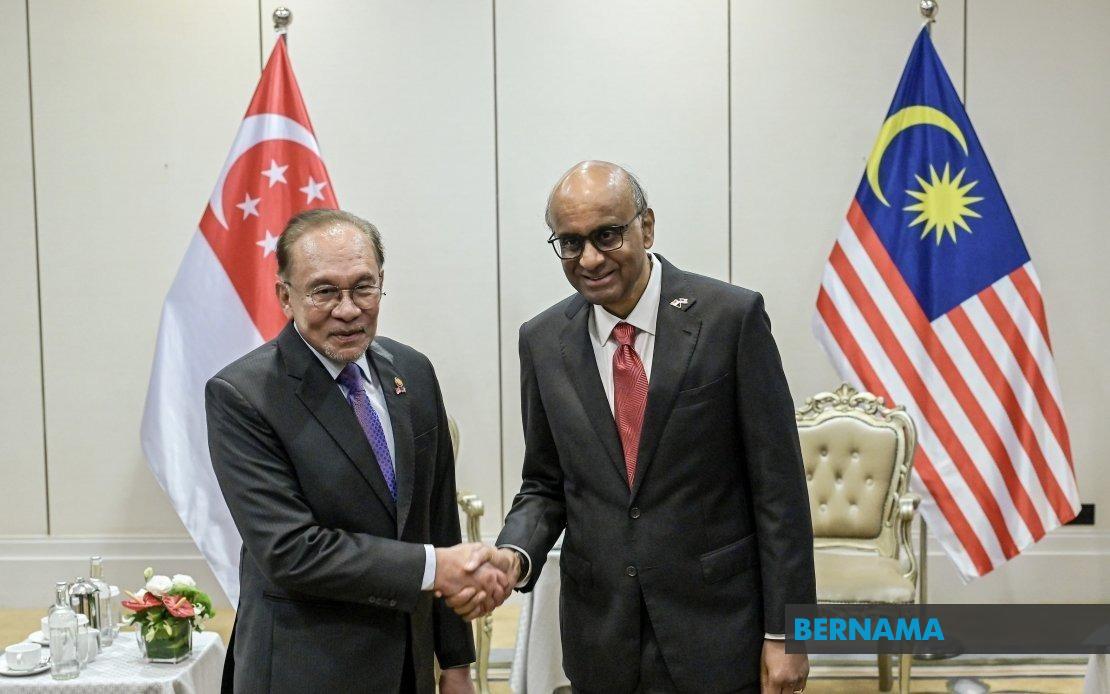
Singapore and Malaysia have committed themselves to expanding cooperation across several sectors identified as mutually beneficial, with particular emphasis on food security and energy independence. The pledge emerged during President Tharman Shanmugaratnam's first state visit to Malaysia as the island nation's president, a symbolic gesture underscoring the importance both governments place on their bilateral relationship. The two countries have long recognized that their geographic proximity and shared maritime environment create natural incentives for closer alignment on critical issues.
During his formal courtesy call on Prime Minister Datuk Seri Anwar Ibrahim on Monday, President Tharman emphasized the value of deepening existing partnerships while exploring new avenues for collaboration. The Singapore Foreign Ministry highlighted that both leaders articulated a commitment to maintaining and strengthening their cooperative framework, particularly in sectors where domestic challenges align. Food security remains a pressing concern across Southeast Asia, with both Singapore and Malaysia acutely aware of regional supply chain vulnerabilities and climate-related threats to agricultural productivity. Energy cooperation similarly reflects pragmatic recognition that stable energy supplies underpin economic growth and regional stability.
The bilateral engagement extended beyond high-level political discussions, incorporating formal state protocols befitting the occasion. President Tharman and his wife Jane Ittogi Shanmugaratnam received a state welcoming ceremony at Istana Negara, where they were received by His Majesty Sultan Ibrahim, King of Malaysia, and Her Majesty Raja Zarith Sofiah, Queen of Malaysia. This ceremonial dimension emphasizes that the visit carries significance beyond routine diplomatic business, reflecting the depth of institutional commitment from both nations' leadership structures. The involvement of Malaysia's Yang di-Pertuan Agong underscores the formal nature and bilateral importance of the engagement.
The leaders also addressed broader geopolitical questions affecting the region, with particular attention to developments in West Asia and their potential ramifications for Southeast Asian interests. Both President Tharman and Prime Minister Anwar reaffirmed their commitment to international law, emphasizing the primacy of the United Nations Convention on the Law of the Sea (UNCLOS) as the governing framework for maritime relations. This emphasis carries particular resonance for countries bordering the Strait of Malacca and operating within complex maritime boundaries, where adherence to established international legal norms provides stability and predictability. The commitment to safeguarding freedom of navigation reflects broader concerns about maintaining open sea lanes critical to regional commerce and security.
Beyond the national level, the Singapore president's itinerary included substantive engagement with Malaysian state-level authorities. On Tuesday, President Tharman met with the Sultan of Selangor, Sultan Sharafuddin Idris Shah, and Selangor Menteri Besar Datuk Seri Amirudin Shari, demonstrating recognition that federal systems require multi-layered diplomatic engagement. Selangor, as Malaysia's most economically dynamic state and home to the Klang Valley industrial corridor, offers particular opportunities for targeted collaboration. The decision to pursue state-level partnerships reflects understanding that innovation and implementation often emerge from sub-national governments with more agile decision-making structures.
The discussions with Selangor leadership identified several concrete areas for potential cooperation. Technical and vocational education emerged as a priority, addressing workforce development needs across both jurisdictions. Singapore has established itself as a regional hub for skills training and professional education, while Selangor represents a rapidly growing economy requiring talent pipeline expansion. Enhanced exchange programs in this domain could yield mutual benefits, allowing knowledge transfer while developing human capital aligned with regional industry requirements. Climate adaptation and flood mitigation represent another collaboration frontier, particularly relevant given Southeast Asia's vulnerability to monsoon patterns and rising sea levels.
The entrepreneurs and startup ecosystem featured prominently in discussions, reflecting both governments' recognition of innovation's role in economic resilience and competitiveness. Singapore and Selangor represent different but complementary positions within Southeast Asia's entrepreneurial landscape—one an established global fintech and innovation hub, the other an emerging center of digital commerce and manufacturing innovation. Cross-border startup collaboration could accelerate technology adoption, facilitate venture capital flows, and create networks linking early-stage companies with established investors and mentors. President Tharman's openness to expanded exchanges between Singapore and Selangor signals willingness to move beyond traditional government-to-government frameworks toward ecosystem-level partnerships.
The timing of this inaugural state visit carries symbolic importance amid evolving regional dynamics. As President Tharman assumes his role, establishing substantive relationships with Southeast Asian neighbors signals Singapore's continued commitment to regional integration despite its global economic orientation. For Malaysia, engagement at this presidential level demonstrates sustained interest in deepening ties with a critical economic partner. The visit occurs within a broader context of Southeast Asian nations reassessing regional relationships following shifts in great power competition and supply chain restructuring.
Food security discussions merit particular attention given both nations' vulnerability to global market volatility. Singapore imports approximately ninety percent of its food requirements, while Malaysia possesses agricultural capacity but faces productivity challenges and climate pressures. Potential cooperation frameworks could encompass joint research into sustainable farming practices, technology transfer for crop optimization, and coordinated approaches to regional supply chain resilience. Energy cooperation likewise reflects pragmatic resource management, with both nations exploring renewable energy expansion while managing transitional hydrocarbon requirements. Joint ventures in solar technology or regional grid integration could advance both nations' decarbonization commitments while reducing energy costs.
The emphasis on international law and maritime stability reflects anxieties about regional security and freedom of navigation in contested waters. The South China Sea remains an arena where great power competition intersects with ASEAN interests, making agreement on UNCLOS primacy especially significant. Both Singapore and Malaysia benefit from predictable maritime regimes that facilitate commerce and prevent militarization. This shared interest in rules-based maritime order represents common ground amid broader geopolitical fragmentation, where smaller nations rely on institutional frameworks rather than military capability to secure interests.
Looking forward, the commitments made during this visit establish a foundation for deepened bilateral engagement across multiple domains. The inclusion of state-level authorities suggests recognition that implementation requires sub-national capacity and buy-in. Concrete follow-up mechanisms—working groups on food security, energy collaboration task forces, and educational exchange frameworks—will likely emerge from these initial pledges. Malaysia and Singapore possess complementary strengths and interests that justify sustained investment in institutional relationships, from maritime law to technological innovation.
For Malaysian readers and regional observers, this visit represents affirmation that bilateral relationships remain central to Southeast Asian stability despite broader geopolitical flux. The emphasis on UNCLOS and freedom of navigation carries implications for all ASEAN members navigating great power competition. The focus on practical cooperation—food security, energy, education, climate resilience—demonstrates that regional nations are addressing shared challenges through collaborative rather than competitive frameworks. As Singapore assumes its presidency under Tharman Shanmugaratnam, this visit establishes precedent for engagement patterns that will likely characterize its diplomatic approach toward Southeast Asian partners throughout his tenure.

