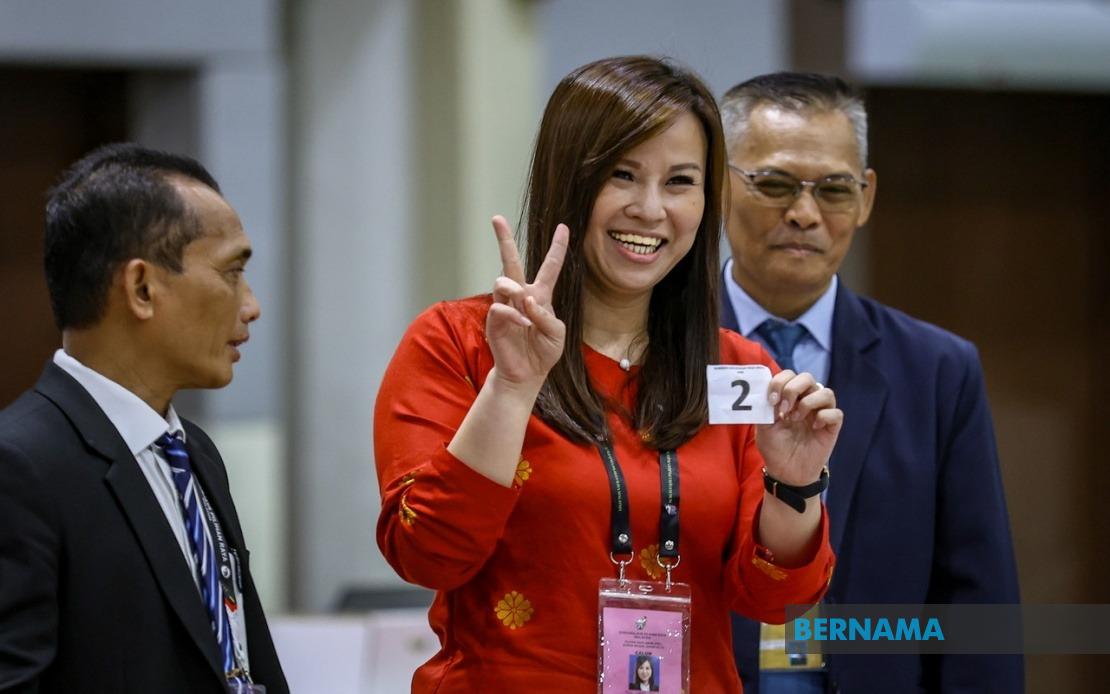
Sharon Teo's entry into the Permas state race represents a significant challenge to the Barisan Nasional's grip on the constituency, with the Pakatan Harapan contender zeroing in on two issues that resonate deeply with residents: the state of local roads and access to essential welfare services. Speaking after the nomination process at Dewan Muafakat in Johor Bahru on June 27, Teo articulated a platform grounded in addressing practical concerns raised during her ground engagement across the constituency, positioning herself as a candidate attuned to the everyday preoccupations of Permas voters.
The chief of Johor Amanah Women's Youth emphasised that deteriorating road conditions pose genuine safety risks to motorists and residents, making infrastructure maintenance a cornerstone of her policy agenda rather than a peripheral campaign talking point. This focus reflects a calculated strategy to win over voters in a constituency where maintenance and service delivery failures may have accumulated under the incumbent's tenure. Teo's background as an aide in the Pulai parliamentary constituency under the late Amanah deputy president Salahuddin Ayub has given her exposure to constituent services and legislative processes, though she will be operating as a candidate in her own right for the first time at the state level.
Her campaign will be anchored to a manifesto that is expected to provide more detailed policy prescriptions in the coming weeks, signalling that Teo and her team have invested effort in developing a substantive programme beyond broad campaign messaging. This approach contrasts with some incumbents who rely primarily on incumbency advantage rather than articulating forward-looking visions for their constituencies. The decision to defer manifesto release suggests strategic sequencing designed to maintain media momentum and voter attention leading up to the July 11 polling day.
The incumbent, Baharudin Mohamed Taib of Barisan Nasional, secured the Permas seat in the 2022 Johor state election but faces a notably complex political landscape this time around. Baharudin's acknowledgement that his opponents possess distinct strengths indicates that he cannot rely on the traditional BN machinery alone to secure victory, particularly if opposition votes consolidate around a single candidate or split across multiple challengers. His candid admission that securing a BN victory is no easy task reflects a realistic assessment of the electoral climate and suggests that his camp recognises the competitive pressures mounting against him.
Barharudin's decision to forego a personal manifesto and instead align his campaign with BN's broader party platform is a conventional approach that emphasises party unity and collective branding. However, this strategy carries risks in an era when voters increasingly expect personalised engagement and constituency-specific commitments from their representatives. By not articulating individual policy priorities, he may struggle to differentiate his candidacy or address localised grievances that extend beyond standard party positions.
The Permas contest has transformed into a four-way battle involving substantial political diversity. Alongside Teo and Baharudin, Perikatan Nasional fields T. Vela, while Parti Bersama Malaysia, a newer political force in Malaysian electoral politics, has fielded Dr Zamil Najwah. This fragmentation creates both opportunities and risks for traditional power brokers—while splitting the vote might prevent any single challenger from dislodging the incumbent, it also dilutes BN's vote share if anti-government sentiment runs high. The presence of smaller political players signals that Malaysian electoral dynamics have shifted beyond the binary contest between BN and PH that characterised earlier cycles.
Permas sits within the Pasir Gudang parliamentary constituency and encompasses 113,963 eligible voters, a substantial electorate by Malaysian state seat standards. The constituency's voter profile and demographic composition will significantly influence which candidate's messaging gains traction. Given Permas's location in a parliamentary area that has proven competitive, the state contest here will likely serve as a bellwether for broader patterns in Johor, where contests between BN and opposition coalitions have become increasingly unpredictable.
The 16th Johor state election scheduled for July 11 will determine not only the fate of individual candidates but also the political trajectory of Malaysia's second-largest state by population and economic output. Johor has historically been a BN stronghold, yet recent electoral cycles have demonstrated that traditional power bases can erode when constituents perceive governance failures or when opposition parties mount organised campaigns. The results from constituencies like Permas will provide crucial indicators about whether BN retains its dominance or whether opposition parties have successfully broadened their appeal across diverse demographic and geographic segments.
Early voting on July 7 provides an opportunity for individuals with work or personal commitments to cast ballots before the main polling day, potentially increasing overall voter turnout. Higher participation rates can advantage candidates with stronger ground organisation and voter mobilisation infrastructure, typically a traditional BN strength, though opposition parties in recent elections have demonstrated capacity to match or exceed BN's organisational prowess in certain areas.
The stakes extend beyond Permas itself, as Johor's electoral outcome will influence the broader political balance within Malaysia. The state government has significant devolved powers over land administration, Islamic affairs, and local governance, making state elections substantively important rather than merely symbolic contests. Results from races like Permas will provide insights into voter sentiment regarding incumbency, service delivery, and political direction that could reverberate across Malaysia's political landscape.

