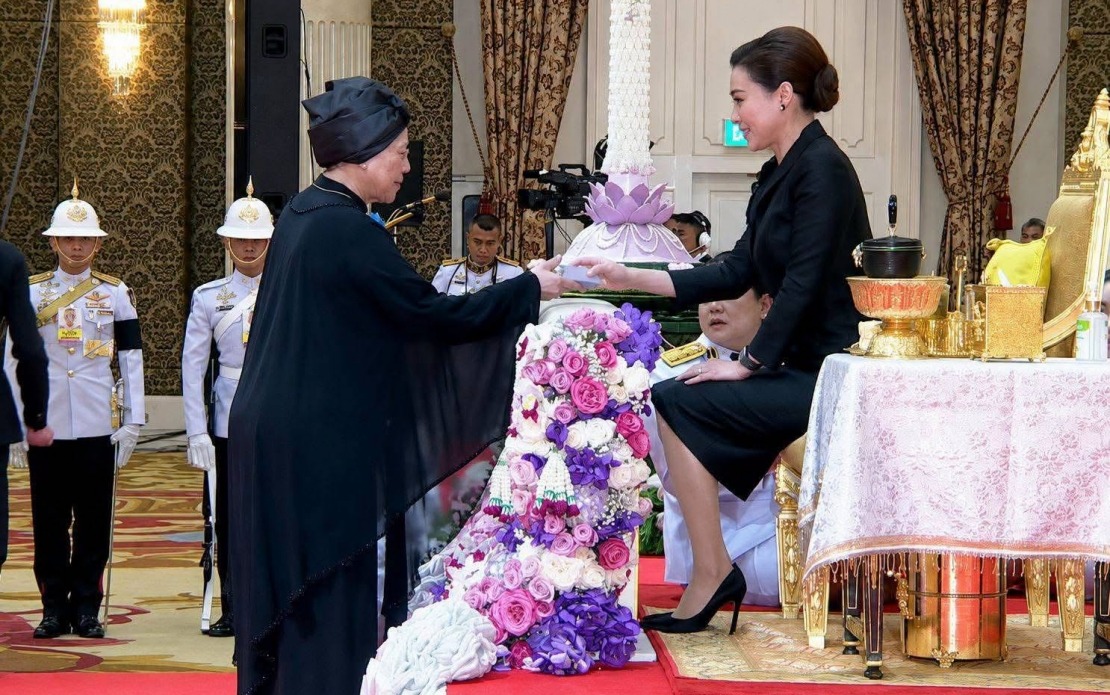
Prime Minister Datuk Seri Anwar Ibrahim and his wife, Datuk Seri Dr Wan Azizah Wan Ismail, have extended congratulations to Prof Emerita Tan Sri Datuk Seri Dr Sharifah Hapsah Syed Hasan Shahabudin following her conferment of the 'Outstanding Woman Award for Social Development'. The accolade, bestowed by Queen Suthida Bajrasudhabimalalakshana of Thailand, represents a significant endorsement of the accomplished academic and her decades of contributions to Malaysian society and regional scholarship.
Anwar used the occasion to underscore the broader significance of such recognition, positioning Sharifah Hapsah's achievement as emblematic of Malaysia's standing on the international stage. By highlighting how the award reflects positively on the nation, the Prime Minister drew attention to the calibre and capability that characterise Malaysian women in their professional and social endeavours. This framing suggests that individual achievements of prominent Malaysian women serve as barometers of the nation's development and soft power.
The Prime Minister's remarks emphasised that Sharifah Hapsah's recognition extends beyond personal accomplishment to represent a vindication of Malaysian women's broader contributions across multiple domains. Through her work, whether in academia, research, or social development initiatives, she has helped establish Malaysia's reputation for nurturing talented professionals capable of meeting international standards and expectations. Such visibility at the regional level carries implications for how Malaysia positions itself within Southeast Asia and globally.
Anwar stressed that this honour should catalyse further engagement from Malaysian women across society. In a message shared on X, he called for the recognition to inspire greater participation from women who might contribute through knowledge creation, leadership roles, and compassionate engagement in community-building efforts. This appeal reflects a deliberate strategy to translate symbolic recognition into concrete action, encouraging broader participation in national development initiatives.
The Prime Minister explicitly connected Sharifah Hapsah's achievement to the Malaysia MADANI agenda, his administration's overarching development framework. By doing so, Anwar positioned women's contributions not as separate from national development priorities but as integral to achieving the government's socio-economic objectives. This integration suggests that advancing women's participation is viewed as essential to realising the aspirations embedded within the MADANI vision.
Anwar's government has made several commitments regarding women's advancement that extend beyond rhetoric. The Prime Minister reiterated the MADANI Government's pledge to expand opportunities for women's participation across various economic, social, and governance sectors. This commitment acknowledges that genuine progress requires structural changes and resource allocation alongside inspirational messaging, recognising barriers that may limit women's advancement despite their qualifications and capabilities.
The emphasis on protecting and promoting women's roles within national development reflects a strategic pivot toward gender-inclusive policymaking. Rather than treating women's advancement as a peripheral concern or occasional gesture, the government's positioning suggests it views women's talent, leadership capacity, and potential as foundational pillars upon which national development must rest. This conceptualisation differs from earlier framings that sometimes relegated women's issues to separate policy silos.
Sharifah Hapsah's award carries particular resonance for Malaysian women working in academia and professional fields, where recognition from international bodies can influence career trajectories and institutional advancement. Her honour at the regional level, conferred by Thailand's monarchy, demonstrates that excellence developed within Malaysian institutions is capable of garnering cross-border recognition. This validation matters not only for the individual but for demonstrating to younger professionals that international acknowledgement of Malaysian expertise is attainable.
The award also reflects Thailand's own commitment to recognising women's contributions to social development across the region, suggesting that recognition of women's achievements transcends national boundaries within Southeast Asia. Regional cooperation on women's advancement and development has gained momentum in recent years, with organisations and governments increasingly collaborating on gender-inclusive programming. Sharifah Hapsah's recognition sits within this broader regional movement toward elevating women's voices and contributions.
For Malaysian readers, the significance extends to understanding how the nation's policy priorities are evolving. An administration that publicly celebrates women's achievements and commits resources to expanding their opportunities signals a particular vision for Malaysia's future. The explicit connection drawn between women's participation and national development agendas suggests that advancing gender equality is no longer viewed as separate from economic and social progress but intrinsic to it.
Anwar's remarks also implicitly acknowledge that much work remains in creating truly equitable opportunities across sectors. The need to call for inspiration and continued contribution suggests that despite progress, engagement levels may not yet reflect women's full potential or interest. This acknowledgement, while diplomatic, hints at recognition that systemic barriers persist even as individual success stories accumulate.
Looking forward, Sharifah Hapsah's recognition may influence how Malaysian institutions approach the development and support of women in leadership positions, particularly within academia and research sectors. When governments publicly acknowledge and celebrate women's achievements, institutional practices often begin shifting to reflect those values. Such recognition can create momentum for policy changes regarding mentorship, advancement pathways, and resource allocation.

