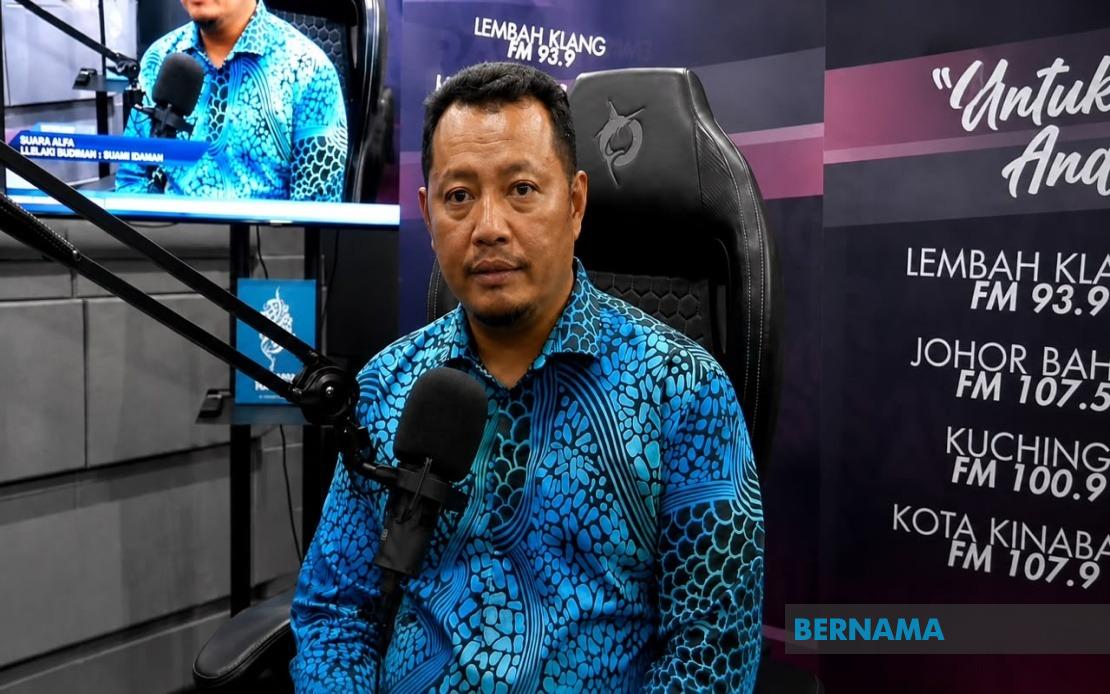
The journey toward developing men of character and responsibility begins not in adulthood but during the formative years of childhood and adolescence, according to Malaysia's National Population and Family Development Board. Speaking on Bernama Radio's Suara Alfa programme, Md Noh Saiman, chief assistant director of LPPKN's Counselling and Intervention Unit, underscored how the foundation for responsible manhood depends fundamentally on parenting approaches and the conduct parents demonstrate throughout their children's developmental stages.
Md Noh emphasised that children internalise and process what they observe in their parents' behaviour, making the home environment the primary laboratory for learning what it means to be a man of integrity. This observation aligns with established developmental psychology, which recognises that children's values, emotional responses, and gender roles are significantly shaped by early familial interactions and parental modelling. In the Malaysian context, where traditional family structures remain influential despite rapid social change, the responsibility placed on parents takes on heightened significance as the primary arbiters of social values within households.
The concept of a gentleman, Md Noh clarified, transcends the superficial aspects of politeness or romantic gestures that popular culture often emphasises. Instead, it encompasses deeper qualities including sincerity, integrity, and a genuine commitment to shouldering responsibilities without expectation of public recognition or reward. This distinction is crucial in contemporary discourse about masculinity, where social media frequently promotes performative displays of care and attentiveness rather than authentic partnership and reliable commitment within relationships and family structures.
Particularly relevant to Malaysian households is Md Noh's discussion of how spouses can meaningfully support one another through active participation in domestic responsibilities and childcare. Rather than viewing household management and child-rearing as exclusively feminine domains, the LPPKN perspective frames these responsibilities as opportunities for husbands to demonstrate their commitment to family welfare. Such engagement becomes transformative not only for the family unit but also for the spouse, as genuine partnership allows women greater freedom and confidence to pursue professional ambitions and personal development without bearing the sole burden of household management.
The Lelaki Idaman Programme, which LPPKN operates, functions as more than a recognition platform for men already demonstrating exemplary behaviour. Instead, it serves as an accessible avenue for men seeking to undergo personal transformation and adopt more responsible approaches to relationships and family life. This inclusive positioning acknowledges that masculine development is not static; rather, men can unlearn outdated patterns and actively cultivate better practices at any life stage. The programme's emphasis on receptiveness to constructive feedback as a marker of maturity further challenges traditional notions of masculinity that equate acceptance of criticism with weakness.
In Malaysia's contemporary landscape, digital platforms and social media have emerged as powerful shapers of expectations regarding ideal masculinity. Md Noh identified this as a significant challenge, noting that both men and women now encounter diverse—and sometimes conflicting—narratives about what constitutes a respectable gentleman. The algorithmic curation of content means individuals often inhabit echo chambers reinforcing particular ideals, whether traditional or progressive, without exposure to balanced perspectives. For Malaysian society, where generational attitudes toward gender roles vary considerably, this digital fragmentation complicates efforts to build consensus around healthy masculine identity.
The relationship between individual masculine development and broader family stability represents a critical linkage in LPPKN's approach. Md Noh contended that cultivating responsible men directly strengthens family institutions, as partners who actively support one another create foundations for more harmonious domestic environments. This perspective recognises that personal development operates within a systems framework; individual transformation ripples outward to affect spousal relationships, parent-child dynamics, and ultimately community wellbeing. In Malaysia, where family remains a cornerstone of social organisation and cultural identity, the stakes of masculine development extend beyond individual fulfilment to encompass social cohesion.
The timing of intervention proves crucial in Md Noh's analysis. By concentrating on childhood and adolescence—when personalities remain malleable and life trajectories still open—society can forestall the consolidation of harmful patterns into adult behaviour. Educational institutions, religious organisations, and community groups all play roles in reinforcing lessons first learned at home, creating multiple reinforcement points for positive masculine development. For Malaysia, where both secular and religious institutions shape social values, coordinated messaging about responsible manhood could leverage existing institutional frameworks to amplify impact.
The broader implication of LPPKN's stance is that responsibility for developing respectful, engaged men cannot rest solely with women or with individual families. Instead, it requires societal commitment to valuing and promoting different models of masculinity in media, education, religious discourse, and workplace cultures. Malaysia's diverse population, encompassing multiple ethnic and religious communities, provides both opportunity and complexity in this regard, as different communities may emphasise different virtues while potentially converging on core principles of honesty, care, and accountability.
Looking forward, the conversation about responsible masculinity must extend beyond recognition programmes to influence policy, institutional practices, and cultural narratives. Whether through education curriculum reforms, workplace cultures that accommodate caregiving responsibilities, or media campaigns promoting diverse masculine ideals, systematic change can support and reinforce the family-level lessons that form the foundation of character. As Malaysia navigates demographic shifts, economic pressures on families, and evolving gender expectations, the cultivation of responsible, engaged men becomes increasingly central to maintaining social stability and enabling genuine partnership within households and communities.

