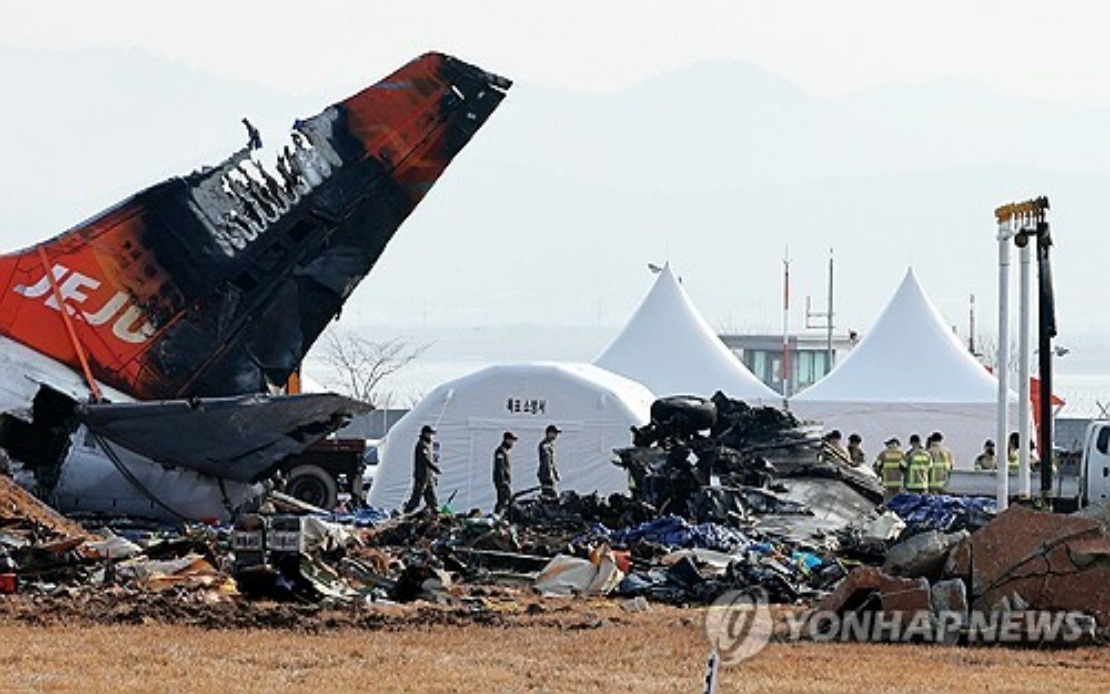
South Korea's transport ministry faces a serious credibility crisis as seven of its officials have been referred to prosecutors for allegedly participating in a systematic cover-up of safety defects tied to the catastrophic Jeju Air accident that claimed 179 lives. According to the special police investigation team's findings released Wednesday, these officials drafted and distributed official statements asserting that a localiser—a critical navigation system used to guide aircraft during landing procedures—met all regulatory requirements, despite their knowledge that it failed to comply with established safety standards.
The disaster unfolded on December 29, 2024, when Jeju Air Flight 2216 executed an emergency belly landing at Muan International Airport, situated approximately 290 kilometres south of Seoul. The aircraft struck a concrete structure housing the localiser system, resulting in the tragic loss of 179 passengers and crew members. The crash immediately drew intense scrutiny regarding the airport's infrastructure and whether the placement of the navigation equipment played a decisive role in the severity of casualties.
The localiser system forms an essential component of modern aircraft landing technology, transmitting precision signals that enable pilots to align their aircraft correctly during low-visibility approaches. Its strategic positioning within a concrete installation at Muan Airport proved controversial immediately following the accident, with aviation experts and investigators questioning whether the structure's placement and design amplified the damage during the collision. These concerns prompted authorities to conduct deeper investigations into whether officials at the transport ministry had known about existing compliance issues.
Police investigations uncovered damning evidence suggesting that departmental officials deliberately misrepresented the localiser's safety status to the public and media. Rather than acknowledge known deficiencies, the officials crafted press statements that explicitly claimed the equipment adhered to all applicable regulations. This discrepancy between internal knowledge and public statements represents a significant betrayal of public trust during a period when transparency and accountability were most crucial.
The seven officials' alleged actions appear part of a broader institutional pattern of prioritising reputational management over public safety disclosure. By distributing misleading statements, they potentially obstructed proper accountability mechanisms and prevented the public from understanding the true factors contributing to the disaster. Such conduct undermines the fundamental credibility institutions require when managing critical infrastructure and public safety matters.
For Malaysia and other Southeast Asian nations, this case illuminates the critical importance of maintaining rigorous oversight mechanisms within transport regulatory agencies. The Jeju Air incident demonstrates how safety compliance failures, when compounded by institutional dishonesty, can transform into tragedies affecting hundreds of lives. Regional aviation authorities must examine their own protocols for ensuring that safety deficiencies are immediately reported rather than concealed through misleading public communications.
The referral of these officials to prosecution signals that South Korean authorities intend to pursue accountability at multiple levels. While the aircraft's pilot and maintenance personnel have faced separate investigations, holding transport ministry administrators responsible represents a crucial step toward ensuring that regulatory oversight failures carry serious consequences. This approach acknowledges that systemic disasters typically involve failures across multiple institutional layers, not merely operational mistakes by flight crews.
The transparency of South Korea's investigation process, including the public revelation of official misconduct, contrasts sharply with how some nations handle aviation disasters. By openly investigating and prosecuting government officials rather than deflecting blame solely to operational personnel, authorities send a powerful message about institutional accountability. This approach, whilst politically uncomfortable, ultimately strengthens public confidence in the ability of oversight systems to self-correct.
The implications for Malaysian aviation extend beyond procedural reform. The Jeju Air case underscores how airports, maintenance facilities, and regulatory bodies must establish robust internal reporting mechanisms that bypass normal hierarchies when safety issues emerge. Without such protections, junior inspectors and technical personnel may feel pressured to remain silent about compliance violations, creating the exact institutional failure that the Jeju Air investigations have now exposed.
As investigations continue and prosecutions proceed, the case will likely establish important precedents regarding the legal responsibilities of government officials who possess knowledge of safety defects. Such precedents matter considerably across the region, where aviation continues expanding rapidly and regulatory frameworks require constant strengthening. The Jeju Air disaster represents not merely a tragic accident but a cautionary lesson about the fundamental necessity of maintaining absolute honesty within the institutions responsible for protecting public safety across aviation networks.

