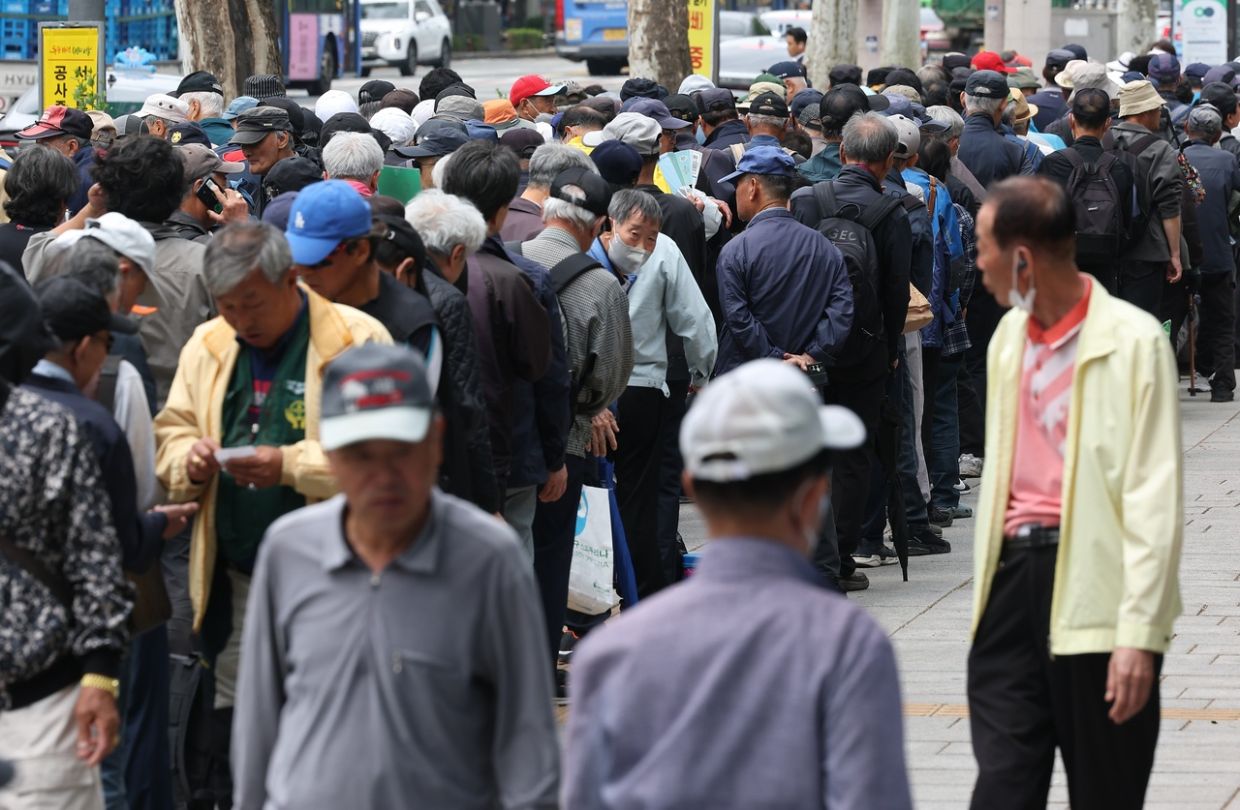
South Korea's capital is exploring whether it can realistically afford to introduce free or subsidised bus travel for senior citizens aged 70 and above, a move that would broaden an already extensive transportation support system and potentially reshape the city's spending priorities for decades to come. The Seoul Metropolitan Council Transportation Committee has advanced the proposal, with a full council vote scheduled to follow shortly. If approved, the benefit would extend to municipal and neighborhood buses whilst leaving express and intercity services outside the subsidy scheme. The timing is notable: the initiative arrives as Seoul's demographic structure continues shifting towards an ageing population, intensifying questions about how the city can sustainably finance welfare programmes for its most vulnerable residents.
The proposal reflects both a campaign commitment made by Seoul Mayor Oh Se-hoon during the June local elections and the observation that current transportation benefits create gaps in accessibility for older residents. Presently, those aged 65 and older enjoy free subway travel across Seoul's extensive network, a benefit that has remained largely unchanged since its introduction decades ago. However, this advantage does not automatically transfer to bus systems, leaving seniors who live in areas with limited subway coverage or who prefer bus transport facing ongoing fare payments. Supporters of the expansion argue this inconsistency places unnecessary financial strain on elderly households with fixed incomes and mobility constraints. By harmonising the benefit system, the reasoning goes, Seoul would offer more equitable access to the public transport infrastructure that many seniors depend upon for medical appointments, shopping, and social engagement.
Other South Korean municipalities have already moved ahead with similar programmes, creating a template that Seoul is now considering. Daegu initiated free bus rides for seniors in 2023 and has committed to a phased reduction in eligibility age requirements, eventually lowering the threshold from 75 to 70 by 2028. Daejeon has established free bus rides for those aged 70 and above, whilst Incheon intends to launch its own scheme for those aged 75 and older during the current year. These regional initiatives demonstrate that the concept enjoys political traction across South Korea and that implementation pathways exist. However, they also reveal considerable variation in how different authorities calibrate eligibility criteria, suggesting that local circumstances and budgetary capacity fundamentally shape these policies.
The financial projections attached to Seoul's proposal, however, are sobering and form the crux of the debate now unfolding. The Seoul Metropolitan Council Secretariat has estimated that providing universal free bus fares to all residents aged 70 and older would require approximately 104.7 billion won in annual expenditure if the programme commenced in 2027. This figure assumes current usage patterns and fare structures remain stable. More critically, as Seoul's elderly population aged 70 and above swells from around 1.27 million currently to approximately 1.63 million within the next seven years, annual costs are projected to climb to 127.5 billion won. Over a five-year period, the cumulative expense could approach 579 billion won—a sum that would represent a substantial incremental burden on city finances already stretched by competing demands.
Contextualising these numbers requires understanding Seoul's existing transportation subsidy ecosystem. The city operates a semi-public bus system in which municipal authorities compensate private operators for their operating losses, a necessity arising from the model's reliance on a combination of fares and government support rather than purely commercial revenue. Last year alone, Seoul allocated more than 450 billion won to subsidise bus companies, a figure that underscores the structural fragility of the current arrangement. Adding a comprehensive senior bus subsidy would essentially layer one major welfare programme atop another that is already financially precarious. The situation is further complicated by recent court decisions affecting ordinary wage calculations, rulings that are expected to inflate labour costs across the bus industry significantly, placing additional pressure on municipal budgets.
Seoul Metro, the operator of the city's subway system, has become an increasingly vocal critic of free travel benefits, pointing to the impact on its own financial sustainability. According to the operator's accounting, free and discounted rides for seniors, persons with disabilities, and national merit recipients collectively generated transportation losses averaging 364.5 billion won annually over the preceding five years, with the figure climbing to 448.8 billion won in 2025 alone. Seoul Metro has repeatedly petitioned the central government to assume responsibility for these costs, arguing that a municipally-operated transit agency should not bear the fiscal weight of nationally-oriented social welfare decisions. The establishment of another major subsidised travel benefit would likely intensify this dispute and potentially embolden Seoul Metro to renew demands for central government intervention.
Policy scholars have sounded caution about the longer-term trajectory of such programmes. Sohn Jong-pil, a senior researcher at the Fiscal Reform Institute, has warned that once cash-transfer welfare initiatives are established, political dynamics make reversal or modification extraordinarily difficult, creating path dependency that constrains future policymaking flexibility. Citizens and advocacy groups, once accustomed to a benefit, mobilise fiercely to resist its curtailment, and elected officials become reluctant to bear the political cost of removal. Furthermore, successful implementation of one senior benefit frequently generates pressure to expand or align other programmes, creating a cascading effect on public finances. Sohn has additionally argued that simply expanding transportation subsidies without simultaneously strengthening the accountability and efficiency of the semi-public bus system itself represents an incomplete approach that fails to address underlying structural problems.
Proponents of the measure counter that the stark cost estimates require careful interpretation and that the proposal itself contains flexibility that could moderate expenses. The ordinance, as currently drafted, does not mandate immediate universal free bus rides for all seniors aged 70 and above. Rather, it establishes a legal framework empowering Seoul's municipal government to determine eligibility criteria, benefit levels, and implementation scope. This flexibility would theoretically permit Seoul to phase the programme gradually, perhaps beginning with low-income seniors or those above a higher age threshold. The city could cap the number of subsidised trips per senior per month, restrict subsidy eligibility to particular times of day when bus utilisation is lower, or provide partial fare discounts rather than complete elimination of fares. Such design features could substantially reduce the initial cost burden compared to the headline estimates.
A Seoul municipal official characterised the ordinance as establishing an institutional basis for future policy development rather than mandating immediate full implementation. By passing the ordinance now, Seoul would create the legal scaffolding necessary to introduce the programme in stages as budgetary circumstances permit or as demographic and usage data become clearer. This framing attempts to address concerns that the city is overcommitting itself financially without careful consideration of consequences. However, critics worry that once the ordinance is formalised, political momentum will favour rapid expansion rather than cautious, incremental deployment, suggesting that the legal framework may function more as a down payment on a much larger commitment than initially framed.
The broader context shaping this debate extends beyond Seoul's immediate fiscal situation to reflect regional and national anxieties about ageing populations and the sustainability of welfare state expansion. Malaysia and other Southeast Asian nations are watching demographic transitions in developed East Asian economies closely, as these transitions foreshadow challenges that will eventually confront societies throughout the region. Seoul's struggle to finance benefits for its swelling elderly population offers instructive lessons about the costs of comprehensive social support systems and the fiscal pressures that emerge when population structures shift rapidly. The political economy of Seoul's decision—the tension between voter expectations for generous benefits and the hard constraints of municipal budgets—mirrors dilemmas that policy makers across Asia will soon confront as their own populations age.
Some observers have noted that the timing of this proposal, coming immediately after elections and positioned as a mayoral campaign commitment, suggests that political considerations may be driving policy more than careful fiscal analysis. Newly elected officials typically move quickly to implement campaign promises to consolidate electoral coalitions and build political capital. Whether Seoul possesses the genuine budgetary capacity to absorb the costs, or whether future councils will be forced to curtail the benefit or other services to accommodate it, remains an open question. The forthcoming council vote will clarify whether Seoul's legislators prioritise immediate responsiveness to elderly constituents or longer-term fiscal prudence, a choice that will reverberate across Seoul's finances for years to come.

