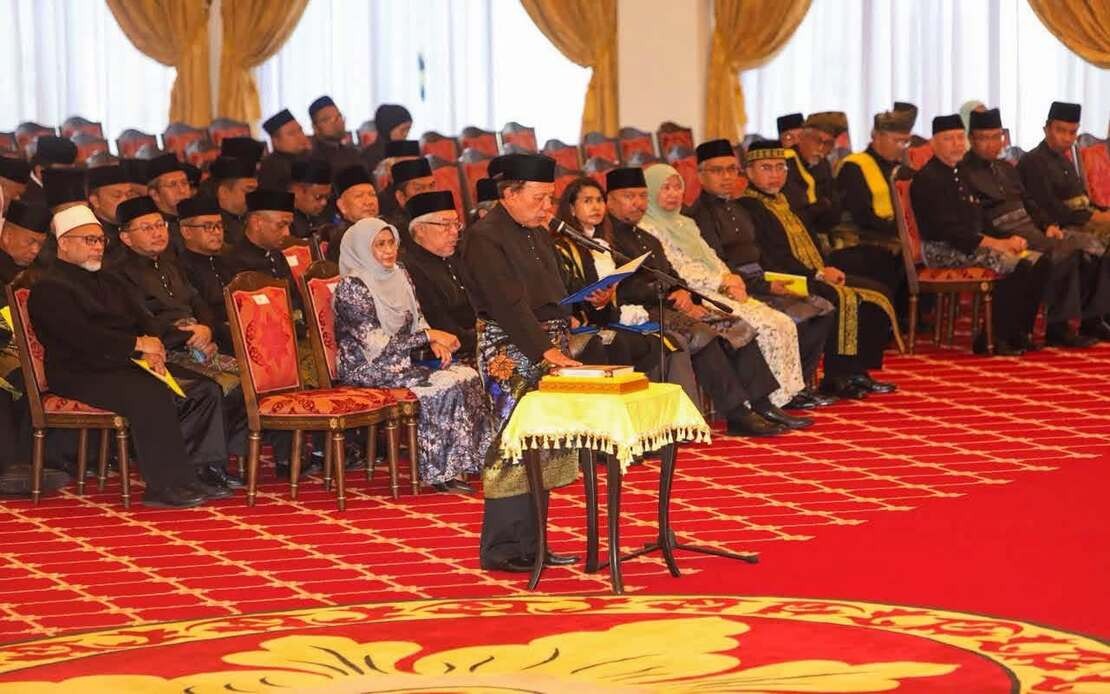
Datuk Ismail Lasim has taken office as the new Menteri Besar of Negeri Sembilan, with senior Cabinet ministers expressing their backing for his elevation to the state's top leadership position. The 67-year-old assemblyman from Juasseh was formally sworn in before the Yang Dipertuan Besar of Negeri Sembilan, Tuanku Muhriz Tuanku Munawir, at the Balairong Seri of Istana Besar Seri Menanti on August 2, marking an important transition in the state administration.
Deputy Prime Minister Datuk Seri Dr Ahmad Zahid Hamidi, who also serves as Rural and Regional Development Minister, was among the first senior figures to publicly acknowledge Ismail's new role. Through a Facebook post, Zahid praised Ismail's appointment while emphasizing the magnitude of the responsibility now vested in his hands. The message conveyed confidence that Ismail would discharge his duties effectively in pursuit of the state's development and the welfare of its residents, with Zahid suggesting that collaborative efforts would position Negeri Sembilan for renewed progress and prosperity.
Defence Minister Datuk Seri Mohamed Khaled Nordin similarly extended formal congratulations, framing Ismail's appointment within the broader context of state governance and continuity. Mohamed Khaled stressed that public trust represented a weighty obligation to sustain the momentum of Negeri Sembilan's ongoing development trajectory. His remarks reflected an expectation that the new leadership would maintain the stability and prosperity that the state has enjoyed, while continuing efforts to deliver shared economic benefits to residents across all sectors and communities.
Plantation and Commodities Minister Datuk Seri Dr Noraini Ahmad characterized Ismail's appointment as a defining moment for Negeri Sembilan's political landscape, signaling the commencement of a fresh chapter in the state's governance. Noraini's public statement acknowledged the significance of the leadership transition while offering encouragement for the substantial tasks ahead. Her message invoked blessings and divine support for Ismail's tenure, emphasizing that his service should be guided by principles of public benefit and moral responsibility.
Ismail brings considerable depth of experience to the position, having embarked on his political journey in 1999 when he was first elected to the state assembly. Over the course of nearly three decades, he has accumulated substantial expertise in Negeri Sembilan's political economy and administrative structures. This extended tenure reflects both his organizational base and his demonstrated ability to navigate the state's competitive political environment across multiple electoral cycles.
The trajectory of Ismail's career within Negeri Sembilan's government structures reveals a progressive rise through senior positions. In 2004, he received his first appointment to the state executive council, gaining access to administrative machinery and policy formation. This appointment inaugurated a period of sustained involvement in governance that would extend across three consecutive terms until 2018, during which he wielded substantive influence over critical state portfolios.
Throughout his tenure in executive positions, Ismail maintained specific responsibility for educational matters, a portfolio that positioned him at the center of Negeri Sembilan's human capital development strategy. His role encompassed not merely administrative oversight but active participation in designing and implementing education policies intended to strengthen the state's labor force competitiveness and institutional capacity. This focus on education and skills development suggests a particular policy orientation that may shape his approach to broader state governance challenges.
The appointment of Ismail arrives at a juncture where Malaysian states continue navigating post-pandemic economic recovery and fiscal pressures. Negeri Sembilan, positioned centrally within Malaysia's geographic and economic framework, faces expectations to maintain its role as a contributor to national economic activity while addressing local development imperatives. The transition to new leadership typically occasions reflection on governing priorities and resource allocation decisions that will define the coming period of administration.
Ismail's extensive background in state-level politics, combined with his specialized knowledge of education and human development, positions him to address a range of contemporary governance challenges. The caliber of support extended by multiple Cabinet-level figures underscores the national government's investment in ensuring continuity and effective administration in Negeri Sembilan. Such visible backing from senior federal ministers typically facilitates smoother relations between state and national authorities, potentially advantageous for resource mobilization and policy coordination.
The welcoming messages from Ahmad Zahid, Mohamed Khaled, and Noraini Ahmad collectively signaled national-level acceptance of Ismail's appointment and confidence in his capability to manage the state's affairs. Such public expressions of support from multiple Cabinet ministers carry symbolic weight beyond mere courtesy, suggesting alignment between state and federal leadership during a period of transition. This coherence in messaging may facilitate more efficient governance and reduce friction points between state administration and federal agencies implementing national programs within Negeri Sembilan.
Moving forward, Ismail's leadership will be tested against expectations for continued development momentum, fiscal prudence, and responsiveness to constituent needs. His appointment represents both continuity with previous governance frameworks and an opportunity to introduce fresh approaches to longstanding state challenges. The substantial institutional knowledge he brings, combined with backing from senior federal figures, creates conditions for purposeful administration directed toward the state's sustained prosperity and progress.

