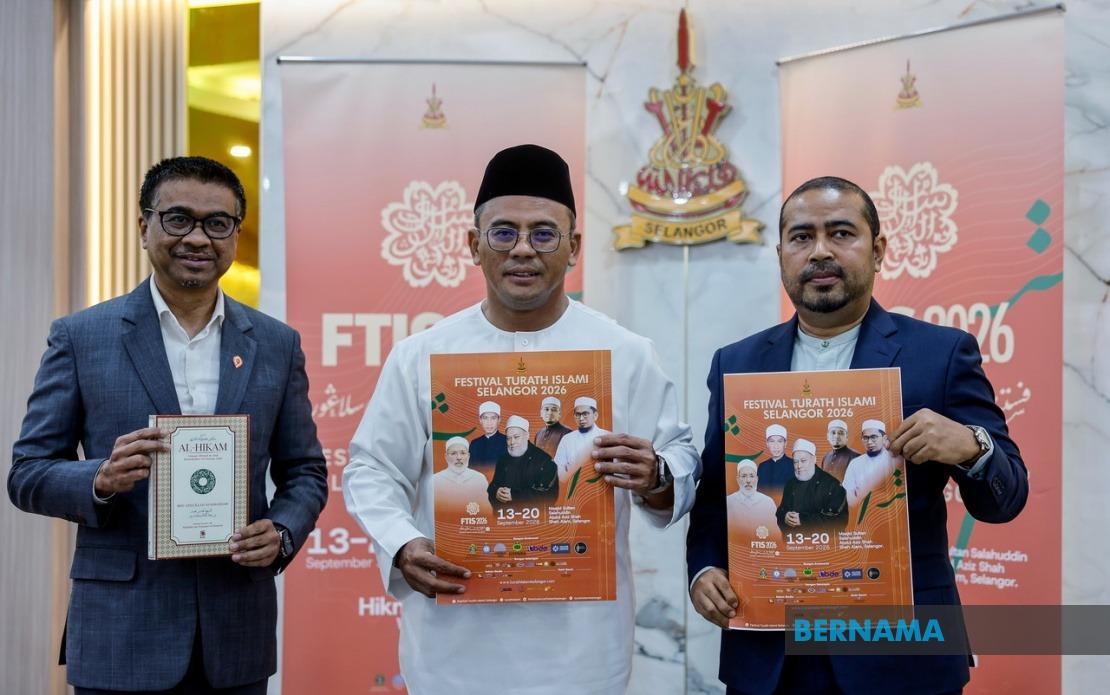
The Selangor state government is preparing to host the fourth edition of its Turath Islami Festival in September 2026, an event designed to celebrate Islamic intellectual traditions and bring contemporary Islamic scholarship to a mass audience. Selangor Menteri Besar Datuk Seri Amirudin Shari announced the festival will assemble 23 prominent Islamic scholars from within Malaysia and internationally, creating a rare gathering of theological expertise across the region. The event represents an increasingly sophisticated effort by Selangor's administration to position itself as a centre for Islamic learning and cultural preservation in Southeast Asia.
Among the distinguished participants will be Sheikh Professor Dr Ali Jum'ah, former Grand Mufti of Egypt, alongside scholars representing Indonesia, Morocco, Thailand, and Malaysia. This international composition reflects the festival's ambition to transcend purely local concerns and situate Selangor within broader conversations about Islam's role in contemporary Muslim-majority societies. The presence of North African and Southeast Asian scholars signals an attempt to forge intellectual connections across regions that often operate within separate theological and educational ecosystems.
The festival will unfold over eight consecutive days from September 13 to 20, with Masjid Sultan Salahuddin Abdul Aziz Shah designated as the primary venue, supplemented by satellite locations throughout Shah Alam. Amirudin framed the event not merely as a religious gathering but as an intellectual undertaking rooted in classical Islamic pedagogy, specifically the talaqqi tradition of direct knowledge transmission between teacher and student. This pedagogical emphasis suggests the organisers view the festival as reviving educational methods that have diminished in contemporary Islamic learning institutions, which increasingly rely on mediated and digital formats rather than face-to-face scholarly engagement.
The programming will encompass over 42 learning sessions structured across various formats, including dawn lectures and intensive study circles focusing on classical Islamic texts. This breadth of offerings aims to accommodate diverse participant interests and knowledge levels, from beginners seeking foundational understanding to advanced students pursuing deeper textual scholarship. The inclusion of multiple session formats reflects recognition that modern audiences possess varied learning preferences and time constraints compared to historical contexts where extended residential study was more common.
A significant innovation in this year's edition is the inaugural National Turath Scholars Dialogue, a dedicated platform for Islamic scholars to collectively examine contemporary challenges confronting Muslim communities across Malaysia and beyond. Rather than functioning as purely academic discourse, this dialogue intends to bridge scholarly discussion with practical policy considerations affecting Islamic education and community welfare. This initiative suggests growing recognition among Selangor's leadership that Islamic scholarship must engage substantively with real-world governance issues rather than remaining confined to historical or theoretical domains.
Anticipated attendance figures indicate substantial public interest, with organisers projecting at least 50,000 visitors—matching previous editions' attendance records. This turnout demonstrates that significant Malaysian audiences maintain appetite for structured Islamic intellectual engagement beyond conventional religious services or informal study groups. The consistent attendance levels across editions suggest the festival has successfully established itself within Malaysia's Islamic cultural calendar, attracting participants willing to dedicate multiple days to scholarly pursuits.
Amirudin highlighted the newly operational Shah Alam Line of the Light Rail Transit 3 as a facilitating factor for festival accessibility. The recent completion of this infrastructure project substantially improves transportation links to Shah Alam, reducing travel friction for participants originating from Kuala Lumpur and surrounding regions. The state government is exploring supplementary transport arrangements including bus and van services to connect LRT3 stations with festival venues, demonstrating awareness that infrastructure investment alone proves insufficient without last-mile connectivity solutions. This logistical planning reflects sophisticated understanding that event accessibility depends on seamless integration with existing urban transport networks.
The festival is expected to receive its official launch from Prime Minister Datuk Seri Anwar Ibrahim, conferring considerable political prestige upon the occasion and signalling federal-level endorsement of Selangor's Islamic educational initiatives. This high-level political participation underscores the event's significance within Malaysia's broader national discourse around Islamic knowledge and identity, particularly as the country navigates complex questions about how traditional scholarship relates to contemporary governance and pluralistic society.
Selangor's sustained investment in the Turath Islami Festival reflects a deliberate state strategy to position Islamic scholarship as integral to the region's cultural identity and developmental vision. By attracting international scholars and facilitating mass participation, the state government attempts to demonstrate that robust Islamic intellectual life flourishes within Malaysia's framework, countering potential narratives that posit Islamic thought as derivative of Middle Eastern sources or intellectually stagnant. The festival's success in drawing consistent attendance suggests meaningful public demand exists for structured engagement with Islamic scholarship beyond what conventional institutions currently provide.
The event's emphasis on dialogue and contemporary application distinguishes it from purely commemorative or ceremonial approaches to Islamic heritage. By convening scholars specifically to address challenges facing Muslim communities, the festival positions Islamic tradition as a living, evolving intellectual resource rather than a historical archive. This orientation proves particularly relevant in Southeast Asia, where Muslim-majority societies increasingly grapple with questions of religious identity in plural, rapidly modernising contexts where traditional transmission mechanisms have substantially weakened.

