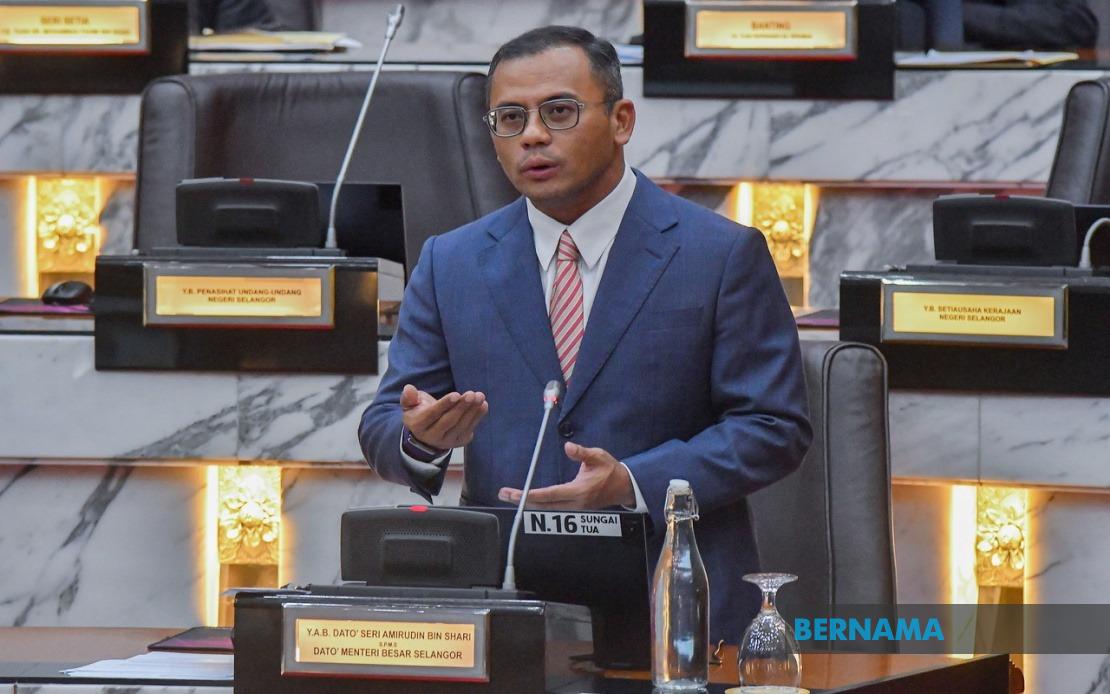
Selangor's state government is taking a firmer stance on persistent public transport connectivity problems after pressure from elected representatives and viral social media complaints. Menteri Besar Datuk Seri Amirudin Shari issued a direct order to all local authorities (PBT) to systematically examine their public transportation networks and the facilities that link commuters to transit stations. The intervention marks an escalation in efforts to address what has become an increasingly visible concern for residents across the state, particularly regarding the relationship between residential zones and major transit routes such as the LRT3.
The directive comes as Selangor grapples with broader mobility challenges that extend beyond the operation of public transport vehicles themselves. First-mile and last-mile connectivity—the journey from a person's home to a transit station and from their destination station onward—remains a critical weakness in the state's transport ecosystem. When this connection is poor, residents default to private vehicles despite having access to public transport, undermining the state's agenda to reduce traffic congestion and emissions. Amirudin emphasised that the allocation of state funds would support infrastructure improvements, including enhanced pedestrian walkways that prioritise both safety and comfort, recognising that the entire journey experience matters to potential users.
What distinguishes this intervention is Amirudin's pointed criticism of local authority responsiveness and accountability. Rather than waiting for problems to accumulate into trending topics on X, Threads, and other social platforms before taking action, he called for proactive governance. This observation reflects a broader governance challenge in Malaysia's metropolitan areas, where social media increasingly serves as the primary channel for escalating civic complaints. By explicitly naming this pattern, the Menteri Besar signalled that local authorities should be listening directly to their councillors and community stakeholders—the formal channels of governance—rather than allowing issues to fester until they generate public pressure online.
The specific trigger for this directive was a connectivity problem involving the LRT3 that gained traction on social media platforms, raised subsequently by Danial Al-Rashid Haron Aminar Rashid, the assemblyman for Batu Tiga. This incident illustrates how Selangor's rapid expansion and the proliferation of new transit infrastructure has sometimes outpaced supporting infrastructure. New LRT lines and stations are valuable assets, but their utility diminishes if commuters struggle to reach them safely or conveniently from their homes and workplaces. The state government's response demonstrates awareness that transport planning cannot be compartmentalised—operators, local authorities, and state planners must coordinate to create seamless networks.
A key element of the new approach involves Ng Sze Han, the state Investment, Trade and Mobility Committee chairman, meeting with all public transport operators to develop comprehensive service mapping. This exercise aims to identify and visualise specific geographic and temporal gaps in connectivity where current arrangements fail commuters. Service mapping is a recognised planning tool that makes abstract problems concrete, allowing stakeholders to see precisely where improvements are needed and to prioritise interventions accordingly. For a state as large and developing as quickly as Selangor, systematic mapping represents a significant upgrade from ad-hoc problem-solving.
The state government is signalling willingness to use subsidies as leverage to improve service quality and coverage. However, Amirudin articulated an important caveat: subsidies alone cannot solve connectivity problems if operators do not adjust their operating hours, routes, and service patterns in response. This reflects a mature understanding that financial incentives work best when paired with clear expectations and accountability. If operators receive subsidies but maintain narrow operating windows or inefficient routes, the state's investment fails to deliver mobility improvements. The Menteri Besar's comments suggest the state is prepared to make operator performance a condition of ongoing subsidies, aligning financial support with behavioural change.
The emphasis on cost-effectiveness is also noteworthy. Amirudin explicitly stated that improvements should not require disproportionate spending, indicating awareness that every ringgit allocated to connectivity must generate tangible returns. This pragmatic approach contrasts with infrastructure projects that become expensive primarily due to inefficiency or redundancy. For a state managing multiple competing priorities—schools, healthcare, social services—disciplined spending on transport improvements helps justify the investment to taxpayers and other stakeholders.
For Malaysian readers outside Selangor, this situation offers lessons about urban governance at scale. Most major Malaysian metropolitan areas confront similar connectivity challenges as they expand outward, build new transit infrastructure, and attempt to shift commuter behaviour away from private vehicles. The approach Selangor is taking—systematic review, operator coordination, and conditional subsidy—represents a replicable model. States like Johor and Perak, which are experiencing their own rapid urban development, can observe how Selangor manages the coordination problem that arises when multiple operators, multiple local authorities, and a sprawling geography must function as an integrated system.
The broader context is Southeast Asia's ongoing urbanisation and the policy imperative to create sustainable transport systems. Cities across the region are investing heavily in rapid transit—metros, light rail, bus rapid transit—but discovering that the final-mile problem is as consequential as the transit infrastructure itself. If commuters cannot easily reach stations, the entire system underperforms. Selangor's attempt to systematise the solution, moving beyond reactive crisis management to planned intervention, may have relevance for urban planners and transport authorities throughout the region.
Implementing these changes will require sustained coordination between the state government, local authorities, public transport operators, and community stakeholders. The process of meeting with operators, developing service maps, and implementing adjusted schedules and routes will take months. During this period, early successes and failures will become visible, generating either momentum or frustration. Amirudin's explicit commitment to leadership on this issue means that progress—or lack thereof—will become a metric by which his administration's performance in office is evaluated. This accountability, whether intentional or not, may prove to be the intervention's most powerful element.

