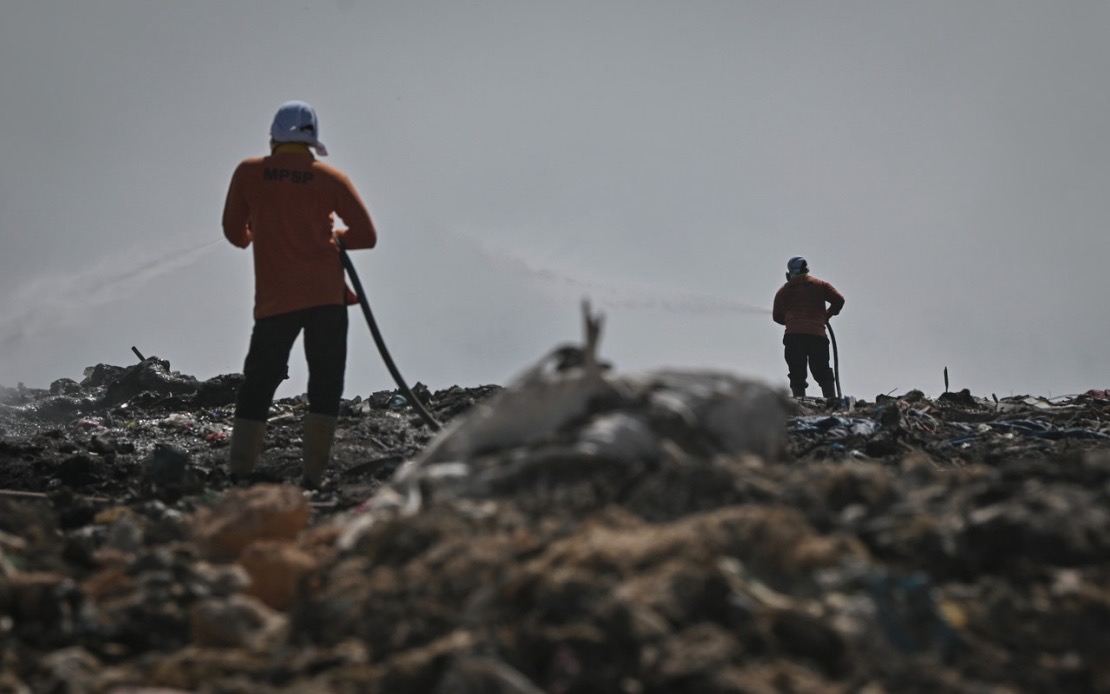
Selangor's state government has outlined an ambitious plan to breathe new life into the long-dormant Teluk Kapas landfill site in Pasir Panjang, Klang, converting what has been an environmental liability for the past 16 years into a productive resource recovery facility and green economic asset. The initiative represents a significant shift in how Malaysia's most developed state approaches waste management legacy issues, moving beyond conventional disposal methods toward circular economy principles that emphasize material recovery and environmental restoration.
The 80-acre site, formally closed in 2007, sits within the Selangor Maritime Gateway development corridor and currently contains approximately one million tonnes of accumulated solid waste compressed to depths reaching 15 metres. For years, conventional remediation approaches appeared prohibitively expensive, with early estimates suggesting rehabilitation through traditional solid waste removal alone would demand around RM200 million in expenditure. This financial barrier had effectively frozen the site's potential, leaving it as a contamination source affecting surrounding waterways and communities. The new strategy abandons this costly path in favour of innovative techniques that harness the waste already present while restoring environmental quality.
Datak Izham Hashim, who chairs Selangor's Infrastructure and Agriculture Committee, unveiled the rehabilitation framework following a Memorandum of Understanding signed between KDEB Waste Management and Landasan Lumayan Sdn Bhd. The partnership brings together specialized expertise in waste processing with environmental restoration capabilities, positioning the project as a scalable model potentially applicable across multiple defunct landfill sites throughout the state. This collaborative approach reflects growing recognition within Malaysian governance circles that environmental problems demand innovative partnerships rather than conventional government-only solutions.
The rehabilitation methodology combines biological, mechanical, and material recovery processes rather than attempting wholesale excavation and removal. By processing the existing waste deposits in situ, the joint venture aims to achieve recovery rates between 70 and 80 percent for recyclable materials—a substantial achievement that transforms buried refuse from an environmental burden into economic feedstock. Such recovery rates would generate tangible revenue streams capable of sustaining long-term operational and maintenance costs, enabling the project to achieve financial independence without perpetual government subsidy.
Leachate management stands as a critical component of the restoration effort. The landfill's decades of operation generated contaminated groundwater that continues degrading nearby rivers and water resources. The rehabilitation programme prioritizes treating this leachate through specialized environmental techniques while simultaneously addressing structural concerns including ground settlement and slope stability—problems that plague most aging landfills and create safety hazards. By tackling these interconnected challenges through an integrated approach, the project addresses root causes rather than symptoms.
The Teluk Kapas initiative carries implications extending well beyond Klang's immediate geography. Should the pilot project succeed in demonstrating economically viable landfill rehabilitation through material recovery, Selangor plans to replicate the model across other abandoned disposal sites scattered throughout the state. This scaling potential transforms a single remediation project into a template for addressing similar environmental problems affecting multiple communities. For a state with Selangor's industrial intensity and historical waste accumulation, such a replicable approach could substantially enhance environmental quality across numerous locations.
From a sustainability perspective, the project aligns with Selangor's broader policy objectives around improving recycling rates, enhancing resource efficiency, and advancing low-carbon development pathways. By extracting value from previously discarded materials, the initiative reduces pressure on virgin resource extraction while decreasing landfill dependency—a dual benefit increasingly important as Malaysia navigates international environmental commitments and domestic sustainability targets. The recovered materials will re-enter economic cycles, reducing both environmental footprints and disposal burdens.
The financial architecture underlying the rehabilitation plan distinguishes it from many environmental projects that depend indefinitely on government funding. By structuring the venture as a commercially viable operation where material recovery and waste processing revenues fund restoration and maintenance activities, the partners have created incentives for genuine long-term commitment rather than funding-dependent initiatives vulnerable to budget cycles. This commercial sustainability model offers lessons applicable to other environmental rehabilitation efforts across Southeast Asia where budget constraints frequently compromise long-term remediation success.
Selangor's approach also reflects evolving attitudes toward waste as a resource rather than merely a disposal challenge. The circular economy framework underpinning the project recognizes that yesterday's garbage contains valuable materials capable of serving modern manufacturing and construction needs. This perspective shift—from viewing landfills as permanent waste repositories to regarding them as temporary storage awaiting material recovery—increasingly influences environmental policy across developed and developing economies alike.
For Malaysian policymakers monitoring waste management trends, the Teluk Kapas project demonstrates that inherited environmental problems need not remain permanent obstacles. The combination of technological innovation, strategic partnerships, and circular economy principles can convert stubborn legacy issues into economic opportunities. As Selangor implements this pilot, outcomes will likely generate significant attention from other state governments and local authorities confronting their own landfill rehabilitation challenges. The project's success or difficulties will provide concrete data on whether such integrated approaches can deliver the promised environmental, financial, and social benefits at scales relevant to Malaysia's development needs.

