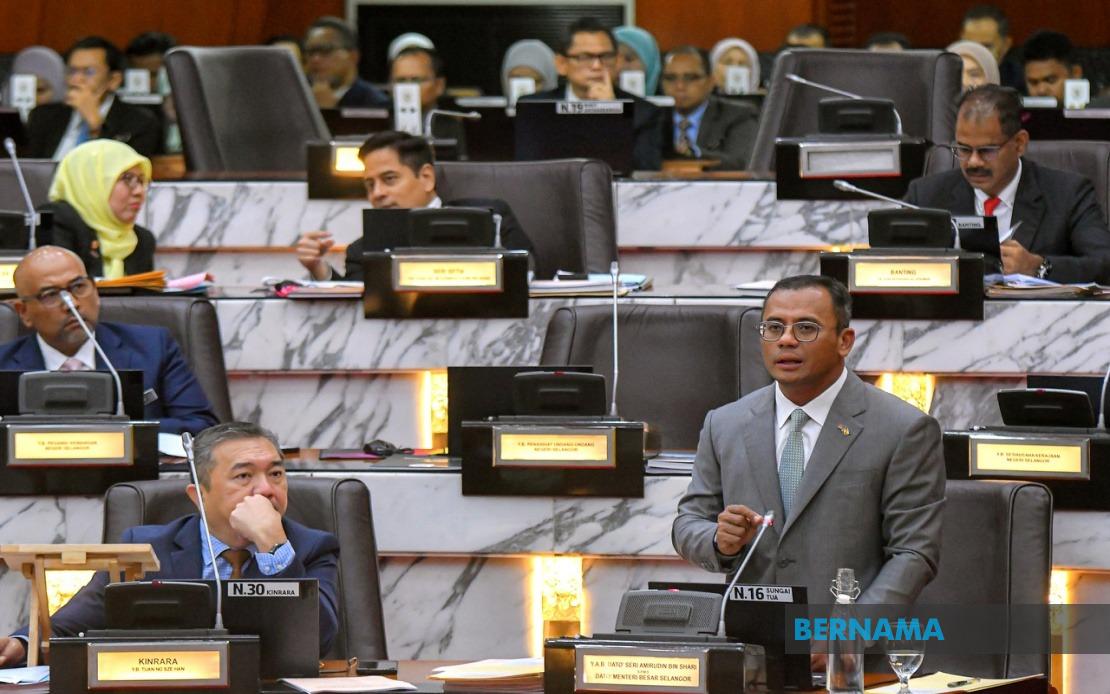
The Selangor government is preparing to significantly expand access to its flagship higher education study incentive programme, with Menteri Besar Datuk Seri Amirudin Shari announcing plans to nearly double the number of beneficiaries from the current 3,000 to 5,000 recipients in the coming year. The expansion reflects mounting pressure on the state's financial aid system, which has struggled to meet surging student demand despite previous expansion efforts.
The move comes as the state government grapples with an oversubscription problem that has persisted across two application cycles. More than 5,000 applications were submitted in both 2025 and the current year, demonstrating consistent and robust interest in the HPIPT programme among Selangor students. This gap between demand and available slots has prompted state leadership to reassess whether current funding allocation adequately reflects genuine educational needs within the state's population of prospective tertiary students.
The RM1,000 financial assistance scheme, known formally as the Higher Education Institution Study Incentive or HPIPT, supports Selangor residents attending recognised higher education institutions, whether in the public or private sector. The programme's scope extends beyond traditional bachelor's degree studies to encompass diploma holders and those pursuing Level 4 Skills Certificates, broadening its appeal across multiple qualification pathways and educational trajectories. This inclusive design has likely contributed to the strong application numbers now overwhelming the current funding envelope.
Amirudin indicated that the state administration is currently conducting a comprehensive financial review to determine whether Selangor's revenue position permits the planned expansion. The Menteri Besar suggested that depending on budget availability, the state may push recipient numbers even higher, potentially reaching between 5,000 and 6,000 beneficiaries. This ceiling represents a significant scaling-up from historical levels, though he acknowledged the state had previously allocated places for 5,000 recipients before reducing the figure in recent years.
The announcement emerged during a question-and-answer session at the Selangor State Legislative Assembly, where legislator Datuk Noorazley Yahya from Bukit Melawati raised concerns about the application quota insufficiency. This parliamentary intervention demonstrates that the programme's constraints have become a visible policy issue, attracting formal scrutiny from elected representatives and positioning educational access as a matter of state-level political importance.
Beyond simply increasing recipient numbers, the state government is simultaneously reviewing the application timeline to give prospective students adequate opportunity to apply following their formal admission notifications from tertiary institutions. Currently, students face a compressed window between receiving university acceptance letters and submitting HPIPT applications, creating logistical challenges that may cause eligible applicants to miss deadlines despite qualifying. Extending this window would reduce administrative friction and potentially improve uptake efficiency.
Moreover, Amirudin disclosed that the administration is exploring a twice-yearly application cycle rather than the present single annual round. This structural change would accommodate students entering tertiary programmes at different junctures throughout the academic calendar, including those starting in mid-year intakes or those transferring between institutions. Such flexibility would recognise the reality of modern educational pathways, which increasingly diverge from the traditional September-start semester pattern.
The HPIPT programme occupies an important position within Selangor's social spending architecture, functioning as a targeted intervention to reduce financial barriers to higher education among the state's resident population. As Malaysia continues to emphasise the importance of human capital development and tertiary education participation rates, state-level initiatives like this reflect broader policy commitments to educational accessibility. For students from middle and lower-income households, such assistance can prove decisive in determining whether pursuing formal tertiary qualifications remains financially feasible.
The planned expansion must be contextualised within Selangor's fiscal circumstances and competing budgetary priorities. As the nation's most economically productive state, Selangor generates substantial internally-generated revenue that provides greater flexibility than many other state governments enjoy. However, this expansion decision still represents a deliberate reallocation of resources, suggesting that state leadership views educational investment as a strategic priority worthy of budget increases even amid broader fiscal constraints affecting public administration generally.
From a regional perspective, Selangor's initiative underscores how Malaysian states are increasingly deploying targeted financial aid to address specific policy objectives. The move also highlights persistent gaps between student demand for educational support and available public resources, a challenge that extends across Malaysia and Southeast Asia more broadly. The state's consideration of programme design improvements—including application timeline adjustments and multiple annual cycles—demonstrates administrative responsiveness to practical implementation challenges rather than simply increasing funding in isolation.
The expansion aligns with broader national conversations about making higher education more accessible and affordable for Malaysians. As private sector participation in tertiary education expands and overall costs rise, government-supported programmes become increasingly vital for ensuring that educational opportunity is not determined purely by family financial circumstances. Selangor's efforts to stretch its HPIPT resources further reflect recognition that current investment levels remain insufficient relative to demonstrated demand among qualifying students.

