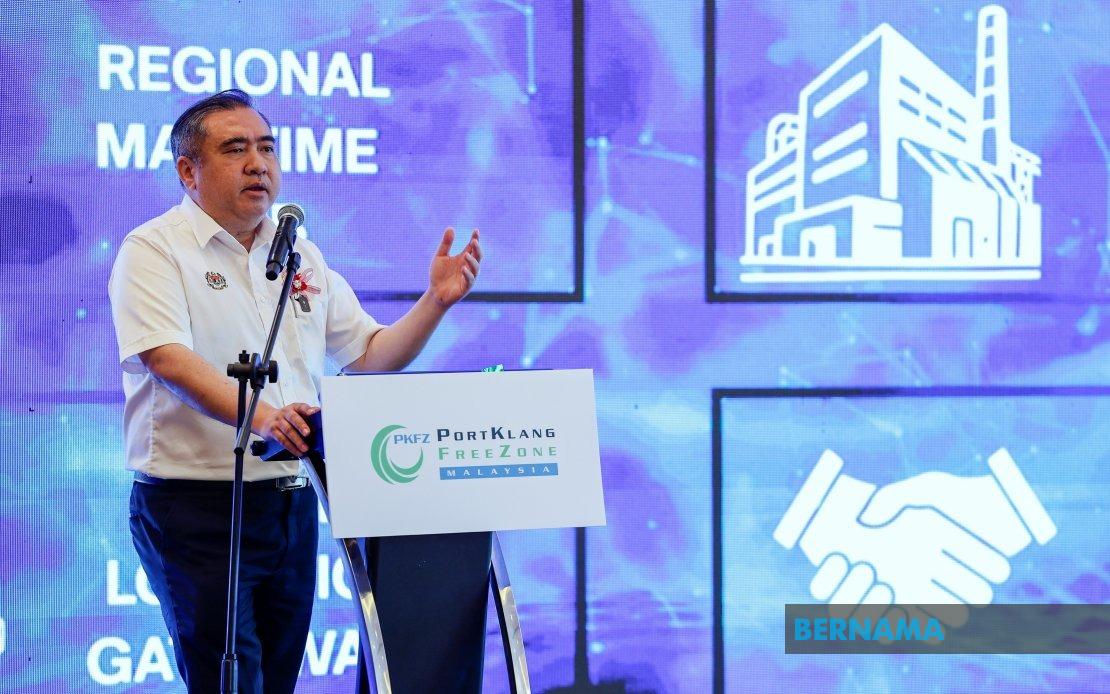
The development of Port Klang's Third Terminal on Carey Island has entered a critical phase as the Selangor State Government and Transport Ministry work to settle longstanding land disputes that have complicated the project's progression. Transport Minister Anthony Loke indicated that resolving these terrestrial complications remains the immediate priority before construction can commence, though the government maintains an ambition to begin work sometime this year through a Build-Operate-Transfer framework.
The Third Terminal represents a significant strategic undertaking for Malaysia's maritime sector, designed to bolster the nation's competitive positioning in global port operations and logistics networks. Prime Minister Datuk Seri Anwar Ibrahim has previously directed all relevant government bodies to accelerate their efforts in bringing this initiative to fruition, signalling high-level political commitment to the project's completion. The terminal's establishment would expand Port Klang's capacity to handle containerised cargo and support the country's broader ambitions in positioning itself as a regional hub for maritime trade.
The land configuration for the proposed terminal encompasses approximately 1,699.68 hectares across Carey Island in Kuala Langat, according to Selangor Menteri Besar Datuk Seri Amirudin Shari. The territory is divided between two distinct stakeholders: the Selangor State Development Corporation (PKNS) manages 1,011.71 hectares of seabed terrain, whilst Yayasan Selangor holds ownership over 687.96 hectares of coastal property. This divided administration has created complexity in the land settlement process, requiring coordinated negotiations among multiple governmental and institutional parties to establish unified control necessary for development.
The project's financing structure will operate through a concession arrangement involving private sector participation, with the Transport Ministry and Selangor authorities currently evaluating suitable partnership models. This Build-Operate-Transfer mechanism allows private entities to fund and manage port operations over a defined period before returning ownership to the state, a framework increasingly common in major infrastructure projects across Asia-Pacific. The cumulative value of this approach distributes financial risk whilst leveraging commercial expertise in port administration and maritime logistics.
Loke's statements come following a series of facility inauguration events at Port Klang Free Zone, where new industrial infrastructure worth RM566 million in cumulative investment has been established. These initiatives, including the Wisma Golden Horse centralised labour quarters, Suntek Materials manufacturing facility, and expanded Golden Horse Rubber operations, demonstrate ongoing momentum within the broader Port Klang industrial ecosystem. The Smart Intelligence Industrial Park launch simultaneously underscores efforts to modernise the port's operational capabilities and attract high-value manufacturing enterprises.
The Third Terminal project holds particular significance for Malaysia's logistics sector, which continues facing capacity constraints amid rising containerised trade volumes transiting Southeast Asia. Port Klang currently operates as the nation's busiest container facility, and expansion through an additional terminal would alleviate congestion whilst enabling the port to compete more effectively against regional competitors including Singapore's facilities and emerging ports throughout the Strait of Malacca corridor. Enhanced capacity translates directly into reduced turnaround times for vessels and improved supply chain efficiency for Malaysian exporters and importers.
Parallel to terminal development, the Transport Ministry is simultaneously addressing labour shortages in Malaysia's logistics and haulage sectors through employment initiatives targeting military retirees. A recent memorandum of understanding between Port Klang Free Zone and the Armed Forces Ex-Servicemen's Affairs Corporation (Perhebat) formalises recruitment mechanisms for retired servicemen, harnessing their disciplinary backgrounds and technical capabilities. Deputy Prime Minister Datuk Seri Dr Ahmad Zahid Hamidi witnessed the signing, reflecting governmental commitment to bridging workforce gaps whilst providing livelihood pathways for defence personnel transitioning to civilian employment.
Lok previously outlined a specialised licensing programme enabling military retirees to obtain Class E heavy vehicle driving credentials, addressing documented shortages of qualified drivers in commercial haulage operations. This targeted approach acknowledges that skilled manpower constraints frequently impede port and logistics expansion, and that military backgrounds often translate into reliable, safety-conscious personnel. By creating structured entry pathways, the government creates mutually beneficial outcomes where infrastructure ambitions align with veteran employment objectives.
The Third Terminal's development timeline now hinges substantially upon expedited land settlements between the multiple property custodians and governmental authorities. With the Selangor administration actively engaged in resolving these administrative complexities, stakeholders perceive movement towards breaking this logjam. However, officials have cautiously framed construction commencement as dependent upon successful land consolidation, suggesting that whilst 2025 construction remains technically possible, achievement requires decisive action across bureaucratic and institutional entities.
For Malaysia's broader economic trajectory, the Third Terminal's eventual completion would strengthen the nation's infrastructure foundation precisely when regional competition for containerised cargo intensifies. Southeast Asian nations including Vietnam, Thailand, and Indonesia are simultaneously expanding port capacities, heightening competitive pressure on Malaysian facilities. Port Klang's Third Terminal consequently represents not merely incremental capacity expansion but a defensive necessity ensuring Malaysia maintains relevance within critical supply chain architecture serving East Asian manufacturing economies and global maritime trade routes.