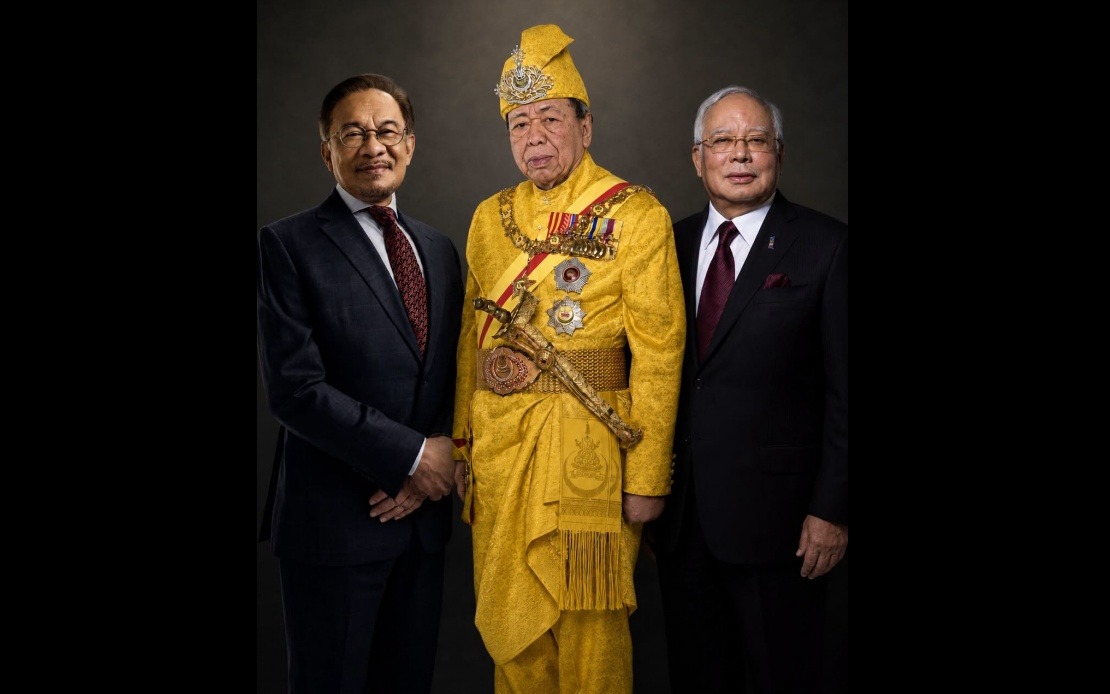
The Sultan of Selangor, Sultan Sharafuddin Idris Shah, has publicly commended Prime Minister Datuk Seri Anwar Ibrahim for ensuring the Shah Alam Line LRT3 proceeded to completion and began operations on Monday, marking a significant milestone for the state's transportation infrastructure. In a statement issued from Shah Alam on July 1, the Sultan acknowledged the Prime Minister's decisive action since taking office in 2022 to revive the project and address earlier setbacks that had hampered its progress.
Among the key interventions highlighted by Sultan Sharafuddin was Anwar's decision to reinstate five railway stations that had been previously cancelled due to cost-cutting measures. The Sultan also noted the government's proposal to develop affordable housing developments in close proximity to LRT3 stations, a move designed to maximise accessibility and convenience for commuters across the Klang Valley corridor. He expressly directed that no further obstacles should be placed in the way of the project's implementation and operations.
The genesis of the LRT3 initiative lay in grassroots concerns brought to the Sultan's attention, particularly from housewives whose daily experience reflected the severe traffic congestion affecting the region. These residents frequently complained about their husbands' inability to return home at reasonable hours due to gridlocked roads connecting Klang, Shah Alam and Kuala Lumpur. The Sultan recognised this persistent problem and worked to champion a rail-based solution that could bypass surface-level congestion entirely.
The Sultan also extended gratitude to former Prime Minister Datuk Seri Najib Tun Razak for responding positively to his initial call for a dedicated rail connection serving the Klang Valley region. At that time, only two bridges spanned the Klang River, a critical bottleneck that severely restricted traffic flow during peak commuting hours. In response to this congestion crisis, the previous administration abolished the Batu Tiga and Sungai Rasau toll plazas in 2018 as a temporary relief measure, though this was never viewed as a comprehensive solution.
The project's journey to completion was fraught with significant delays and compromises. Following the change of government in 2018, the LRT3 experienced more than 18 months of postponement as new administrations reassessed their priorities and funding allocations. The challenges intensified when the COVID-19 pandemic struck in 2020, introducing an additional 19-month delay that lasted until 2021. During this extended period of uncertainty, project specifications were substantially reduced to manage costs and maintain momentum. Station designs were scaled down, the number of train coaches allocated to the line was decreased, and the aforementioned five stations were initially removed from the blueprint entirely.
Sultan Sharafuddin emphasised a crucial perspective on the nature and purpose of the LRT3 venture. He categorically stated that this project was never conceived as a prestige mega-project designed to showcase grand government accomplishments, but rather as a fundamental public service initiative focused on tangible benefits for ordinary Selangor residents. This framing is particularly significant in the Malaysian context, where major infrastructure projects are often scrutinised for whether they serve genuine public need or primarily reflect political ambitions.
Looking forward, the Sultan expressed confidence that the LRT3 would substantially alleviate traffic congestion across the Klang Valley, while simultaneously offering commuters a faster, more comfortable and safer alternative to road travel. The benefits are expected to flow especially strongly to those travelling the Klang-Shah Alam-Kuala Lumpur corridor, one of Malaysia's most economically productive regions. The Sultan also called upon Prasarana Malaysia Bhd, the state-owned operator, to maintain rigorous maintenance standards to ensure services remain smooth and efficient for years to come.
A notable element of the Sultan's statement was his deliberate effort to depoliticise the LRT3's successful completion. He explicitly cautioned against any single individual or political party claiming sole credit for the project's realisation. Instead, he framed the achievement as a product of sustained planning, institutional commitment and cross-party cooperation spanning multiple government administrations. This approach reflects a desire to position infrastructure development as a matter of national interest transcending electoral cycles and partisan politics, a principle increasingly important in Malaysian governance.
The Sultan expressed broader expectations that the LRT3 would function as a catalyst for economic development throughout the corridor it serves. By improving connectivity and reducing travel times, the infrastructure investment is anticipated to enhance business activity, strengthen property values near stations, and improve overall quality of life for residents across the affected areas. The enhanced integration between Kuala Lumpur, Petaling Jaya, Shah Alam and Klang positions these locations as mutually reinforcing centres of national economic growth, capable of competing more effectively on a regional and global scale.
For Malaysian readers, the LRT3's successful launch represents a tangible example of how persistent infrastructure challenges can be addressed through coordinated effort, despite the substantial obstacles posed by political transitions and unexpected crises. The project's history also illustrates the tensions inherent in large-scale public works, where ambitious initial designs must sometimes be modified to accommodate fiscal constraints and evolving circumstances. The Sultan's emphasis on public benefit over political credit-claiming offers a refreshing perspective on how Malaysian leaders might approach development challenges in an increasingly complex and divisive political environment.

