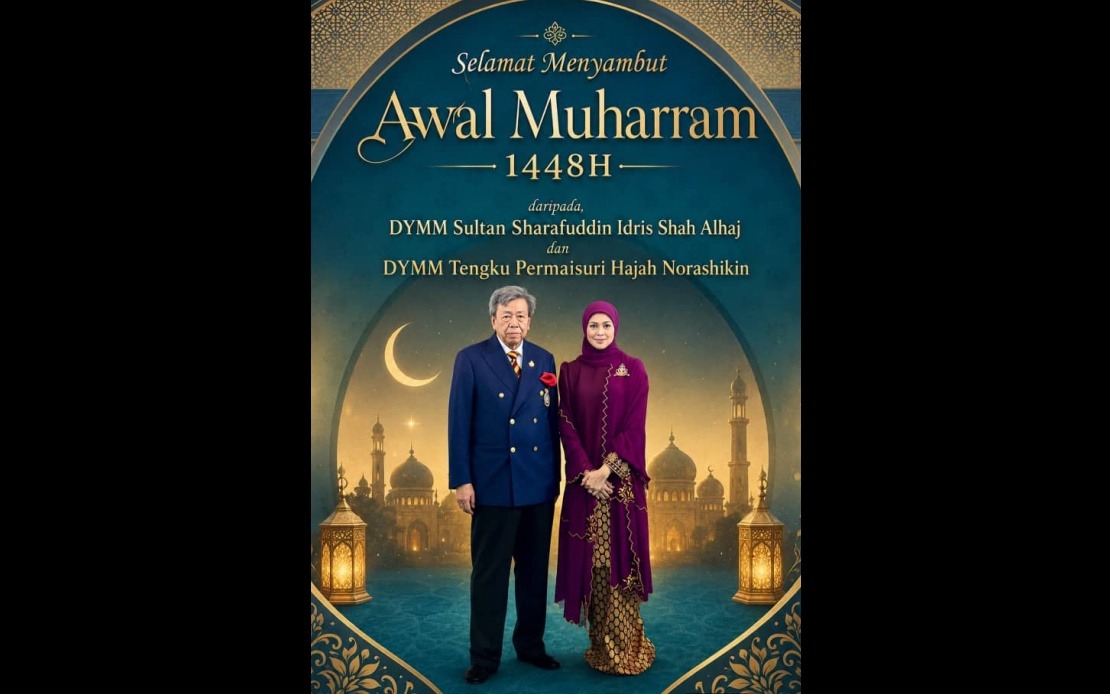
Sultan Sharafuddin Idris Shah of Selangor has renewed his appeal for the Muslim community to place unity at the forefront of their priorities as they mark the Maal Hijrah 1448H celebration. The annual observance, which commemorates the Islamic calendar's starting point, represents far more than the physical relocation of the Prophet Muhammad and his followers to Medina, the Sultan emphasised, but rather embodies a spiritual commitment to positive transformation and collective advancement of the ummah.
In his Maal Hijrah message delivered on June 16, the Selangor ruler drew inspiration from the teachings of his predecessor, the late Sultan Salahuddin Abdul Aziz Shah, who consistently reminded his heirs about the imperative of maintaining cohesion within the Muslim community. The Sultan's invocation of his father's legacy underscores how this message represents a continuation of long-standing values within Selangor's royal household regarding social harmony and religious responsibility.
The Sultan articulated a nuanced vision of how disagreements within the Muslim community ought to be addressed. Rather than allowing differences to fester or escalate, he advocated for open communication conducted with wisdom and decorum. When constructive criticism or guidance needs to be offered, it should be delivered with graciousness and respect for the recipient's dignity, reflecting Islamic principles of admonition. This approach stands in stark contrast to the inflammatory rhetoric that sometimes characterises contemporary religious and political discourse in Malaysia.
Central to the Sultan's message is the principle that internal disputes should remain confined to private forums where they can be resolved through measured deliberation and mutual respect. By keeping sensitive matters out of the public sphere, the Muslim community can avoid the destructive consequences of visible fractures that undermine collective strength. The Sultan warned that public quarrelling not only exposes vulnerabilities but also creates opportunities for external actors to exploit existing divisions for their own gain, fundamentally weakening the ummah's position.
This cautionary note carries particular significance in Malaysia's contemporary context, where religious and ethnic sensitivities frequently intersect with political considerations. The Sultan's emphasis on preventing exploitation of internal divisions reflects an understanding that cohesion directly translates to geopolitical and social resilience. When communities appear fractured or engaged in bitter disputes, neighbouring nations, competing religious groups, or external powers may perceive opportunities to influence outcomes or expand their influence at the expense of Muslim interests.
The Sultan further stressed that allowing persistent internal conflict serves no victorious purpose for any faction within the community. Rather than producing winners and losers, prolonged public disputes only diminish everyone's standing and collective capacity to address shared challenges. This message implicitly acknowledges that Malaysian Muslims face numerous external pressures and internal complexities—from economic challenges to demographic transitions—that demand unified responses rather than fragmented efforts.
The Selangor ruler explicitly connected the spiritual essence of Hijrah to contemporary social imperatives. The migration of the Prophet Muhammad symbolised a pivotal moment where the community chose collective welfare over individual comfort or tribal loyalty. Similarly, he suggested, modern Muslims must consciously subordinate personal and factional interests to broader religious, ethnic, and national objectives. This reframing of Hijrah as a metaphor for contemporary sacrifice and prioritisation speaks to the challenges of pluralistic societies where competing interests constantly vie for prominence.
Tolerance emerged as another crucial pillar in the Sultan's vision for strengthening the Muslim community. Beyond mere coexistence with difference, tolerance implies actively appreciating the validity of diverse perspectives while maintaining underlying unity around core principles. In a nation where Muslims constitute the majority but must navigate relationships with significant non-Muslim populations and minorities within Islam itself, this message of tolerance carries implications extending beyond the Muslim community to society at large.
The Sultan's articulation of placing religious, racial, and national interests above personal or group considerations presents an idealistic yet ambitious framework for communal conduct. This hierarchical ordering acknowledges that individuals naturally gravitate toward protecting their immediate interests, yet suggests that conscious effort and spiritual discipline can redirect those impulses toward collective good. The invocation of this principle during Maal Hijrah—a time when Muslims reflect on spiritual renewal—frames unity not as a political demand but as a religious obligation.
The broader context of this message reflects ongoing challenges within Malaysia's Muslim majority regarding sectarian tensions, political polarisation, and the influence of transnational religious movements. By grounding his appeal in traditional Islamic values and royal authority, Sultan Sharafuddin attempts to establish a stabilising counterweight to more divisive religious rhetoric circulating through social media and religious networks. The timing of this message during a religious observance lends it additional symbolic weight, positioning the monarchy as guardian of integrative Islamic values.
For Malaysian policymakers and civil society leaders, the Sultan's message offers a framework for addressing the complex challenge of managing diversity within the Muslim community while maintaining broader social cohesion. His emphasis on private resolution of disputes, respectful dialogue, and subordination of factional interests to collective welfare provides a template applicable to Christian communities, Hindu communities, and the broader Malaysian pluralistic society. The principle that public conflict breeds vulnerability to external exploitation transcends religious boundaries and speaks to fundamental truths about social organisation and national resilience.