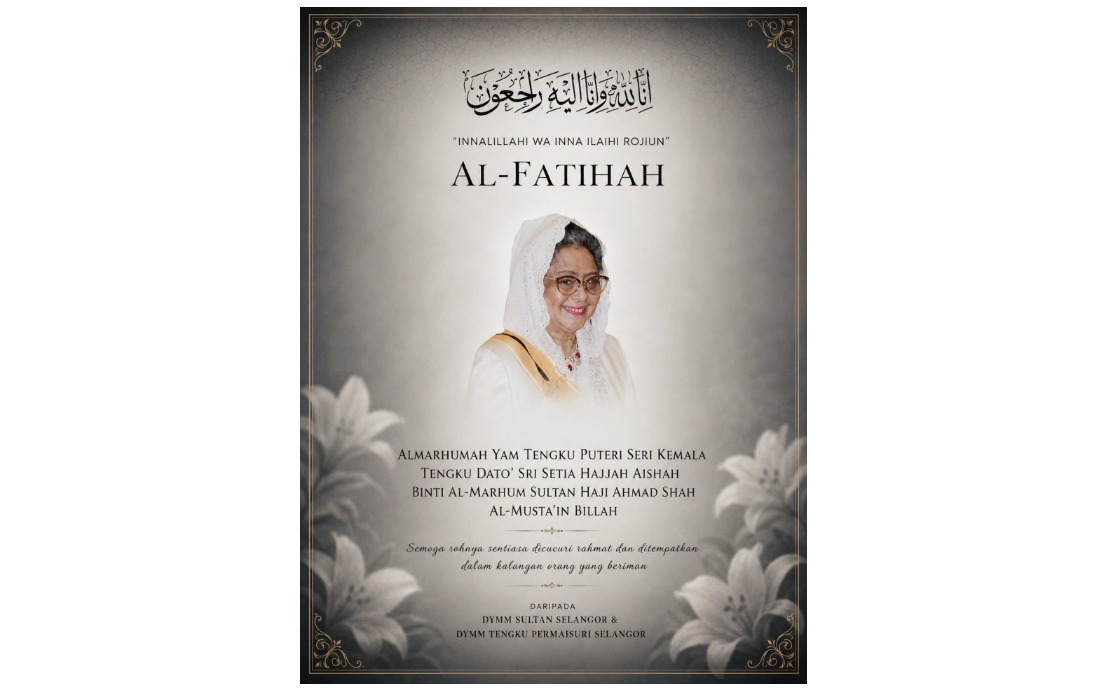
The Sultan of Selangor, Sultan Sharafuddin Idris Shah, and his consort, Tengku Permaisuri Selangor Tengku Permaisuri Norashikin, have formally conveyed their sympathies to Al-Sultan Abdullah Ri'ayatuddin Al-Mustafa Billah Shah regarding the loss of his elder sister, Tengku Puteri Seri Kemala Tengku Datuk Seri Aishah Almarhum Sultan Ahmad Shah, who departed on Tuesday evening.
The expressions of grief came through an official statement released by the Selangor Royal Office, where the royal couple articulated their deep sadness at the news of her passing. In Malaysian royal protocol, such formal condolences between rulers of different states represent an important demonstration of familial bonds and inter-state solidarity within the Federation. The gesture underscores the close connections that exist among Malaysia's royal households, particularly given the shared heritage and historical ties between the sultanates of Selangor and Pahang.
According to the Selangor Palace announcement, Sultan Sharafuddin and Tengku Permaisuri Norashikin have offered prayers for the deceased, requesting divine mercy and blessings upon her soul. The statement specifically requested that Tengku Datuk Seri Aishah be granted a place among the righteous, reflecting the Islamic customs observed within Malaysia's royal circles. The phrase "Al-Fatihah," traditionally recited as an opening chapter of the Quran dedicated to the departed, punctuated their formal expression of mourning.
Tengku Datuk Seri Aishah, who belonged to the immediate family of the Pahang sultanate, passed away at a medical facility in Kuala Lumpur at 9:15 pm on Tuesday. The circumstances surrounding her final hours and any preceding health matters remain undisclosed in official communications, which is consistent with the royal family's customary approach to matters of a personal nature. Her tenure as a member of Pahang's royal household would have involved participation in state ceremonial functions and public engagements, connecting her to the broader life of the sultanate.
Arrangements for her final rites proceeded according to established royal protocols. The remains were scheduled for transport to the Pahang Royal Mausoleum located in Pekan on Wednesday, where interment would take place under ceremonial conditions befitting her status within the royal family. Such burial arrangements, conducted with full honours and in adherence to time-honoured royal customs, reflect the significance of her position and the respect accorded to senior members of Malaysia's reigning families.
The death of family members connected to Malaysia's sultans typically prompts expressions of sympathy from other state rulers, members of the federal government, and senior public officials, demonstrating the interconnected nature of Malaysia's political and ceremonial leadership structures. These formal condolences serve not merely as expressions of personal grief but as affirmations of institutional continuity and the bonds of mutual respect that sustain Malaysia's constitutional monarchy system.
For Malaysian readers and observers of royal affairs, such events provide occasions to reflect on the traditions and customs that govern Malaysia's sultanates. The sultans occupy a distinctive constitutional position, serving simultaneously as heads of state at the federal level on a rotational basis and as custodians of Islamic and secular law within their respective territories. Families of the sultans, therefore, carry significant symbolic weight within their states' governance and cultural landscapes.
The death of Tengku Datuk Seri Aishah, a member of the Pahang royal line with historical connections to the sultanate's earlier generations, represents the passing of an individual who had witnessed decades of Malaysia's development as an independent nation. As the sister of the current sultan, she occupied a position of seniority and respect within palace circles, making her loss a matter of genuine consequence for the Pahang court and the broader Malaysian royal establishment.
The formal nature of Selangor's response demonstrates the diplomatic protocols that persist among Malaysia's state governments, even in moments of personal bereavement. Though Selangor and Pahang maintain their own distinct administrative structures and governance arrangements, the connection between their royal families transcends these political boundaries. Such inter-state courtesies remain an integral aspect of how Malaysia's sultanates navigate their collective responsibilities and honour their shared heritage.
As Malaysian society continues to evolve with modernisation and social change, the observance of traditional customs by the royal families, including formal expressions of mourning and adherence to ceremonial burial practices, represents a conscious preservation of Malaysia's cultural continuities. These practices anchor the nation's institutions in historical traditions while allowing them to function effectively within contemporary governance frameworks, a balance that remains central to Malaysia's constitutional arrangement.

