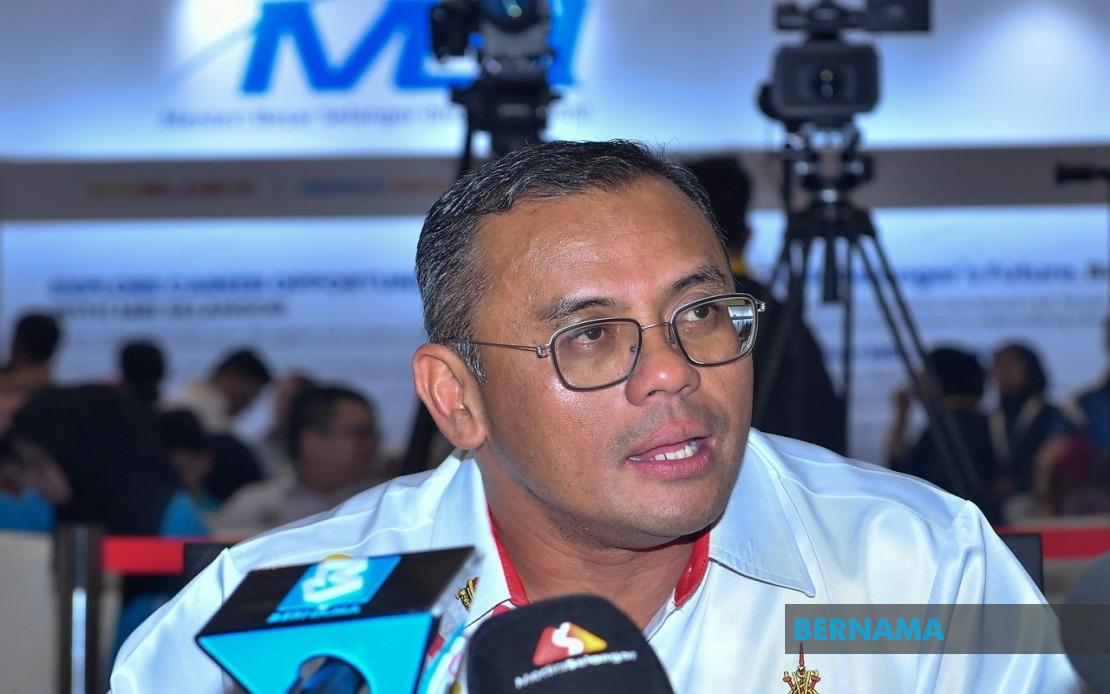
The Selangor state government is preparing a comprehensive support programme for approximately 400 workers who will lose their jobs when Panasonic AVC Networks Kuala Lumpur Malaysia Sdn Bhd ceases television production operations by the end of March next year. State leadership announced plans to convene meetings with affected employees within the coming week, signalling an urgent effort to mitigate the employment crisis before retrenchments take effect.
Menteri Besar Datuk Seri Amirudin Shari outlined the administration's multi-pronged response during remarks at the Selangor Mega Jobcare 2026 programme in Shah Alam. The government will dispatch V. Papparaidu, chairman of the State Human Resources, Poverty Alleviation, Indigenous & Minority Affairs Committee, to lead direct engagement with displaced workers. These discussions will coordinate closely with the Social Security Organisation (PERKESO) to gather critical information about the workers' circumstances and identify the most pressing support requirements.
Immediate assistance will include tangible relief measures such as food baskets distributed to affected families, though state officials emphasise that temporary handouts represent only the first layer of their response. The government's primary objective centres on securing alternative employment pathways that would allow workers to maintain their economic stability and continue residing in Selangor without facing significant hardship. This approach reflects growing recognition among Malaysian policymakers that sustainable solutions to industrial displacement must prioritise rapid job placement over prolonged welfare dependency.
PERKESO's involvement introduces a structured financial safety net for workers navigating the retrenchment period. The agency operates an unemployment insurance scheme that provides graduated income protection, beginning at 80 per cent of monthly salary during the first month of joblessness. This support gradually diminishes to 50 per cent in the second month and 30 per cent thereafter, functioning as a job-seeking allowance to bridge the gap between losing one position and securing another. Papparaidu highlighted this mechanism as a transformative initiative that addresses the vulnerability of Selangor's industrial workforce, particularly in manufacturing sectors susceptible to operational consolidations and technological transitions.
Panasonic Malaysia's decision to withdraw from television manufacturing reflects broader industry trends across Southeast Asia, where electronics companies are rationalising production footprints and relocating operations to markets offering greater cost advantages or proximity to supply chains. The Kuala Lumpur facility's closure represents a significant contraction for a corporation that has maintained a presence in Malaysia for decades. The decision to eliminate two product lines simultaneously underscores the comprehensive nature of the strategic shift, affecting not merely a single production line but rather multiple manufacturing streams that collectively employ a workforce of several hundred personnel.
The timing of the closure—spanning from announcement in August to completion by March—provides approximately seven months for intervention efforts, a window that state and federal agencies aim to maximise. This horizon offers sufficient time to conduct skills assessments, identify sectors with labour shortages, and facilitate retraining programmes where necessary. Malaysia's experience with previous industrial closures demonstrates that proactive early engagement substantially improves employment outcomes, as workers who receive timely support and placement assistance typically secure new positions faster and with less wage deterioration than those left to navigate transitions independently.
The Selangor Mega Jobcare 2026 programme itself demonstrates the state's broader commitment to labour market interventions. The career fair convening at Shah Alam Convention Centre assembles 147 employers offering more than 11,000 vacant positions, with approximately 62.2 per cent providing monthly salaries exceeding RM3,000. This concentration of higher-wage opportunities creates favourable conditions for Panasonic workers transitioning to new employment, as their manufacturing experience and technical qualifications typically position them competitively for positions within the salary ranges represented at the fair. The programme targets job seekers aged between 18 and 60, encompassing most of the Panasonic workforce demographic.
Regional economic observers note that Malaysia's manufacturing sector increasingly requires proactive workforce transition management as automation, reshoring trends, and changing corporate strategies reshape employment patterns. The Panasonic situation exemplifies challenges that policymakers across Southeast Asia must address as international corporations continually evaluate production locations. Selangor's response—combining immediate relief, structured unemployment insurance, and targeted job placement—establishes a template that other state governments may reference when navigating similar crises in future years.
The involvement of state-level political leadership in retrenchment response reflects evolving expectations regarding government responsibility for industrial communities. Rather than treating factory closures as purely private commercial decisions with minimal public sector involvement, Selangor's approach positions elected officials as active problem-solvers tasked with preserving community stability. This stance carries implications beyond immediate humanitarian concerns, as rapid employment restoration prevents the social costs associated with prolonged joblessness, including increased pressure on public health and social welfare systems.
Beyond the immediate Panasonic situation, the state's emphasis on alternative employment opportunities suggests confidence in Selangor's broader labour market capacity. The willingness to commit resources toward placement assistance rather than merely extending welfare payments reflects fiscal sustainability principles that acknowledge the state's long-term financial constraints. By returning displaced workers to productive employment quickly, the government reduces ongoing support expenditures while maintaining tax revenue contributions that strengthen public finances available for other priorities.
Workers affected by the Panasonic closure represent a critical constituency for state policymakers, as manufacturing employment forms the backbone of Selangor's economy and provides stability for families throughout the state's diverse communities. The upcoming meetings between government officials and displaced workers will determine whether theoretical support commitments translate into practical assistance mechanisms. Success in this instance will establish government credibility for future industrial transitions, while gaps in delivery would undermine confidence in state-level capacity to manage economic disruptions effectively.

