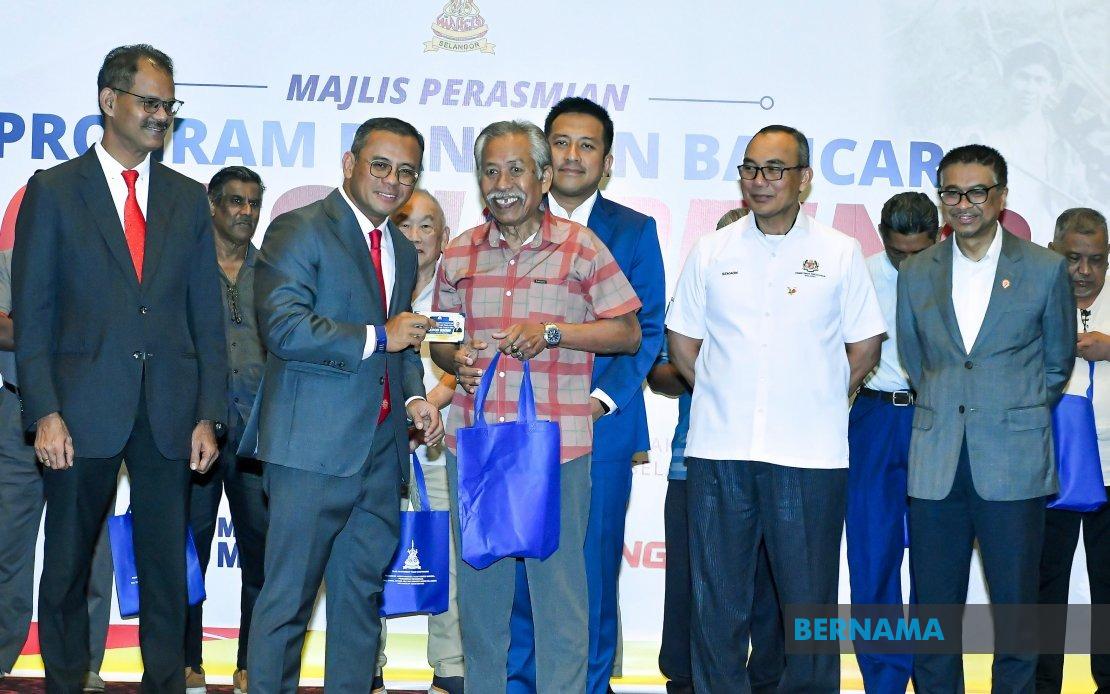
The Selangor state government has launched a new assistance initiative targeting nearly 8,400 veterans of the Malaysian Armed Forces and Royal Malaysia Police who do not receive pensions. The Jom Shopping Voucher Assistance Programme, unveiled to mark the 2026 National Warriors' Day commemoration, represents the inaugural effort of its kind in the state and signals a growing commitment to support those who have served the nation but fallen outside the formal pension system.
Menteri Besar Datuk Seri Amirudin Shari framed the initiative as an expression of gratitude toward a community whose contributions to national defence and security are often taken for granted. He emphasised that the programme embodies the state government's governing philosophy of inclusivity, ensuring that veterans who have sacrificed for the country are not forgotten or marginalised. While acknowledging that the material value of the vouchers cannot truly compensate for decades of service, Amirudin stressed the symbolic importance of state recognition and tangible support during an era of rising living costs affecting many households across Malaysia.
The distribution mechanism prioritises orderly and efficient delivery, with vouchers being allocated across state assembly constituencies in staggered phases. This phased approach, scheduled for completion by the end of July or early August, reflects administrative prudence and allows the state government to manage logistics while ensuring every eligible veteran receives their allocation smoothly. Each recipient receives a voucher valued at RM200, designed for use at participating retailers under the Jom Shopping merchant network.
The scope of non-pensioned veterans substantially exceeds the current intake. The Selangor government identified more than 22,700 pensioned veterans within the state, many of whom receive relatively modest monthly allowances. This larger cohort represents a potential future beneficiary group should the current initiative prove successful and attract positive public reception. The existence of such a significant population of pensioned veterans with inadequate income underscores a structural challenge within Malaysia's veteran welfare system—that official pensions, while available, frequently fail to meet contemporary living standards.
Amirudin's remarks highlight the multifaceted role played by military and police personnel beyond conventional defence responsibilities. Modern security forces are increasingly called upon to respond to domestic emergencies, particularly flood relief operations that have become more frequent and severe across Malaysia due to changing weather patterns. By acknowledging these expanded duties, the Menteri Besar positioned veteran support as recognition of comprehensive national service rather than narrow military function alone.
The cost-of-living crisis has emerged as a defining policy challenge for state governments across Malaysia. Inflation, rising food and energy prices, and housing affordability have squeezed household budgets and created acute financial stress, particularly for fixed-income populations including retirees and pensioners. Veterans without pensions face heightened vulnerability, combining age-related income constraints with potential service-related disabilities that limit employment opportunities. Shopping vouchers, while modest, provide immediate relief and represent a direct state intervention in favour of a constituency often overlooked in broader poverty-reduction discussions.
The programme's emphasis on honouring warrior contributions reflects shifting political priorities in Selangor. As Malaysia's most economically developed and urbanised state, Selangor has increasingly positioned itself as a laboratory for innovative social policies that balance fiscal responsibility with welfare expansion. This veteran support initiative fits within a broader pattern of targeted assistance programmes designed to build political goodwill while addressing genuine gaps in the federal social safety net.
The involvement of state-level committees focused on human resources, poverty eradication, youth, and sports underscores the cross-portfolio coordination required for veteran welfare. Veterans are not a monolithic constituency—they span different age cohorts, service durations, and circumstances. Some entered military or police service young and built entire careers; others departed early due to injury, redundancy, or personal circumstances. This diversity demands tailored approaches rather than one-size-fits-all solutions, justifying the multi-committee approach evident in the programme's governance structure.
Looking forward, the Selangor government has signalled intent to expand the voucher programme contingent upon positive evaluation. Extending coverage to the 22,700 pensioned veterans would require substantially larger budget allocation but would acknowledge the inadequacy of pension levels themselves. This expansion possibility suggests the state government recognises that veteran welfare reform cannot be addressed through vouchers alone—sustainable solutions require systemic pension reviews and adjustments to ensure that those who sacrificed for national security receive dignified retirement income.
For Malaysia more broadly, Selangor's initiative raises important questions about veteran welfare federalism. While defence and internal security fall within federal jurisdiction, state governments increasingly participate in supporting veteran populations within their boundaries. This division of responsibility creates potential coordination challenges and raises equity questions about whether veterans receive consistent treatment across different state administrations. The success or failure of Selangor's programme may influence whether other prosperous states adopt similar models or pressure the federal government to enhance nationwide veteran support frameworks.
The Warriors' Day commemoration provides valuable symbolism for honouring service, yet symbolic gestures require backing through sustained, adequately-resourced programmes. Shopping vouchers offer tangible benefit but address symptoms rather than underlying causes of veteran financial insecurity. Meaningful reform demands attention to pension adequacy, employment support for those transitioning to civilian life, healthcare provisions for service-related conditions, and psychological support for those dealing with trauma. Selangor's voucher programme succeeds best as a component within comprehensive veteran welfare architecture rather than as a standalone initiative.

