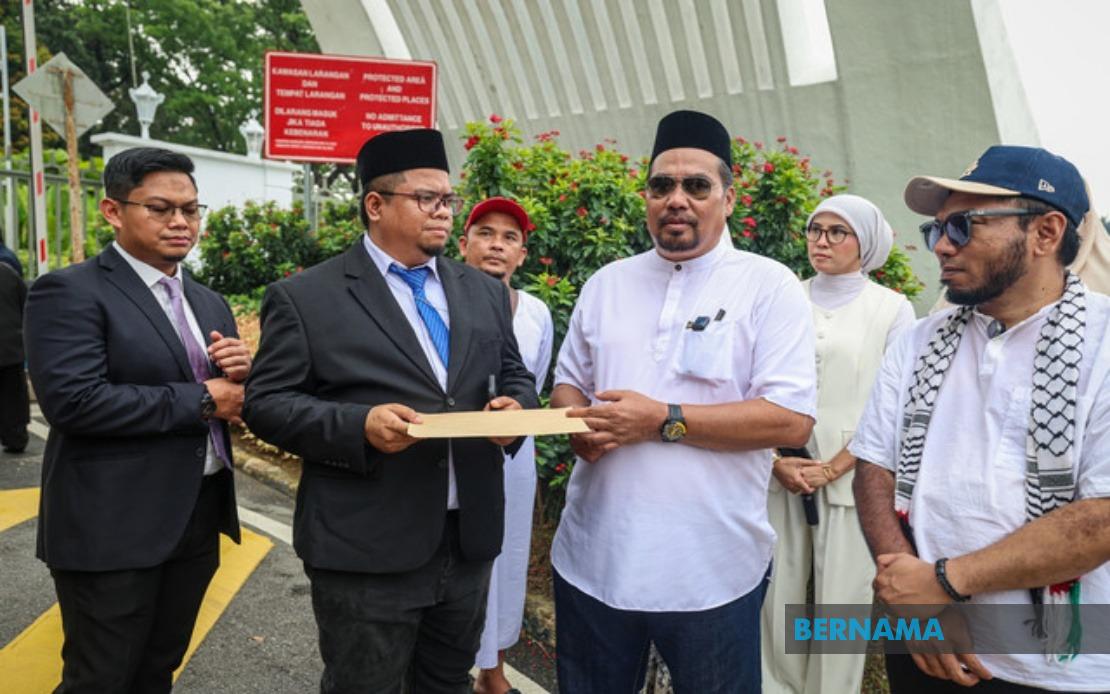
A prominent social media activist coalition has escalated pressure on Malaysia's government to pursue accountability for institutional failures at Lembaga Tabung Haji (TH), the statutory body managing hajj savings for Muslim Malaysians. The Sekretariat Gerak Gempur Media Sosial Rakyat Malaysia (SEKPUR) delivered a formal memorandum to Parliament on August 11, demanding that those culpable for the pilgrimage fund's deterioration face rigorous legal consequences in accordance with directives from the Yang di-Pertuan Agong.
The memorandum submission coincided with a special parliamentary sitting convened to brief lawmakers on findings from a comprehensive Royal Commission of Inquiry (RCI) into TH's operational and governance shortcomings. SEKPUR secretary Mohd Yani Alias emphasized that the coalition's position transcends partisan considerations, stressing that institutional accountability must remain paramount regardless of the political affiliation of implicated officials. This stance carries particular significance in Malaysia's polarised political environment, where accusations of selective enforcement often overshadow institutional reform efforts.
The RCI report, released publicly on July 29, comprises 211 pages documenting systemic weaknesses spanning the 2014 to 2020 period—a critical juncture when TH faced mounting financial pressures and operational challenges. The inquiry identified critical gaps in management practices, risk oversight, and decision-making processes that contributed to TH's financial difficulties. The report's 25 recommendations represent a blueprint for institutional restructuring, with TH having already implemented approximately 75 per cent of proposed reforms by late July, suggesting a degree of administrative responsiveness despite the gravity of identified failures.
Beyond accountability mechanisms, SEKPUR has articulated broader concerns about TH's long-term financial viability and its capacity to deliver competitive hibah distributions—the profit-sharing returns that depositors receive from the pilgrimage savings scheme. This dimension of the debate reflects grassroots anxiety about whether TH can sustain its core function of making hajj financially accessible to ordinary Muslim Malaysians. For depositors who have contributed savings over decades with expectations of reliable returns, the RCI findings have raised questions about institutional trustworthiness that extend beyond technical governance improvements.
The escalating cost of performing hajj represents another dimension of SEKPUR's concerns, particularly resonant among middle and lower-income pilgrims who comprise TH's primary constituency. Rising international airfares, accommodation expenses, and service charges have progressively burdened hajj aspirants, with many relying on TH's financial assistance schemes. SEKPUR's memorandum specifically highlighted this affordability crisis, linking it to broader questions about whether TH's management adequately prioritises the needs of Muslim Malaysians across income brackets rather than pursuing investment strategies that may have inadvertently exposed the fund to excessive risk.
Another critical issue raised involves transparency in hajj quota allocation, a process historically opaque and frequently subject to political patronage allegations. The memorandum urged enhanced disclosure mechanisms regarding how TH distributes limited hajj slots among competing applicants. In Malaysia's demographic and religious context, hajj remains a profound spiritual aspiration, and perceived inequities in quota allocation can undermine institutional legitimacy. SEKPUR's intervention suggests that civil society organisations increasingly view corporate governance standards as inseparable from public accountability in religiously significant institutions.
The timing of SEKPUR's action reflects broader societal expectations that the RCI process will translate into concrete remedial action rather than merely generating documentation. Parliamentary scrutiny alone has proven insufficient to satisfy stakeholders seeking assurance that mismanagement will not recur. By mobilising activists and presenting a formal memorandum, SEKPUR has amplified civilian pressure on government agencies responsible for TH oversight, particularly the Ministry in the Prime Minister's Department (Religious Affairs), headed by Minister Senator Dr Zulkifli Hasan.
The memorandum was formally received by Zairudin Hashim, press secretary to the Religious Affairs Minister, signalling bureaucratic engagement with the coalition's demands. However, converting memorandum submission into enforcement action represents a distinct challenge in Malaysia's administrative framework, where executive discretion in prosecutorial matters remains substantial. SEKPUR's emphasis on non-partisan accountability reflects recognition that selective prosecution based on political calculation would ultimately undermine institutional trust and confirm perceptions that governance standards operate inconsistently.
For Malaysian depositors at TH, particularly those from lower-income communities who view the fund as essential to fulfilling hajj obligations, the RCI process and subsequent accountability mechanisms carry profound personal implications. Any perception that mismanagement persists unremedied or that perpetrators escape consequences would likely erode confidence in TH's capacity to safeguard entrusted savings. The coalition's intervention represents an attempt to translate institutional reform recommendations into enforceable standards that protect beneficiaries rather than merely satisfying bureaucratic review cycles.
Looking forward, the effectiveness of responses to SEKPUR's demands will significantly influence public confidence in Malaysia's ability to govern religiously significant institutions with integrity. The RCI report's extensive recommendations require sustained implementation oversight and financial restructuring that cannot be accomplished through cosmetic administrative adjustments. Whether government authorities will pursue prosecutions of those implicated in documented mismanagement remains uncertain, yet the Yang di-Pertuan Agong's directive and SEKPUR's public pressure have elevated expectations that accountability will transcend institutional rank and political patronage networks.

