The Sejahtera MADANI programme in Perak has reached a milestone in its efforts to uplift economically disadvantaged communities, having channelled RM2.3 million in targeted assistance to approximately 2,000 residents since its inception. The initiative, which forms part of the government's broader commitment to inclusive economic development, is now poised for significant expansion following approval of an additional RM3 million in funding allocated to broaden its reach and deepen its impact across the state.
Muhammad Kamil Abdul Munim, the Finance Minister's political secretary, announced the expanded funding commitment during an official roadshow event held in Kuala Kangsar on June 30. The enhanced allocation represents a strategic decision to strengthen support mechanisms for particularly vulnerable population segments, including small-scale business operators struggling to scale their enterprises, salaried workers earning below the poverty line, and academically talented students from underprivileged backgrounds whose potential might otherwise remain untapped due to financial constraints.
The programme's multifaceted approach extends well beyond simple cash transfers, recognising that sustainable poverty alleviation requires complementary interventions tailored to specific needs. Microenterprises receive not merely financial grants but practical business development assets—equipment, tools, and resources designed to measurably enhance operational productivity and generate meaningful income improvements. Students demonstrating exceptional academic achievement in their Sijil Pelajaran Malaysia examinations receive laptop computers, directly addressing the digital access gap that increasingly determines educational and employment prospects in Malaysia's knowledge-intensive economy. This combination of financial support and capability-building tools reflects contemporary understanding that effective aid programmes must address both immediate material needs and longer-term capacity constraints.
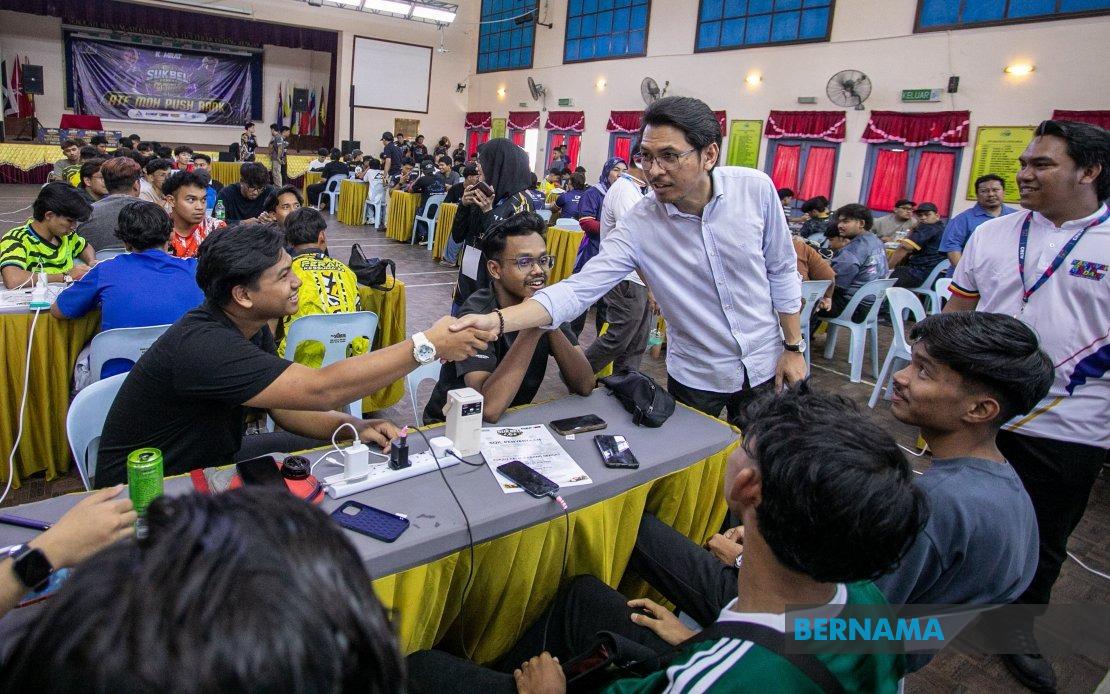
During the Padang Rengas parliamentary constituency roadshow at the Millennium Hall in Lubok Merbau, the programme showcased tangible outcomes: thirteen high-performing SPM students received laptops to facilitate their transition into tertiary education, while five micro-entrepreneurs were handed business equipment packages designed to strengthen their commercial operations. These visible demonstrations of the initiative's practical benefits served to illustrate how government support translates into concrete improvements in individual circumstances and community development trajectories.
Muhammad Kamil emphasised that the programme's design prioritises targeted, impact-driven resource allocation rather than generalised distribution. The government's position reflects a deliberate pivot toward evidence-based social spending, where aid mechanisms are structured to produce measurable improvements in living standards and educational attainment rather than serve primarily redistributive functions. This approach aligns with broader policy frameworks emphasising efficiency and outcomes-orientation in public expenditure.
However, the announcement also revealed significant lessons learned from earlier implementation challenges. The Finance Minister's political secretary acknowledged that previous iterations of the broader SejaTi MADANI grant scheme encountered substantial difficulties, with several community-selected projects failing to reach completion or achieving their intended objectives. The original operational model, which granted considerable autonomy to local communities in identifying and prioritising development projects, encountered implementation weaknesses that undermined programme effectiveness and raised serious concerns regarding fiscal accountability.
These implementation failures prompted a fundamental reassessment of governance structures underpinning the initiative. Muhammad Kamil stressed that substantially enhanced supervisory mechanisms would henceforth characterise the programme's operational framework. While acknowledging that implementation challenges are inevitable in any large-scale public initiative, he underscored that systematic monitoring protocols, rigorous oversight procedures, and strengthened accountability mechanisms represent essential safeguards against both fraudulent misappropriation of funds and unintentional leakages that erode public resources without delivering intended beneficiary outcomes.
The tightened governance approach reflects growing recognition within Malaysia's development policy community that community participation and local autonomy, while politically attractive and theoretically sound, require complementary institutional oversight to prevent accountability failures. The transition from a largely decentralised model toward one featuring enhanced central supervision represents a pragmatic recalibration balancing legitimate governance concerns with continued commitment to participatory development approaches.
For Perak residents, particularly those operating marginal microenterprises or managing precarious household finances, the expanded Sejahtera MADANI allocation signals renewed government attention to region-specific poverty alleviation and economic inclusivity. The state has experienced significant economic pressures, with traditional tin mining industries in decline and agricultural sectors facing market pressures, creating substantial populations requiring targeted support to navigate economic transition. The programme's focus on equipping entrepreneurs with productive assets and supporting students in gaining tertiary qualifications addresses these structural challenges by investing in human and physical capital formation among vulnerable populations.
The additional RM3 million injection, while modest relative to broader development expenditure, carries symbolic significance in demonstrating continued government commitment to addressing grassroots economic insecurity. For programme beneficiaries already receiving assistance, it signals expansion rather than consolidation, potentially enabling recruitment of additional families and enterprises into support mechanisms. The commitment also implicitly acknowledges that initial RM2.3 million allocation proved insufficient to address the full universe of eligible beneficiaries, suggesting demand for such programmes substantially exceeds resources currently allocated across Malaysia.
Looking forward, the Sejahtera MADANI initiative's experience offers valuable lessons for other Malaysian states and federal poverty alleviation programmes. The combination of community participation with enhanced institutional oversight, diversified support mechanisms addressing multiple constraint categories, and demonstrated flexibility in responding to implementation challenges provides a template that policymakers might adapt across comparable contexts. The programme's evolution from decentralised autonomy toward strengthened supervision represents a maturation process that many development initiatives undergo as they scale and encounter real-world implementation complexities.
The expanded funding also reflects broader economic policy considerations as Malaysia navigates post-pandemic recovery and manages inflationary pressures affecting household purchasing power. Targeted assistance to low-income households helps moderate adverse distributional consequences of price increases, particularly for essential commodities. Supporting microentrepreneur formalisation and productivity improvement contributes to gradual expansion of the tax base and formal economy, potentially reducing long-term reliance on direct assistance while building sustainable livelihood foundations.
As implementation proceeds under strengthened oversight protocols, monitoring whether the enhanced RM3 million allocation successfully reaches intended beneficiaries without significant leakage will provide crucial evidence regarding the programme's effectiveness and the adequacy of governance mechanisms introduced. The Sejahtera MADANI initiative's ultimate success will depend not merely on resource availability but on institutional capacity to deliver assistance efficiently while maintaining public confidence in programme integrity and equitable beneficiary selection.

