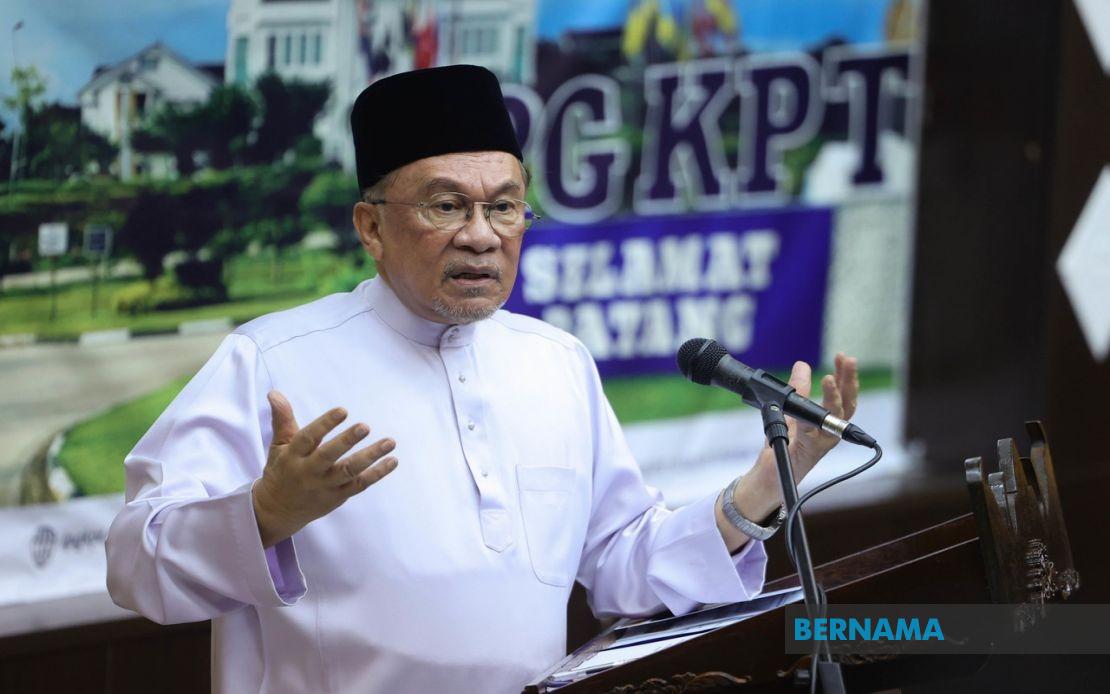
Prime Minister Datuk Seri Anwar Ibrahim has called on Malaysian schools to abandon the practice of concealing bullying incidents to shield their institutional reputation, urging instead that swift and transparent action be taken to protect affected students and address the underlying causes of such behaviour. Speaking in Nilai on July 17, the Prime Minister emphasised that reporting cases should not be viewed as a mark of failure for school leadership, but rather as a necessary and responsible step toward creating safer learning environments.
Anwar drew an important distinction in his remarks between competent and negligent school administration. A principal or headteacher who identifies and reports bullying incidents within their institution should not face blame, he stressed. Rather, the real failure lies with those who are aware of such cases yet choose silence to preserve their school's public standing. Using an illustrative example, the Prime Minister suggested that a school with 1,000 students reporting two bullying cases demonstrates appropriate vigilance and proper institutional governance, not weakness.
The underlying message reflects a growing recognition among Malaysian policymakers that reputation management at the cost of student welfare represents a fundamental betrayal of educational principles. When schools prioritise image protection over intervention, victims suffer compounded harm—not only from their peers but from institutional abandonment. This stance aligns with contemporary approaches to safeguarding in education systems worldwide, where transparency and immediate action have proven more effective than silence in reducing bullying prevalence.
Anwar's comments, made in the presence of Education Minister Fadhlina Sidek, touch on a broader malaise within Malaysia's educational ecosystem. The Prime Minister articulated his view that the persistence of bullying incidents indicates significant gaps in character development and moral education initiatives. Despite greater exposure to religious instruction than previous generations received, students continue to engage in harmful behaviour toward their peers. This paradox suggests that access to religious content alone—without genuine cultivation of empathy, respect, and human understanding—may be insufficient to prevent bullying.
The Prime Minister extended his critique beyond bullying specifically to encompass the philosophy underpinning Malaysian education more broadly. He challenged the conventional prioritisation of academic and technical excellence, arguing that schools must simultaneously develop students' capacity for compassion and their understanding of human dignity. His observation that graduates may achieve remarkable credentials—advanced degrees, specialisation in information technology, or expertise in technical fields—while lacking fundamental respect for others captures a real tension in how educational success is measured and valued.
This perspective carries particular resonance in Malaysia's context, where the education system historically emphasised competitive academic outcomes and professional qualification. As the nation seeks to position itself as a knowledge-based economy attracting high-skilled talent, Anwar's intervention suggests that policymakers recognise the non-negotiable importance of producing graduates who are not merely technically competent but also ethically grounded and socially responsible. Without such attributes, he implied, individual achievement becomes hollow and potentially damaging to society.
Anwar affirmed that Malaysia's teaching profession operates at a high standard globally, and expressed confidence that educators will continue improving their practice as education quality initiatives advance. This careful acknowledgement of teachers' existing contributions serves to frame his critique not as blame directed at the profession but rather as identification of systemic challenges requiring institutional and policy responses. Teachers, he suggested, must remain empowered to shape character development alongside subject instruction.
The remarks also underscore the particular responsibility that educators carry in forming the next generation. Beyond curriculum delivery, schools serve as environments where students develop social skills, test peer relationships, and learn patterns of behaviour that extend throughout their lives. When bullying occurs and receives institutional attention rather than concealment, schools communicate powerful lessons about accountability, respect, and the value placed on every student's wellbeing. Conversely, when incidents are suppressed, the institutional message to both perpetrators and victims is severely undermined.
For Malaysian parents and students, the Prime Minister's statement offers reassurance that national leadership recognises the seriousness of bullying and is actively promoting a culture shift toward transparency and protective intervention. This can encourage families to report incidents with greater confidence that they will be treated as legitimate concerns requiring action rather than embarrassing blips to be managed discretely. It may also embolden parents to hold schools accountable should they suspect that cases are being handled outside official reporting channels.
The intervention also reflects evolving international norms regarding safeguarding in educational institutions. Malaysia's adoption of explicit anti-concealment messaging aligns with frameworks established by organisations focused on child protection and educational wellbeing. By making these principles explicit at the highest level of government, Anwar has effectively signalled that schools will be judged not by the absence of bullying incidents but by the transparency and adequacy of their responses to those incidents.
Implementation of this philosophy will require careful communication to school leaders, clarifying that reporting bullying cases will not result in negative evaluation of their leadership or institutional standing. Equally important is establishing robust support systems for affected students and evidence-based interventions to address root causes of bullying behaviour. Without such complementary measures, transparency alone may create additional burden without proportionate benefit.
The Prime Minister's remarks ultimately reframe institutional reputation in education—suggesting that genuine standing derives not from avoiding difficult issues but from addressing them with integrity and effectiveness. Schools that transparently identify and respond to bullying demonstrate institutional strength and commitment to their core mission of student development and protection. This represents a significant repositioning of what educational excellence means in contemporary Malaysia.

