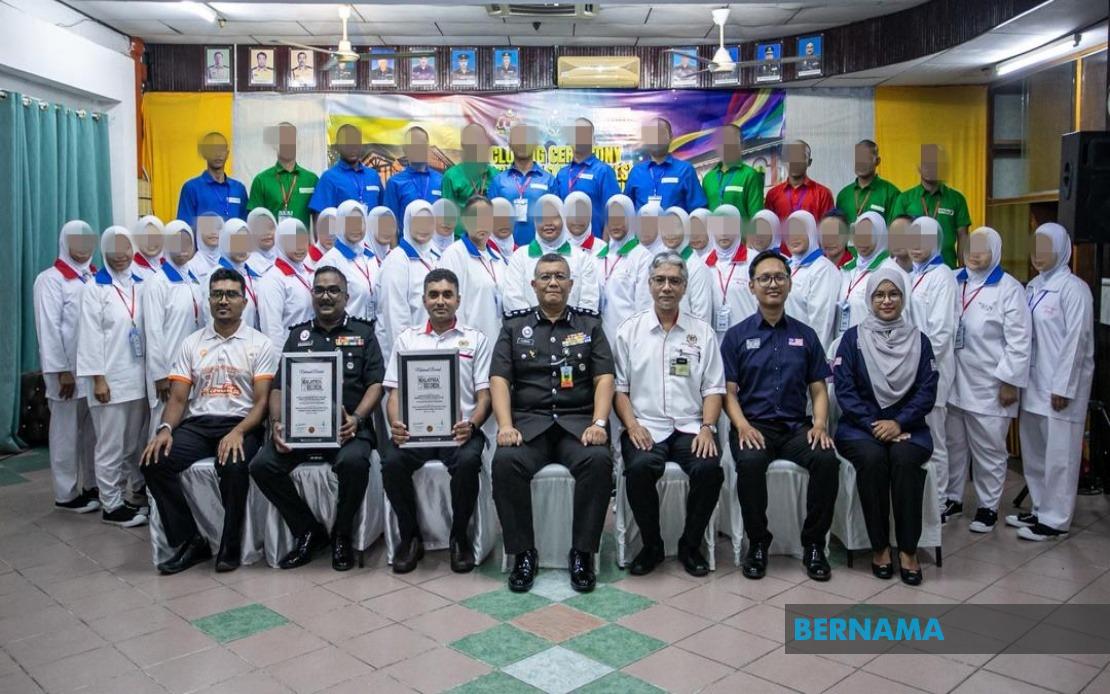
Home Minister Datuk Seri Saifuddin Nasution Ismail has publicly acknowledged the Malaysian Prisons Department's milestone achievement after the Batu Gajah Correctional Centre received recognition from the Malaysia Book of Records for successfully conducting a Basic Life Support and Automated External Defibrillator training course that engaged 42 inmates. The recognition represents a significant endorsement of an unconventional programme that places skill development and human dignity at the centre of correctional facility operations.
The minister's public commendation signals an important shift in how Malaysia's political leadership frames the role of prisons in society. Rather than emphasising confinement and punishment, Saifuddin characterised the institution as fundamentally oriented towards rehabilitation and the restoration of human potential. This framing reflects an evolving correctional philosophy that recognises incarceration as an opportunity to equip individuals with competencies that serve both personal transformation and broader social benefit.
The Basic Life Support and Automated External Defibrillator course represents more than technical skills acquisition. According to Saifuddin, the training delivers what he described as life-saving capabilities while simultaneously cultivating humanitarian values, discipline, responsibility and self-confidence among participants. This multi-dimensional approach treats rehabilitation as a holistic process rather than a purely punitive exercise, acknowledging that reintegration into society requires both practical knowledge and personal character development.
For Malaysian readers, this initiative carries particular relevance given ongoing debates about the effectiveness of correctional systems across Southeast Asia. The region has historically faced criticism regarding prison conditions and rehabilitation outcomes, with many facilities struggling under resource constraints and overcrowding. The Batu Gajah programme demonstrates that even within existing institutional frameworks, targeted interventions can produce measurable improvements in inmate development and generate recognition at the national level.
The Malaysia Book of Records recognition serves as tangible validation of programme quality and impact. In a regional context where rehabilitation successes often receive limited publicity, such official acknowledgement elevates the initiative's visibility and creates a template that other correctional facilities might emulate. The fact that 42 inmates completed the training successfully suggests the programme achieved scale while maintaining rigorous standards, a balance often difficult in resource-constrained correctional settings.
Saifuddin articulated the core philosophy underpinning this approach: that correctional institutions exist not merely to remove individuals from society but to prepare them for successful reintegration. He emphasised that inmates completing such programmes acquire not only certified life-saving competencies but also the psychological and behavioural foundations necessary for productive participation in family life, community participation and economic contribution. This perspective positions rehabilitation as an investment in social stability rather than an expense of public resources.
The minister's statement that the ultimate departmental objective involves ensuring every person returning to the community possesses requisite skills, values and capability for positive contribution reflects a measured optimism about correctional outcomes. Rather than accepting recidivism as inevitable, this framework commits the institution to measurable preparation for successful reentry. For Malaysian society, the implications extend beyond individual reformation to encompass community safety and economic productivity, as individuals with employment skills and social confidence pose reduced risks of reoffending.
The emphasis on life-saving skills training carries additional significance beyond individual competency development. By certifying inmates as trained in Basic Life Support and Automated External Defibrillator operation, the programme grants participants credentials recognised within the wider healthcare ecosystem. Upon release, these individuals possess portable, marketable qualifications that enhance employment prospects in hospitals, clinics, industrial sites and emergency response organisations. This practical pathway from incarceration to economic participation represents rehabilitation as more than symbolic gesture.
Saifuddin's call for expanded programming reflects recognition that isolated initiatives, however successful, cannot achieve systemic transformation without institutionalisation and scaling. His appeal for more high-impact programmes suggests receptiveness to continued innovation within correctional settings, provided interventions demonstrate clear outcomes and align with rehabilitation objectives. For policymakers and civil society organisations working on criminal justice reform across Malaysia and the region, such ministerial support creates space for experimentation and programme development.
The Batu Gajah initiative also illustrates how correctional reform need not require extraordinary resources or facility reconstruction. Rather than waiting for facility upgrades or budget expansion, the Prisons Department identified a concrete need—inmates possessing valuable skills that might prevent deaths in emergency situations—and structured a training programme addressing both departmental capacity and participant development. This pragmatic approach offers lessons for other institutions operating under similar constraints.
For broader Malaysian society, the recognition of inmate achievement through national record-keeping mechanisms carries important symbolic weight. It acknowledges that individuals within correctional custody remain capable of excellence and worthy of public recognition. This perspective potentially shifts public consciousness about incarcerated populations away from stigmatisation toward recognition of human potential, creating space for more constructive post-release community integration.
The initiative's success also validates investment in prisoner welfare and development as consistent with security and discipline objectives. Rather than treating rehabilitation programming as contradictory to security, Saifuddin's framing presents skill development as complementary to institutional order, with engaged, purposeful inmates more likely to maintain positive institutional conduct. This alignment removes a significant policy obstacle that correctional systems in some jurisdictions face when attempting to implement rehabilitation programming.

