As Johor prepares for a crucial state election, Sabah UMNO is stepping up its involvement in the Barisan Nasional campaign, channelling party resources into specific constituencies where East Malaysian voters form a significant voting bloc. The decision underscores the coalition's strategy of leveraging inter-state party structures to maximise support among communities with shared regional ties, a tactic that reflects the complex migration patterns within Malaysia's electoral landscape.
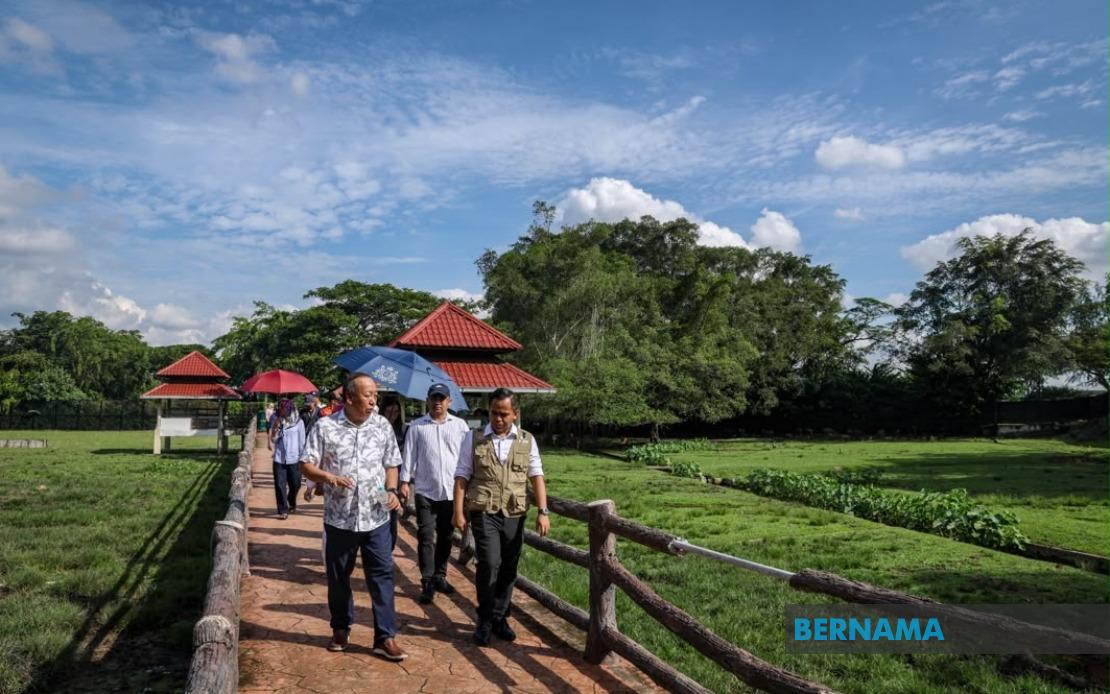
Datuk Jafry Ariffin, who chairs Sabah UMNO's liaison committee and serves as Sabah's Minister of Tourism, Culture and Environment, outlined the party's operational focus during a visit to Johor Zoo on June 18. The Pasir Gudang parliamentary constituency has been designated as the primary theatre for Sabah UMNO's involvement, with particular emphasis on mobilising support in the Permas and Johor Jaya state assembly seats. These two constituencies have emerged as logical targets given the concentration of Sabahan registered voters within their boundaries.
Voter demographics reveal the scale of this migrant community's electoral significance. Approximately 3,000 voters originally from Sabah are registered in Permas, while Johor Jaya hosts another 2,000 registered Sabahan voters. For context, these figures represent substantial voting populations in state-level contests, where margins of victory often remain tight. The presence of such cohesive communities offers political parties an opportunity to conduct targeted, culturally resonant campaigns that speak directly to the concerns and aspirations of voters who maintain ties to their home states.
This is not Sabah UMNO's first rodeo in these constituencies. Four years earlier, during the 2022 Johor state election, the party undertook similar assignment to support BN candidates in Permas and Johor Jaya. That prior engagement has created institutional memory and established networks within these communities, advantages that parties typically leverage in subsequent contests. Jafry's reference to Pasir Gudang being "no stranger" to Sabah UMNO reflects the party's confidence in its ability to operate effectively within this terrain.
The Sabah UMNO machinery has already commenced preliminary mobilisation activities, though on a modest scale reflecting the early stages of the campaign cycle. The party is calibrating its intensity to align with the formal campaign schedule set by the Election Commission, which designated June 27 as nomination day and July 11 as polling day. Rather than exhausting resources during the preparatory phase, Sabah UMNO plans to escalate campaign intensity substantially after nominations close, ensuring that party messaging reaches target voters during the period when the electorate is most attentive to election developments.
The strategic deployment of Sabah UMNO's resources illuminates broader patterns in Malaysian electoral politics. When migration creates identifiable voting communities across state boundaries, parties increasingly exploit these networks as campaign infrastructure. Sabahan voters in Johor likely maintain social connections, kinship ties, and cultural affinities that facilitate word-of-mouth political messaging. Sabah UMNO campaigners can authentically communicate with these voters in their native context, discussing issues relevant to diaspora communities—ranging from employment opportunities to maintaining cultural identity in an adopted state.
The Johor state election carries significant ramifications for Barisan Nasional's broader political positioning. Prior to dissolution of the state assembly on June 1, BN controlled 40 of the 56 state seats, a commanding majority that nonetheless remains vulnerable to the fragmentation evident in the opposition landscape. Pakatan Harapan held 12 seats, Perikatan Nasional three, and MUDA one. The electoral environment reflects the volatile coalitional dynamics that have characterised Malaysian politics since 2018, making every contested seat potentially consequential.
Sabah's role in this context deserves deeper scrutiny. As an East Malaysian state with distinct political traditions and voting patterns, Sabah UMNO's participation in West Malaysian state elections demonstrates the degree to which UMNO operates as a national party with unified strategic interests. This cross-regional cooperation also reflects the pragmatic reality that migrant communities often possess disproportionate political importance in competitive electoral contests, particularly when they congregate in specific constituencies rather than dispersing across numerous seats.
For Malaysian observers, this campaign mobilisation highlights how internal party structures and inter-state cooperation mechanisms remain vital campaign tools in the modern electoral era. Rather than relying solely on paid advertising or digital outreach, BN is deploying human capital in the form of Sabah UMNO activists and organisers who can function as trusted intermediaries between the party and communities of voters who share regional backgrounds. This ground-level approach, though labour-intensive, often proves more effective in persuading swing voters than impersonal media campaigns.
The experience accumulated through Sabah UMNO's 2022 participation in the Johor campaign serves as a reservoir of tactical knowledge that the party intends to deploy fully in the current contest. Campaign organisers understand local geography, have developed relationships with key community figures, and comprehend the specific concerns animating Sabahan voter preferences in Johor contexts. These advantages compound over multiple electoral cycles, creating path-dependent advantages for parties with established campaign infrastructure.
Looking forward, the intensity of Sabah UMNO's engagement in Johor's electoral process will likely intensify significantly after nomination day closes on June 27. The formal campaign period, lasting approximately two weeks before the July 11 polling date, represents the window during which voter attention peaks and campaign messaging achieves maximum saturation. Sabah UMNO's strategy of restraint during early phases and escalation during the formal campaign window reflects sophisticated understanding of electoral psychology and resource allocation.
The Johor state election ultimately represents a referendum on Barisan Nasional's capacity to retain control of one of Malaysia's traditionally important political territories. Sabah UMNO's deployment in support of this objective demonstrates that even in electoral contests ostensibly determined by local concerns and state-level politics, national coalitions mobilise all available organisational resources and cross-regional party machinery to maximise competitive advantage.