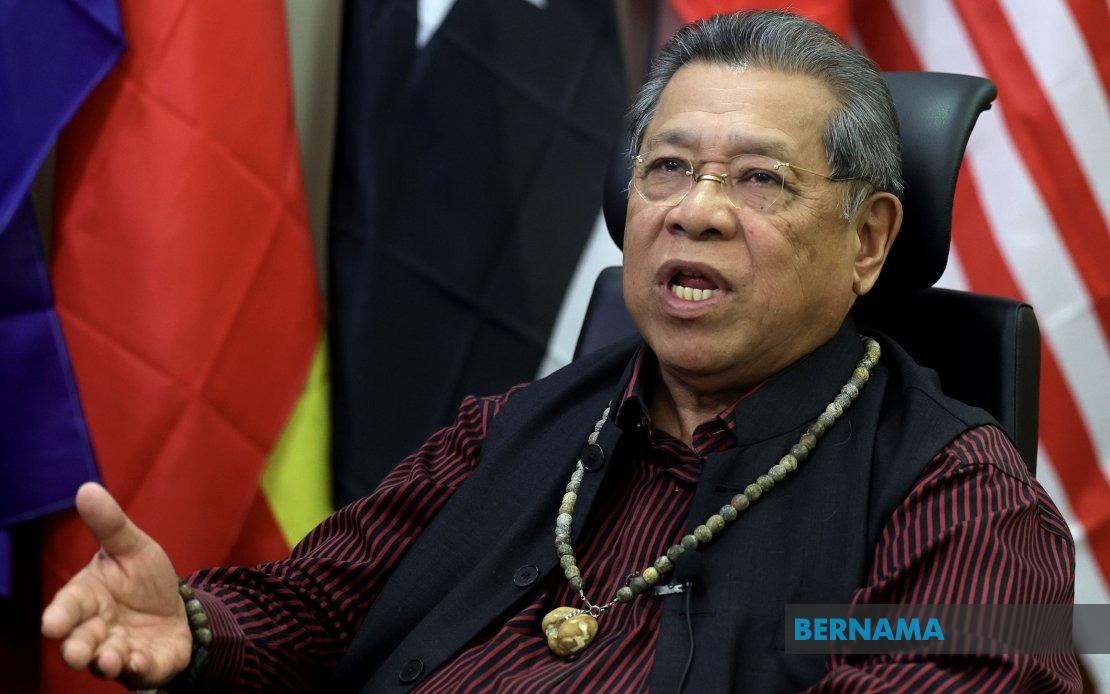
The substantial rise in federal funding allocated to Sabah represents a significant turning point for the state's development trajectory, according to United Sabah National Organisation (USNO) president Tan Sri Pandikar Amin Mulia. Speaking at the 2026 PKR National Congress in Melaka, he underscored the tangible benefits that enhanced budgetary support would deliver to Sabahans across multiple sectors and regions. The leadership backing for increased investment reflects broader efforts to address infrastructure gaps and accelerate economic growth in the resource-rich state, which has historically faced constraints in realising its development potential.
Prime Minister Datuk Seri Anwar Ibrahim disclosed that federal allocations to Sabah have climbed dramatically by 35 per cent over a four-year span, escalating from RM13 billion in 2022 to RM17.6 billion in 2026. This trajectory marks a significant departure from previous funding patterns and signals renewed commitment to bridging regional disparities. The additional RM4.6 billion represents resources that could be channelled toward critical infrastructure, education, healthcare, and economic diversification initiatives that have long been identified as priorities in the state's development blueprint.
Pandikar Amin's remarks at the congress venue in Ayer Keroh reflected confidence that the funding injection would catalyse multiple development projects simultaneously across Sabah. Rather than viewing allocations as narrow fiscal transfers, he positioned them as catalysts for broader progress that extends beyond state boundaries. This framing aligns with Malaysia's national development strategy, where the fortunes of resource-producing states like Sabah are increasingly recognised as integral to the country's macroeconomic stability and regional competitiveness in Southeast Asia.
The USNO president's endorsement of Prime Minister Anwar carries particular weight within Sabah's political landscape, where bumiputera-focused parties have historically wielded significant influence. His statement that Malaysia "still needs" Anwar Ibrahim in both international and domestic contexts suggests alignment on national direction despite the diverse coalition supporting the MADANI Government. This political backing underscores the delicate balance required to maintain cohesion among parties representing different regional interests while pursuing unified policy objectives.
Anwar used his PKR presidential address to rebut contentions that the government was shortchanging particular states in its budgetary framework. The Prime Minister emphasised that allocations reflect varying developmental priorities rather than political favouritism or neglect. This defensive posture acknowledges persistent regional grievances, particularly among states perceiving themselves as economically marginalised or overlooked in federal resource distribution. Sabah's historical sense of being underfunded relative to its resource contributions has been a recurring flashpoint in Malaysia's federalism debates.
The 35 per cent increase must be contextualised within Sabah's specific economic position and development needs. The state remains heavily dependent on primary sectors including palm oil, timber, and fisheries, with limited manufacturing diversification compared to peninsular counterparts. Infrastructure deficits—spanning port facilities, transportation networks, and digital connectivity—continue constraining private investment and entrepreneurial activity. Federal funding increases, if deployed strategically, could address bottlenecks that have historically limited value-chain advancement and talent retention in the state.
For Malaysian policymakers and observers, the Sabah funding trajectory demonstrates recognition that regional inequality poses long-term risks to national cohesion and development. East Malaysia's two states, encompassing substantial landmass and population, require sustained investment to prevent further divergence from peninsular development standards. The allocation rise also reflects pressures within Malaysia's federal system, where state governments increasingly demand commensurate fiscal autonomy and revenue-sharing arrangements to address local priorities effectively.
The timing of these announcements during the PKR National Congress was deliberate, signalling to Sabah-based party members and constituents that the Anwar administration prioritises their development concerns. The MADANI Government's coalition structure necessitates careful management of inter-party dynamics and regional satisfaction to maintain parliamentary support. Pandikar Amin's public affirmation serves as both endorsement and insurance, strengthening political bonds between peninsular-led parties and Sabah-based organisations critical to sustaining government stability.
Moving forward, implementation becomes critical to translating budgetary increases into tangible benefits. How effectively the additional RM4.6 billion is deployed—whether toward productive infrastructure yielding long-term returns or recurrent expenditure with limited multiplier effects—will substantially determine developmental impact. Transparency in project selection, timeline adherence, and outcomes measurement will be essential to validating government commitment and rebuilding public confidence in fiscal federalism mechanisms.
The funding increase also carries implications for Sabah's competitive positioning within ASEAN. States like Brunei, Sarawak, and Indonesian Kalimantan offer alternative investment destinations for regional capital flows. Enhanced infrastructure and services funded through federal allocations could improve Sabah's attractiveness to investors pursuing opportunities in renewable energy, digital economy, and sustainable agriculture. This competitive dimension underscores why state-level development funding increasingly intersects with Malaysia's regional diplomatic and economic strategy.
Pandikar Amin's remarks reflect a pragmatic recognition that Sabah's progress is inextricably linked to stability and cooperation within Malaysia's national framework. Rather than pursuing confrontational approaches, the USNO leader opted to affirm the government's commitment while extracting visible benefits for his constituents. This approach mirrors broader trends in Malaysian politics, where regional actors increasingly negotiate within institutionalised systems rather than challenging federal structures fundamentally, pragmatically accepting that development gains depend on maintaining productive relationships with centre-based power.

