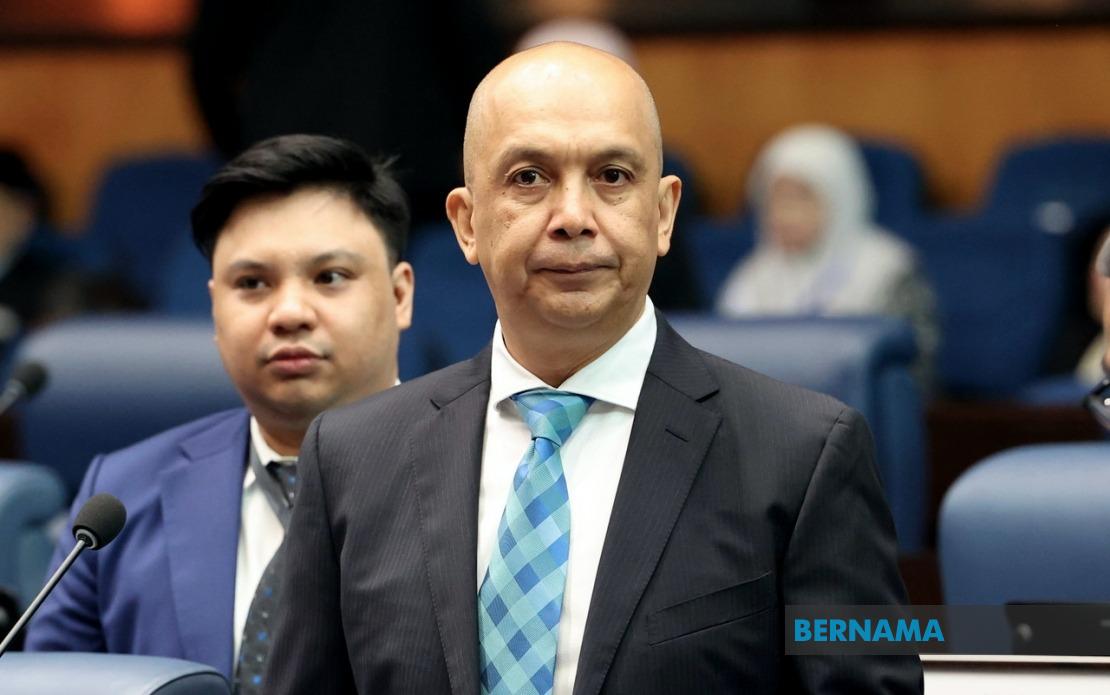
Sabah has intensified efforts to secure the second tranche of a federal special grant package, with state officials confirming receipt of RM600 million in mid-June and formally requesting that the outstanding RM900 million be released within 2024. The announcement underscores the ongoing tension between Kuala Lumpur and the Borneo state over long-standing constitutional revenue-sharing obligations, a dispute that has periodically erupted into public controversy since Sabah's entry into the Malaysian federation in 1963.
Datuk Mohd Ishak Ayub, Sabah's Assistant Finance Minister II, made clear during state assembly proceedings that the RM1.5 billion payment should not be interpreted as a settlement of the state's full entitlements. He emphasised that Sabah's acceptance of the interim disbursement came expressly without surrendering the state's broader constitutional claims under Articles 112C and 112D of the Federal Constitution. This careful legal positioning reflects the complexity of Sabah's relationship with the federal fiscal framework, where the state has historically argued that it receives insufficient compensation for its natural resources and federal tax revenues.
The 40 per cent formula referenced by Mohd Ishak represents the cornerstone of Sabah's financial grievance. Under this constitutional provision, the state contends it is entitled to retain or receive 40 per cent of certain federal revenues derived from Sabah's territory. However, the practical implementation of this formula has remained contentious for decades, with successive Sabah administrations alleging that the federal government has either withheld payments or adopted narrow interpretations of which revenues fall within the formula's scope. The interim grant, therefore, sits uneasily between federal goodwill gestures and Sabah's assertion of earned constitutional rights.
Prime Minister Datuk Seri Anwar Ibrahim had announced the increased interim payment during Sabah's Kaamatan Festival celebrations on May 30, signalling a shift in federal approach toward addressing state grievances. The subsequent correspondence between federal and state authorities in early-to-mid June paved the way for the RM600 million transfer on June 12. However, the timing and sequencing of these communications suggest ongoing negotiations rather than a final resolution, with Sabah clearly determined to extract the remaining amount before the fiscal year closes.
For Malaysian observers, Sabah's push holds broader implications. The state has long served as a bellwether for federal-state relations, and how effectively it presses its constitutional case influences perceptions among other states regarding their own revenue entitlements and bargaining leverage with Putrajaya. Additionally, Sabah's economic development and ability to fund critical services depend substantially on securing these funds, making the financial dispute far more than an abstract constitutional matter.
Beyond the headline grant allocation, Sabah's state assembly also heard updates on welfare assistance, revealing another dimension of fiscal strain. Datuk Rina Jainal, the Assistant Minister of Women, Health and People's Wellbeing, indicated that welfare payments to eligible households would remain within the RM200 to RM350 band, with any expansion hinging on improvements to the state's financial position. The eligibility thresholds have been marginally adjusted, with household income ceilings rising from RM1,198 to RM1,236, reflecting minor inflation adjustments rather than substantive policy expansion.
The welfare assistance remarks underscore that Sabah's fiscal stress extends beyond infrastructure and development spending into basic social safety nets. A state struggling to fund welfare programmes signals constrained resources across most government functions. The explicit linkage between potential welfare increases and the state's overall financial condition illustrates how dependent Sabah remains on federal transfers to sustain even modest social programmes. This dependency, in turn, reinforces the political logic behind Sabah's aggressive pursuit of the outstanding RM900 million grant.
Federally-funded welfare assistance, by contrast, operates under different parameters. Rina noted that increases in federal welfare rates are determined through the federal budget cycle and Prime Minister announcements during parliamentary budget presentations. This bifurcation means that Sabah state welfare can only improve if state finances strengthen, while federal welfare improvements depend on central budgetary decisions. For low-income Sabah households, this creates an incentive structure where state lobbying for higher federal transfers becomes a proxy for pushing social support upward.
The constitutional and fiscal dynamics at play also reflect Sabah's unique historical position within Malaysia. Unlike peninsular states that joined the federation through merger with Malaya, Sabah (then North Borneo) negotiated entry as a constituent state with explicit revenue-sharing guarantees. Those agreements have been progressively reinterpreted and, from Sabah's perspective, eroded over five decades. The 40 per cent formula represents an attempt to anchor those guarantees in constitutional text, yet implementation remains disputed.
For Southeast Asian observers, Sabah's situation illustrates broader challenges facing federal systems in the region. Resource-rich states within larger nations frequently experience tension over revenue distribution, particularly when central governments face fiscal pressures or when resource wealth shifts. How Malaysia's federal centre resolves Sabah's claims will shape expectations among other states and territories regarding their own negotiating positions, making this ostensibly technical fiscal matter a significant test of federal governance.
The government's next steps will be closely watched. Sabah's insistence on releasing the remaining RM900 million this year creates an implicit deadline, after which officials may escalate rhetoric or formal complaints. The Federal Government, meantime, faces pressure to balance Sabah's demands against competing fiscal commitments and the precedent that full compliance might establish. How these negotiations unfold will illuminate whether Anwar's administration intends to substantially address Sabah's decades-old grievances or merely manage them through periodic interim payments.

